Western North Carolina Rail Advocates, Officials Report Fresh Momentum on Passenger Service
Ray Rapp said an Asheville-Salisbury passenger train is 'fast becoming a reality,' but local governments must first raise $133M of a $665M total cost.
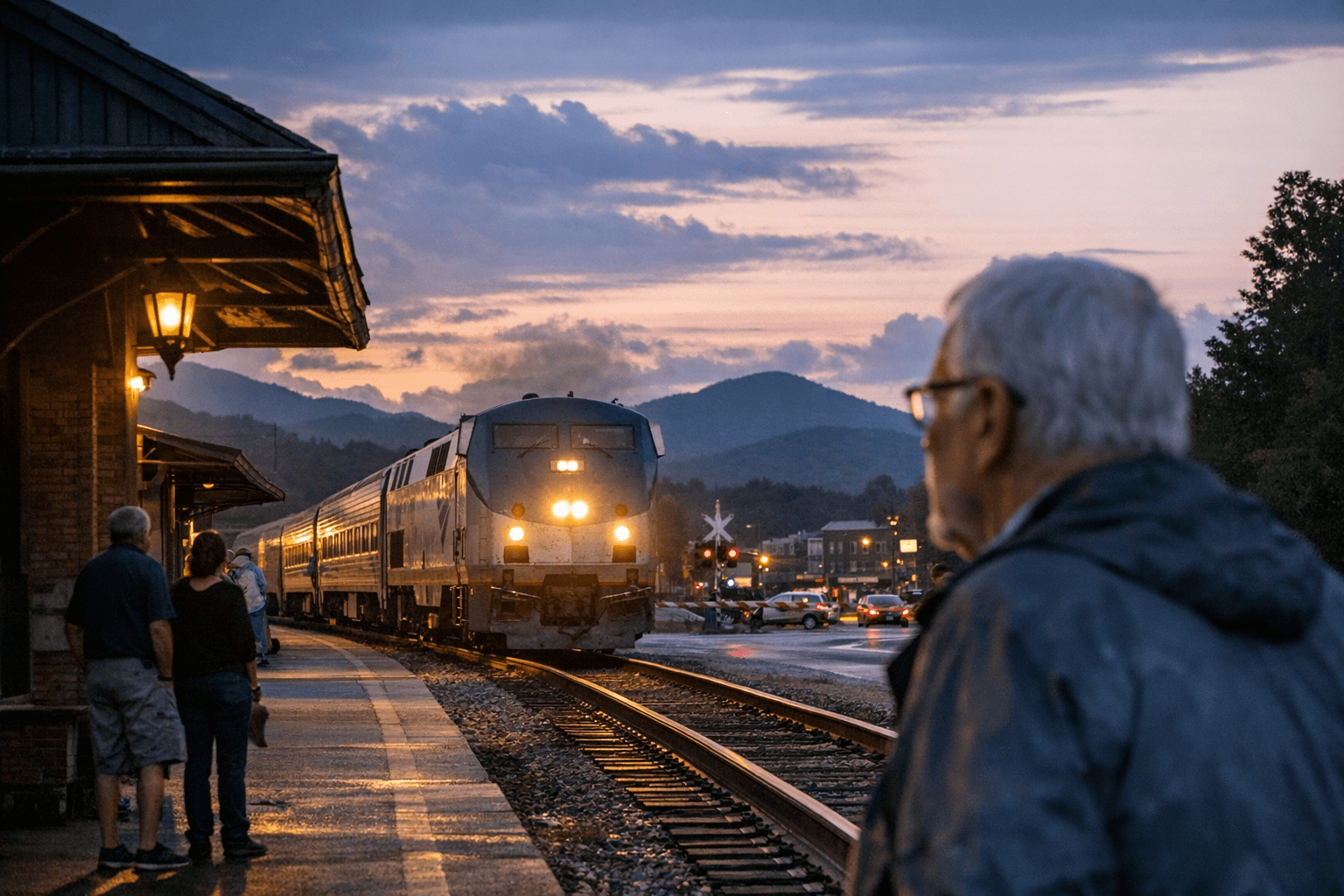
Local governments along a 139-mile stretch of mountains and Piedmont have a concrete number to reckon with: $133 million, the state and local share of a $665 million project that would put a passenger train back in Asheville for the first time since 1975.
That math was central to a March 18 conference in Morganton, where the nonprofit WNC Rail Committee gathered about 140 people, including Asheville Mayor Esther Manheimer, Morganton Mayor Ronnie Thompson, Marion Mayor Steve Little and Salisbury Mayor Pro Tem Susan Kluttz, to chart next steps for reviving the Salisbury-Asheville corridor. Ray Rapp, a former state legislator and mayor of Mars Hill who co-chairs the committee, said the project had reached a new threshold. "The potential for this corridor project is fast becoming a reality," Rapp said. "And so, we need to be ready."
If built, the service would run three daily round trips along Norfolk Southern's AS-Line, covering the distance in roughly three and a half hours. Passengers arriving in Salisbury could transfer to the state-supported Piedmont train and the long-distance Carolinian, creating a car-free route from Asheville to Charlotte and Raleigh. For Western North Carolina, the line would offer an alternative to I-40 congestion and a new pipeline for tourists already traveling by rail from the state's larger cities.
The federal government is expected to fund 80 percent of the $665 million price tag, but only after state and local partners commit the remaining $133 million. Rapp called that obligation substantial but workable if regional planning bodies coordinate their efforts. Representatives from the Land of Sky Regional Council, the Western Piedmont Council of Governments and the Foothills Regional Commission all attended the Morganton conference. "We need them to work with local governments on how much they're able to contribute and, more importantly, what kind of grants they can pursue," Rapp said.
Norfolk Southern's pledge to spend $40 to $50 million restoring the Old Fort Loops, a 13-mile section of track between Black Mountain and Old Fort that sustained serious damage in Tropical Storm Helene, has given planners their most tangible near-term win. That freight-driven repair addresses what NCDOT's 2023 feasibility study identified as the route's most engineering-intensive segment, and advocates are citing it as evidence that the physical corridor can realistically be rehabilitated.
Asheville still faces an unresolved local question: where to build a station. The city previously considered property near Biltmore Village, but Helene's flooding of the Swannanoa River complicated that site. The River Arts District has emerged as a possible alternative, though the feasibility study estimated that option would add roughly $5 million to local costs.
NCDOT's economic analysis projected the restored service would support 305 permanent jobs and generate nearly $60 million in annual economic output for the region. The corridor was selected for the Federal Railroad Administration's Corridor Identification and Development program in 2023, placing it in the federal pipeline for construction funding.
Formal project development agreements among NCDOT, local governments, Norfolk Southern and Amtrak remain the immediate required step before any funding can be obligated, and the full project is expected to unfold over multiple years. What distinguishes this push from earlier attempts is the convergence of a federal program selection, active freight-rail investment on the corridor's most critical segment, and a room full of mayors from every major stop along the route. The WNC Rail Committee has spent more than three decades building toward exactly that alignment.
Know something we missed? Have a correction or additional information?
Submit a Tip

