Cleveland County library offers rich family-history records and free copies
Shelby’s North Carolina Room can turn a family name into birth records, obituaries and deeds in one stop, and the first 10 black-and-white copies are free.

A grandparent’s birth date, a great-aunt’s obituary and an old land deed can all surface in one trip to the Eugenia H. Young Memorial Library in Shelby. The North Carolina Room holds the kind of records that often unlock a family story fast, including Shelby Star microfilm and the first 10 black-and-white copies free each day.
Start in the North Carolina Room
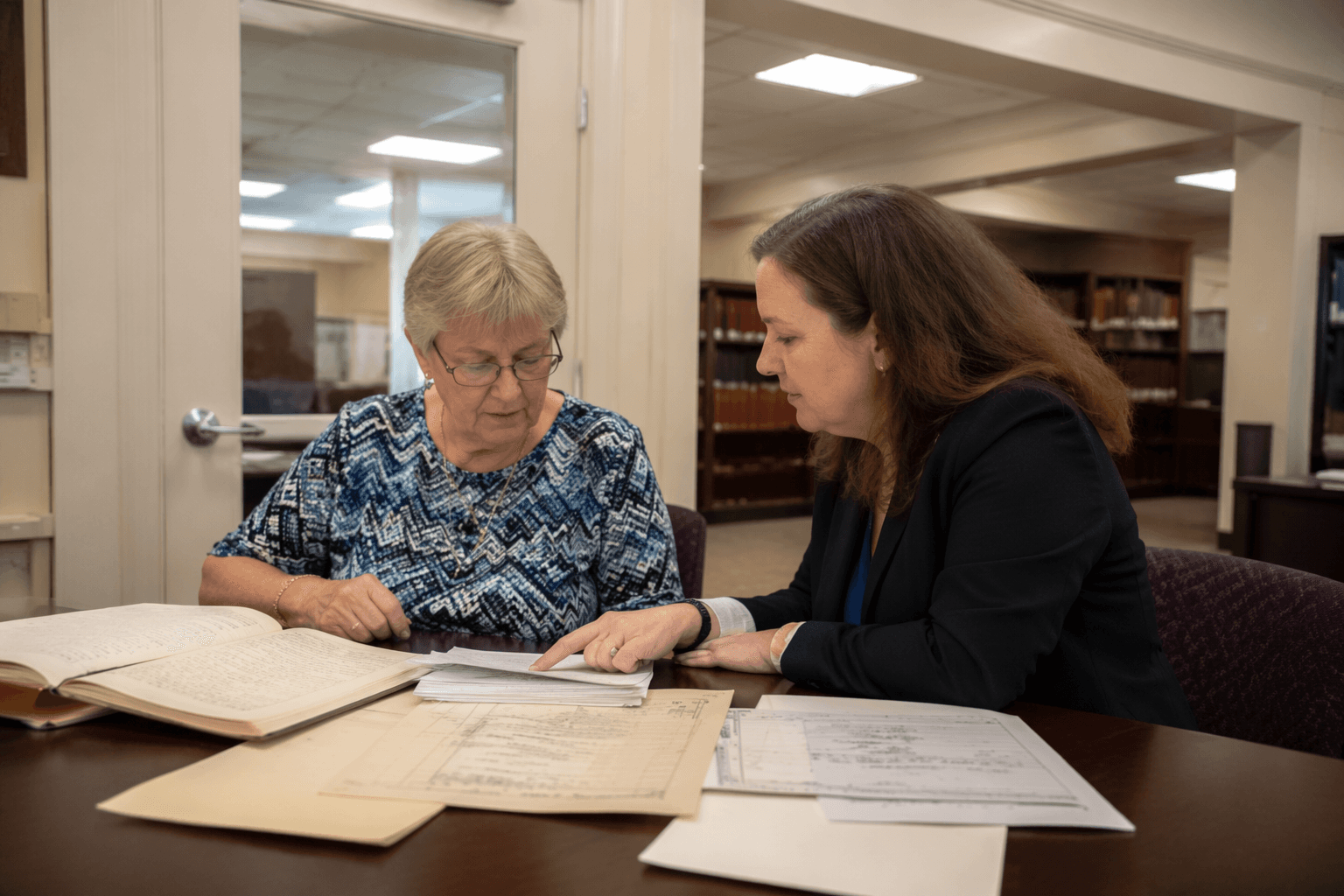
The North Carolina Room is open to the public during normal operating hours, and it is built for practical research rather than browsing alone. Its holdings reach beyond newspapers and include Cleveland County records on microfilm, a survey of county cemeteries, deeds, wills, birth records, voter records, tax lists, family history files, census information, genealogy magazines, local publications, Revolutionary and Civil War records, city directories and phone books.
A name in a newspaper notice can be matched to a burial site, then tied to a deed or tax list, then checked against a birth record or family file. The Shelby Star microfilm is especially useful, although the newest reels arrive with about a three-month delay.
A one-visit route through the records
Bring as much identifying detail as you can, even if it feels incomplete. A full name, an approximate birth or death year, a maiden name, a church, a school or a neighborhood in Shelby can save time when the staff starts pulling newspaper reels, city directories or family files.
Ask first for the sources that can quickly anchor a life in place and time. That means the Shelby Star microfilm, the cemetery survey, birth and death records, deeds, wills, tax lists and voter records, along with city directories and phone books that can show where a family lived from one year to the next.
Leave with copies and a next-step list. Walk out with a birth record, obituary clipping, deed page or directory listing in hand. If the trail extends into Lincoln County, Rutherford County or upper South Carolina, the room already keeps some of those records close at hand.
Why Cleveland County’s paper trail is so useful
Cleveland County was established in 1841 from Lincoln and Rutherford counties, and no extensive losses of county records are known. The county was named for Colonel Benjamin Cleveland, whose Revolutionary War service and link to the Battle of Kings Mountain remain part of the county’s identity, and the county seat is Shelby.
Cleveland County sent 2,035 men to serve in the Confederate Army. Cleveland County’s population was 10,396 in 1850 and 12,348 in 1860, an 18.8% increase over that decade, and North Carolina has been counted every ten years since 1790.
Use the State Archives to widen the search
When the North Carolina Room gives you a name or date, the next stop is often the State Archives of North Carolina. Its county-records guide organizes materials into major series that include bonds, census, courts, land, estate, marriage and vital records, military and pension records, roads and bridges, schools, taxes and wills.
A land record can show where a family settled, a tax list can show when a property was held, a court record can explain a dispute, and a pension file can connect a soldier to his service and heirs. North Carolina land-grant records run from 1663 to 1960, and they can be used to study settlement and migration patterns across the state, including families that moved between Cleveland County, Rutherford County and Lincoln County before county lines settled into their present form.
The digital collections add another layer
The North Carolina Digital Collections put a large amount of material within reach before anyone leaves home. The site holds more than 90,000 historic and recent photographs, state government publications, manuscripts and other resources, and the Cleveland County Collection 1799-1977 is made up of six disparate groupings of papers tied to county history.
Among those materials is a memorandum book with an alphabetical list of state-issued land grants for Rutherford County from 1811 to 1825. That kind of document can connect a surname to a place long before modern maps or street addresses existed, especially for families whose roots stretch back into the early 1800s. The digital collections are free and full-text searchable.
Nearby institutions can fill in the gaps
Gardner-Webb University’s Cleveland County Historical Collection gives researchers another local path, especially when family stories intersect with schools, churches, businesses or civic life. The collection preserves documents, artifacts, photographs and memorabilia that document county history.
A single surname can move from a Shelby Star notice to a cemetery listing, then into a deed book, a tax list, a military file or a land-grant record without leaving the county’s research network.
This article was produced by Prism’s automated news system from verified source data, official records, and press releases, then run through automated quality and moderation checks before publishing. The system is built and supervised by the people who set the standards it runs under. Read our full AI policy.
Did this article answer your question?