Cleveland schools, Justice Department file competing desegregation plans
Cleveland schools and the Justice Department are fighting over how grades 6-12 will be assigned, a decision that could reshape campus use and family planning.
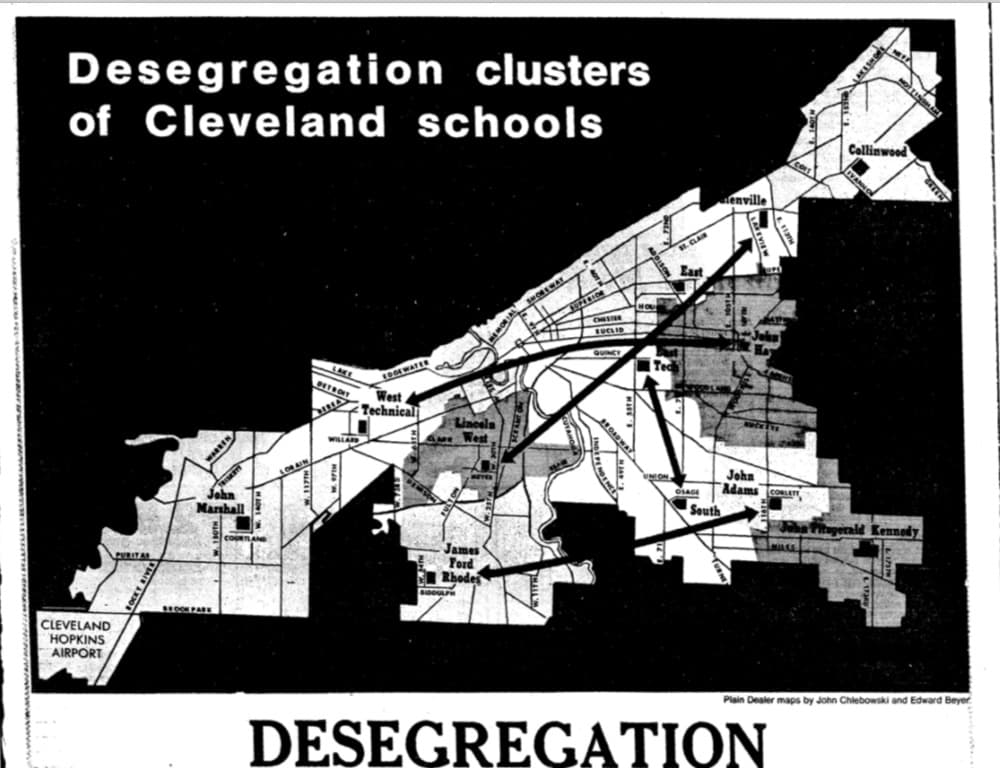
Cleveland families could see a new school map for grades 6 through 12 as the Cleveland School District and the U.S. Justice Department ask a federal judge to choose between two competing desegregation plans. One side wants a simpler structure with one middle school and one high school for all students in those grades; the other is pressing open-enrollment and magnet-based alternatives that district leaders say would preserve more local flexibility.
The Justice Department said its plan would immediately desegregate the grades 6-12 schools because their enrollments would mirror districtwide demographics. Earlier filings from the department had called for a new middle school at the current East Side High School facility for grades 6-8, while the district has continued to push magnet-program remedies and other options it says could move the system forward without the same level of consolidation. In its response, the department said the district’s middle school plan would unnecessarily delay schoolwide desegregation and require more resources than the federal plan.

The dispute matters far beyond the courtroom in Greenville because it will shape where students go to school, how buildings are used, and how quickly families can get a stable answer on assignments and transportation. The current filing also sits inside a long-running fight over whether Cleveland can finally return to local control after generations of federal oversight.
That case began on July 24, 1965, when 131 minor children, through their parents or guardians, sued the Bolivar County Board of Education over white-only and black-only schools. Court records show that Judge William C. Keady permanently enjoined racial discrimination on July 22, 1969. Decades later, the Justice Department argued that Cleveland schools were still operating as racially identifiable schools, and a 2014 decision by the U.S. Court of Appeals for the Fifth Circuit reversed a freedom-of-choice remedy that had not desegregated the district.
The latest court fight comes after major prior milestones. A May 13, 2016 ruling ordered consolidation of Cleveland’s middle and high schools. In March 2017, Judge Debra M. Brown approved a settlement that required Cleveland to open consolidated middle and high schools by August 2017, including Cleveland Central High School at the former Margaret Green/Cleveland High campus. That order was meant to end decades of segregation that had already divided schools along the railroad tracks in Cleveland.
Now the district and the Justice Department are once again asking the court to decide how the next phase should look. The answer will determine whether Cleveland keeps moving toward a consolidated system or whether another round of federal oversight remains in place.
This article was produced by Prism’s automated news system from verified source data, official records, and press releases, then run through automated quality and moderation checks before publishing. The system is built and supervised by the people who set the standards it runs under. Read our full AI policy.
Know something we missed? Have a correction or additional information?
Submit a Tip