Delta State celebrates Lady Statesmen legacy in Cleveland
Delta State's Lady Statesmen still shape Cleveland's identity, from Walter Sillers Coliseum to alumni pride, and the question is whether that legacy is being used or just remembered.

Delta State’s Lady Statesmen are not just part of Cleveland’s sports past. Their rise still helps define how the university, the campus, and the city tell their own story, from the court at Walter Sillers Coliseum to the way alumni and longtime fans talk about Delta State’s place in the Mississippi Delta. What began as a reinstated program in 1972 quickly became a national standard, and that history still carries civic weight today.
A program that changed the scale of Cleveland’s sports identity
When Delta State brought back women’s basketball in 1972 after about four decades without it, the program was not starting from a polished foundation. It was building from scratch, and the first women’s game followed in 1973 against Holmes Community College at Walter Sillers Coliseum. That setting mattered: the coliseum sat at the center of campus life, and the team’s early success moved almost immediately from local curiosity to national relevance.
That rise came under Margaret Wade, the former high school coach who guided the Lady Statesmen through the program’s early dynasty. Delta State’s women were the first No. 1 team when the women’s college basketball poll debuted in 1976, a milestone that placed Cleveland in the earliest national map of the sport. They also won three straight AIAW national championships from 1975 through 1977, a run that still gives the program unusual historical standing.
Walter Sillers Coliseum still does the heavy lifting
The legacy is easier to understand when you stand inside Walter Sillers Coliseum. Delta State describes it as a circular brick building 182 feet in diameter, with seating for more than 3,500 for basketball and arena events. It has been home to Statesmen and Lady Statesmen basketball since it was completed for the 1961-62 season, which means the building itself has carried generations of Delta State athletics.
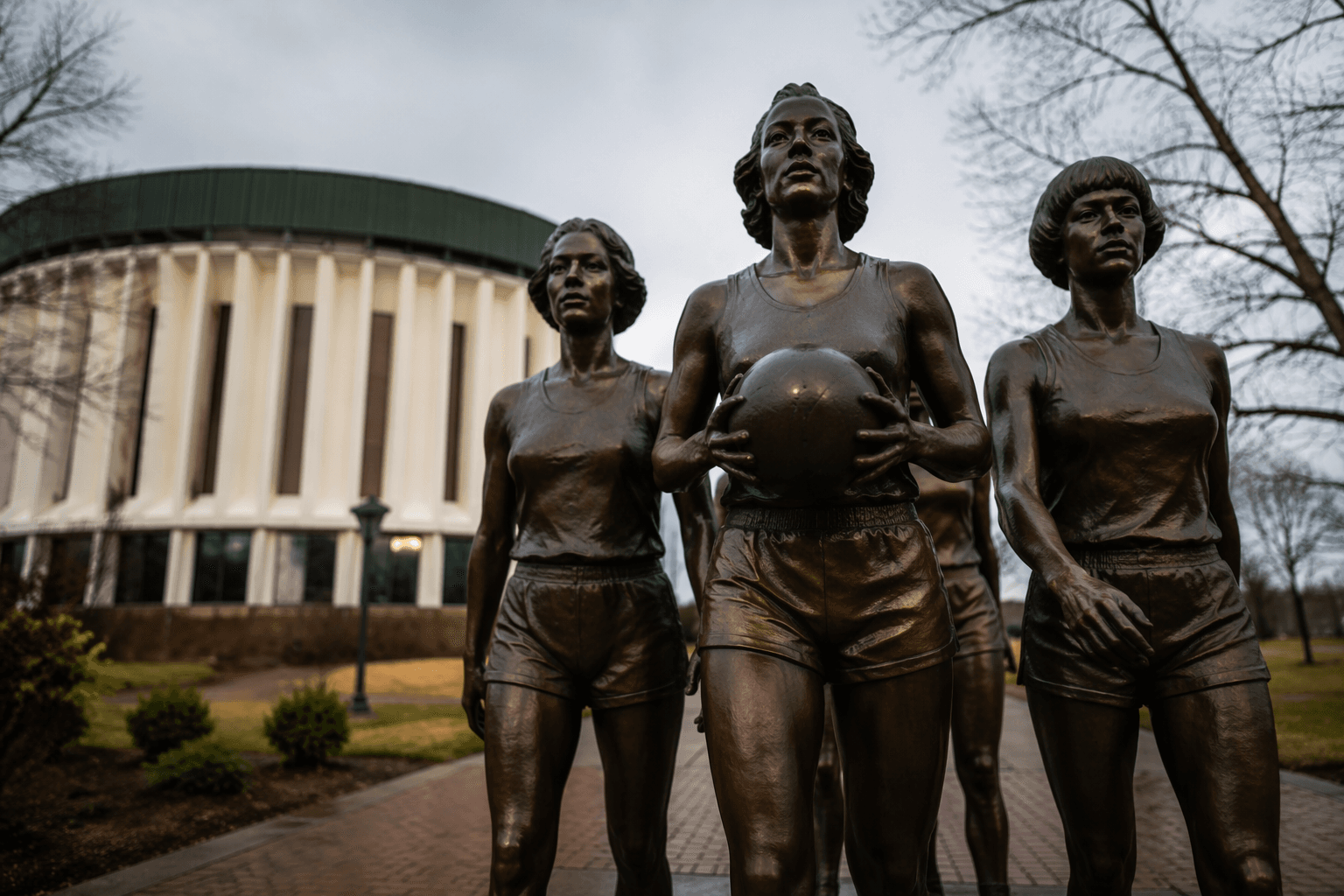
The first women’s game there reportedly drew only a sparse crowd and had no tickets or concessions. That detail matters because it shows how quickly the program’s reputation outgrew its early circumstances. What began as a modest campus event became a venue tied to one of the most influential stretches in women’s college basketball history, and the building remains one of Cleveland’s most recognizable sports landmarks.
The historical record is still being actively maintained
This is not a story that lives only in old photographs or hallway plaques. Delta State’s 1974-75, 1975-76 and 1976-77 teams received the Women’s Basketball Hall of Fame’s Trailblazer Award in 2017, a formal recognition of the program’s role in helping build collegiate women’s basketball. That honor did more than preserve memory. It confirmed that the Lady Statesmen’s early dominance helped establish the sport’s broader legitimacy before the NCAA took over women’s basketball governance in 1982.
The anniversary attention has continued as well. The Associated Press marked the 50th anniversary of the women’s Top 25 poll in 2026, and its coverage tied Delta State’s No. 1 debut and championship run to the larger rise of the sport. That same anniversary year included the AP Top 25 Fan Poll Experience in Phoenix at Arizona State’s Walter Cronkite School of Journalism and Mass Communication, another sign that the program’s history still travels well beyond Mississippi.
Why the legacy still matters in Cleveland now
For Cleveland, the value of the Lady Statesmen legacy is practical, not ceremonial. It gives Delta State a story that is instantly recognizable and easy to anchor in place: a campus, a coliseum, a coach, a championship run, and a national first. That kind of identity helps the university distinguish itself, but it also strengthens the city’s own self-image, because a small Delta community can point to a program that helped shape women’s basketball at the national level.
That history also gives recruiters and alumni something concrete to build around. Athletic tradition is one of the most visible ways a university keeps former players, donors, students, and neighbors emotionally attached to campus. In Cleveland, the Lady Statesmen brand still does that work by tying present-day programs to a story that includes Margaret Wade, the 1975 through 1977 AIAW titles, and the first No. 1 ranking when the poll was new.
Preserved, not merely remembered
The strongest test of a legacy is whether it still shows up in the places people use. Walter Sillers Coliseum is still standing, still named, still central to Delta State basketball, and still linked to the program’s defining years. The Trailblazer Award and the national anniversary coverage keep the record visible, while the campus itself keeps the story rooted in Cleveland rather than in a museum case.
That is what separates preservation from nostalgia. The Lady Statesmen are not just remembered as a great team from the past. They remain part of how Cleveland explains itself, one championship run and one campus landmark at a time.
This article was produced by Prism’s automated news system from verified source data, official records, and press releases, then run through automated quality and moderation checks before publishing. The system is built and supervised by the people who set the standards it runs under. Read our full AI policy.
Did this article answer your question?