Explore Cleveland County’s museums, from Earl Scruggs to genealogy
Earl Scruggs, family files, rail history and fair memorabilia all fit into one Cleveland County loop built for a full day or easy weekend.

Earl Scruggs’s banjo story begins on a forty-acre cotton farm in Flint Hill, and it still anchors a Cleveland County museum trail that runs from Shelby to Kings Mountain and Grover. For a practical day out, start in Shelby, follow the county’s music and family-history stops, then work outward to rail heritage, presidential memorabilia and fair culture that helped shape the county’s civic memory.
Start in Shelby with the Earl Scruggs Center
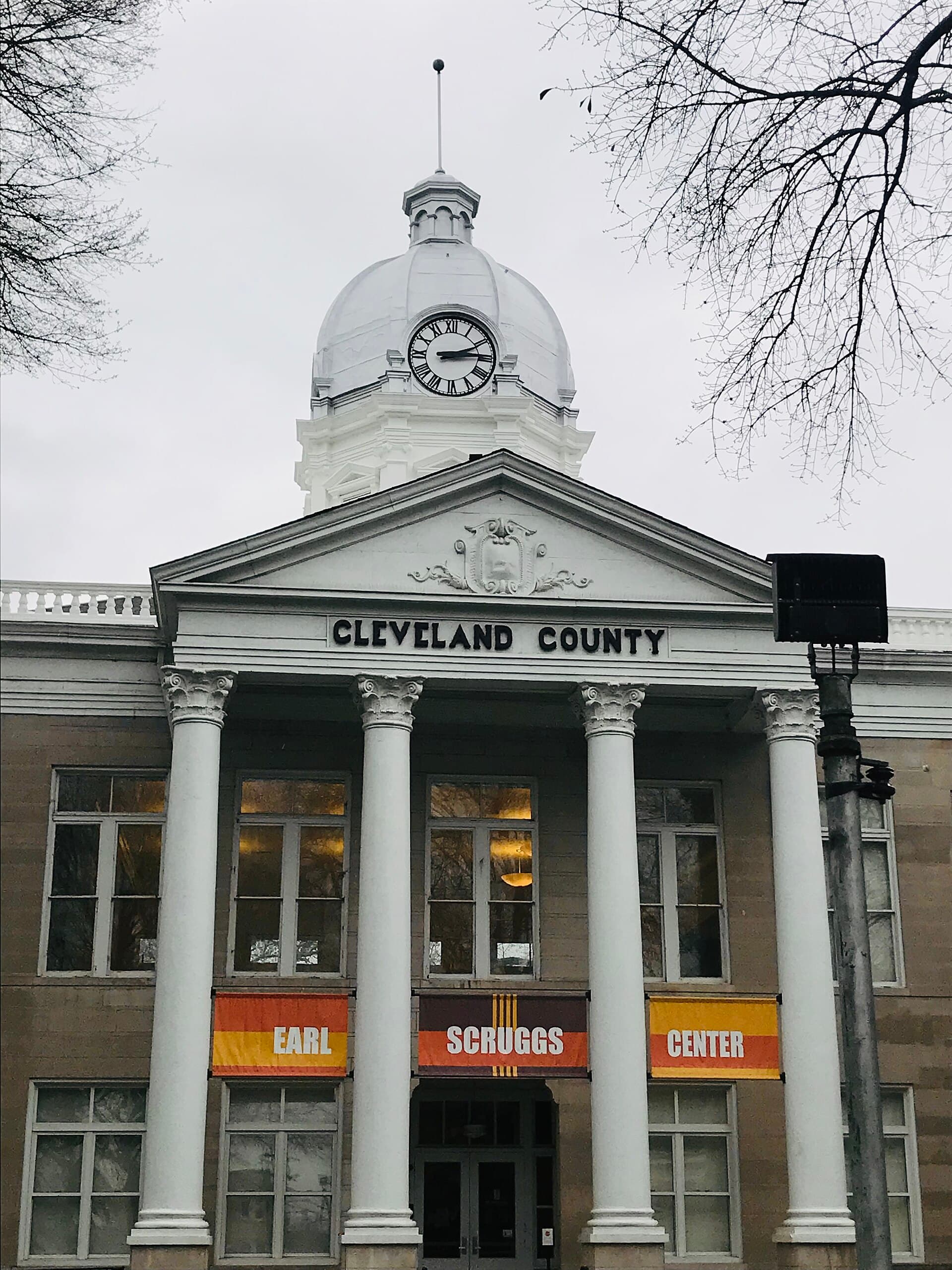
The Earl Scruggs Center gives the trip its clearest entry point because it ties one national music figure to a very local place. The center sits in the restored 1907 Cleveland County Courthouse in downtown Shelby and describes itself as a hub for music, history and community engagement, with interactive exhibits, educational programs and live performances. It is built around the life of Earl Eugene Scruggs, who was born on January 6, 1924, in the Flint Hill community.
The details inside make the visit feel more like a rooted county story than a generic bluegrass stop. The center says Scruggs started playing banjo at age 4, had the three-finger style down by age 10, and later helped launch bluegrass after his debut at the Ryman Auditorium. If you are planning a group visit, the center offers self-guided tours year-round and group rates for 20 or more adults or 30 or more students, with reservations due at least 72 hours ahead. That makes it useful for church groups, classrooms and family reunions as well as solo visitors.
Build the Shelby leg around research and memory
A short drive or walk deeper into Shelby adds another layer: the Broad River Genealogical Society at 1145 County Home Road. It serves as a repository for local documents, newspapers and books tied to Cleveland County and its ancestral families, which makes it one of the best stops for anyone tracing a surname, a farm line or a church connection. The society is generally open Tuesday evenings from 6:00 to 8:00 and on the second and third Saturday mornings of the month from 9:00 to 1:00.
Its journal title, Eswau Huppeday, reaches back to the Catawba language and means “the land between the rivers.” That name fits the society’s role well: it does more than preserve names on a page, it connects families to the geography and language that shaped the county long before today’s road signs and subdivisions.
Shelby also gives the itinerary an easy way to include community memory without leaving downtown. The Combs Family Museum, at 103 S. Lafayette St., brings together Cleveland County Fair memorabilia, NASCAR memorabilia, baseball items and local history artifacts. Its rooms show how fair culture, racing and family history can sit side by side in the same local archive, which makes it a strong stop for visitors who want a broader sense of what Cleveland County families have saved and celebrated over time.
Use Lattimore and Lawndale to show how towns remember themselves
The Lattimore Historic Society adds a smaller-town perspective that still carries a lot of weight. Lattimore was settled in the mid-1880s, incorporated in 1899, briefly renamed Delight around 1887 and changed back to Lattimore by spring 1888. The town was named for Audley Martin Lattimore, who sorted mail at his house and served as the first Seaboard Railroad agent and the town’s first mayor.
Inside the museum, Martha’s Room honors Martha Mason, the Lattimore author and polio survivor, and gives the stop a deeply personal local dimension. That blend of town history and individual biography is exactly what makes Lattimore worth the detour: you get a compact view of how a railroad town, a mail route and a family story can all leave a mark that outlasts the original businesses and buildings.
Lawndale tells a different kind of story, one tied to education and the reuse of old school buildings. The Lawndale Historical Society and Museum is housed in the Richard and Betty Hord Building beside the Lawndale Community Center, in the former Piedmont High School building. The brick building was renamed in 2017, and Piedmont High School served students in Lawndale and other upper Cleveland communities until it closed in 1967. The building once held welding and carpentry classes, a reminder that the county’s museum spaces often come from the practical structures that once trained local workers.
Follow the county’s railroad thread
For transportation history, Metcalf Station helps connect the dots between Lawndale and Shelby. The site preserves artifacts from a former railway stop that once linked the two towns, and it fits into the county’s larger story of rail and postal development. In a county where so much history is preserved through local institutions rather than one large museum, the rail stop matters because it shows how people and goods moved between communities before modern driving patterns flattened those distances.
That transportation thread also helps explain why these museums work well as a single route. Shelby, Lattimore, Lawndale and Kings Mountain sit close enough to make a one-day itinerary realistic, but each stop specializes in a different part of the county’s past.
End in Kings Mountain and Grover
The Kings Mountain Historical Museum, housed in the former U.S. Post Office building at 100 E Mountain St. in Kings Mountain, adds a civic-history layer that pairs well with the morning in Shelby. Its collection includes a wide range of archives and objects related to Kings Mountain and its residents, and the museum says it offers three changing exhibits a year. It is open Tuesday through Saturday from 10 a.m. to 4 p.m., with some Saturdays closed when no exhibit is active.
That mix of archives and changing displays makes the museum a strong finish because it rewards both planners and drop-in visitors. A family can count on seeing something different across seasons, while a researcher can use it as a starting point for local names, neighborhoods and institutions.
In Grover, the Presidential Culinary Museum broadens the county’s historical reach in a different direction. Visit NC describes it as a hidden gem led by a former presidential chef, with White House menus, china and culinary treasures on display. The museum said it had welcomed more than 25,000 visitors by 2016, and it has also hosted a spring White House Chef’s Easter Egg Roll. That combination of White House ephemera and small-town setting makes it one of the county’s most unexpected museum stops.
Why the Cleveland County Fair belongs in the same story
The Cleveland County Fair is not just an event on the calendar, it is part of the museum route’s historical backbone. It began in 1924 after the Shelby Kiwanis Club laid plans in 1923 to combine smaller community fairs, and the first fair drew 70,000 attendees. The fair extended its run in 1927 so African American families could participate, and separate fairs continued until the Civil Rights Act era in the mid-1960s.
That history gives the county’s museum trail a wider frame. The fair, the music center, the genealogical society and the town museums all preserve different kinds of memory, but together they show how Cleveland County keeps track of who lived here, who worked here, who performed here and who was included in public life. A day spent moving among them is not just a tour of objects. It is a compact way to see how the county tells its own story, one room, one exhibit and one name at a time.
This article was produced by Prism’s automated news system from verified source data, official records, and press releases, then run through automated quality and moderation checks before publishing. The system is built and supervised by the people who set the standards it runs under. Read our full AI policy.
Did this article answer your question?