Collin County History Museum preserves McKinney’s historic post office
The old McKinney post office now houses Collin County’s archive. Family files, maps, and newspapers help residents read a county still growing around it.

As downtown McKinney keeps changing around the square, the 1911 post office on East Virginia Street stands as a fixed point. The Collin County History Museum is housed in that building, one block east of downtown, where the county now keeps the photographs, maps, documents, and family files that explain what came before the boom. For newcomers trying to place a fast-growing county in context and longtime residents tracing a surname, a school, or a neighborhood, the museum turns civic memory into something useful.
A landmark built for a different county
The building itself is part of the story. Designed by architect J.H. Suttle, the former McKinney Post Office is a Recorded Texas Historic Landmark and a well-preserved example of early 20th-century civic architecture in Collin County. Its limestone exterior, arched three-bay entrance, wide eaves, and surviving original doors and windows still give the structure the weight and formality of a federal building.
The post office served McKinney and nearby communities as a post office, postal savings bank, and government office for 46 years before the federal government deeded it to Collin County in 1959. The historic marker says it was the fourth post office to serve the area, a reminder that even this landmark replaced earlier civic infrastructure as the community grew. Restoration began after years of changing uses and disrepair, and Lady Bird Johnson cut the ribbon dedicating the building as a museum in 1976.
That restoration set up the building’s next life. The Collin County History Museum moved in in 1982, and the Texas Historical Commission marker was erected in 1997, the same year the building received its Recorded Texas Historic Landmark designation. The sequence matters because the museum is not just displayed inside an old shell. It is a preservation project that kept a public building in public use.
What the museum keeps in view
Inside, the museum’s job is less about nostalgia than access. Its collections and programming focus on local history through exhibits, artifacts, photographs, maps, documents, and archival newspapers that trace the development of Collin County communities. The museum describes itself as a place dedicated to preserving and sharing local stories through engaging exhibits, educational programs, and collaborative community events.

That broad mix makes the museum useful to more than one kind of visitor. Descendants looking for family names, students working on local history, historians studying settlement patterns, and casual visitors trying to understand how the county changed can all find material here. The museum also welcomes family research and genealogy projects, which gives the archive practical value for people searching surnames, property histories, and school histories.
The Research Room is the clearest example of that utility. Visitors can browse family files and a specialized book collection, and the museum says its archives and family files include information, documentation, and photographs from throughout Collin County. In a county where subdivisions and commercial corridors can erase older landmarks quickly, that kind of recordkeeping helps keep older relationships to place legible.
A visit can start with the building’s architecture and end with paper evidence of daily life. The most useful resources include:
- family files with names, documentation, and photographs
- maps that show older community patterns
- archival newspapers that record local events, people, and places
- documents and photographs tied to Collin County history
- a specialized book collection in the Research Room
How to plan a visit to 300 E. Virginia St.
The museum is open Friday and Saturday from 11 a.m. to 5 p.m. at 300 E. Virginia St. in McKinney, close enough to downtown that a visit fits easily into a walk around the square. Guided tours, educational programming, and facility rentals are part of what the museum offers, so the building serves both as a public history site and as a venue for community use.
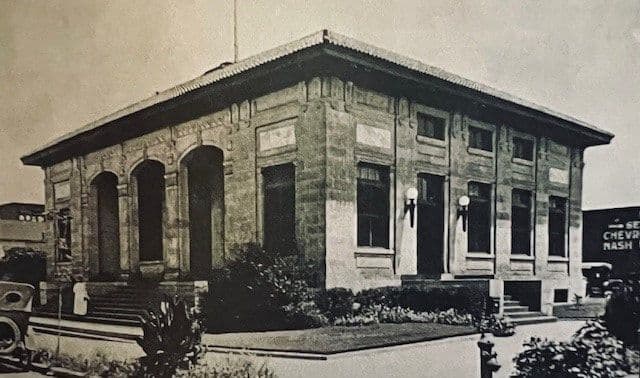
That mix makes the museum more flexible than a standard display space. A family researching an ancestor can use the archives, while a teacher or civic group can use programming that connects the building’s federal past to the county’s present. The site also works as a downtown anchor, because the former post office still gives people a reason to look closely at one of McKinney’s oldest civic blocks instead of treating it as background.
The preservation story has a public-facing side beyond exhibits and tours. The Collin County Historical Commission, which describes itself as the county’s official local arm of the Texas Historical Commission, adds another layer to the preservation ecosystem and holds regular public meetings. Together, the museum and the commission give Collin County a way to preserve not just buildings, but the records and decisions that explain how the county took shape.
Why civic memory matters in a county that keeps growing
Collin County’s growth makes places like this more important, not less. When new residents arrive and downtowns keep reshaping themselves, the county’s older paper trail becomes a practical tool for understanding how roads, neighborhoods, schools, and civic institutions evolved. The museum’s role is to make that material visible before it disappears into storage or out of memory.
That work extends beyond the walls of the 1911 post office. The Portal to Texas History’s Collin County Area Newspapers collection spans 1860 to 2012, and McKinney’s digital newspaper program says searchable Collin County newspapers from the 1880s through the 1930s are available online. Those digital collections complement the museum’s physical archives by letting residents and researchers follow local history across decades, not just in one building.
The result is a rare kind of civic continuity. A federal post office built for a smaller McKinney now houses a county archive for a region that keeps adding people, buildings, and roadways. Inside its limestone walls, Collin County stores the evidence of what it was, so residents can understand what it has become.
This article was produced by Prism’s automated news system from verified source data, official records, and press releases, then run through automated quality and moderation checks before publishing. The system is built and supervised by the people who set the standards it runs under. Read our full AI policy.
Did this article answer your question?