Collin County malls tell the story of growth and reinvention
Collin County’s old malls are becoming mixed-use neighborhoods, showing how rapid growth is reshaping where families shop, eat and gather.
In Collin County, the clearest map of growth is not a subdivision plat or a highway plan. It is the mall footprint. As old shopping centers in Plano and Frisco give way to housing, dining, offices and parks, the county is showing how suburban retail can turn into the next generation of neighborhood life.
A growth story hiding in plain sight
Local Profile’s June 2 feature on Collin County’s shopping centers gets the central point right: this is not a nostalgia story, it is a development story. The region’s mall sites are becoming a window into how families live now, where they spend money, and what kinds of places still draw people out of the house. When a center weakens, it can leave behind acres of asphalt and an empty shell; when it is rebuilt, it can become a new district with homes, jobs and places to eat.
The timing matters because Collin County is still growing at a pace that keeps reshaping daily life. The North Central Texas Council of Governments said the county added almost 76,000 residents in one year, and the U.S. Census Bureau put the county’s population at 1,297,179 on July 1, 2025. In the same 2025 estimates, the broader region reached 8,718,500 people. That kind of pressure changes what land is worth, where traffic goes, and why old retail sites are suddenly too valuable to remain single-purpose malls.
Willow Bend and the end of the enclosed-mall era
The Shops at Willow Bend opened in Plano on August 3, 2001, and drew an estimated 250,000 visitors that opening weekend. It arrived as a symbol of confidence, anchored by Neiman Marcus, Dillard’s, Lord & Taylor and Foley’s, which later became Macy’s. But just 39 days later, the Sept. 11 attacks reshaped consumer behavior and slowed retail growth nationwide, turning what looked like a peak moment into a marker for how quickly the retail landscape could change.
That history helps explain why Willow Bend now sits at the center of one of Collin County’s most consequential redevelopment plans. Plano City Council approved an updated version of the project on February 24, 2025, and Centennial rebranded it as The Bend. The company’s vision is to replace the old enclosed-mall model with a walkable destination that blends retail, dining, entertainment, residential, hospitality and office uses.
The updated plan also changes the site’s physical shape in a way that matters for the neighborhood around it. Centennial’s revised concept calls for demolition of the northern section of the mall, from Macy’s to Neiman Marcus. It includes 50 townhomes near Plano Parkway and Chapel Hill Boulevard and allows single-family villas, while keeping the total residential cap at 965 units. Centennial also said it bought Macy’s after the chain announced widespread store closures, a sign of how national retail consolidation is now feeding directly into local land use decisions.
Michael Platt put the shift bluntly, calling Willow Bend “yesterday’s suburban mall” built for a different era. That is not just a line about retail taste. It is a description of how the county’s highest-value land is being rethought for a population that wants shorter trips, more reasons to stay longer, and places that serve more than one purpose.
Collin Creek shows what reinvention looks like on the ground
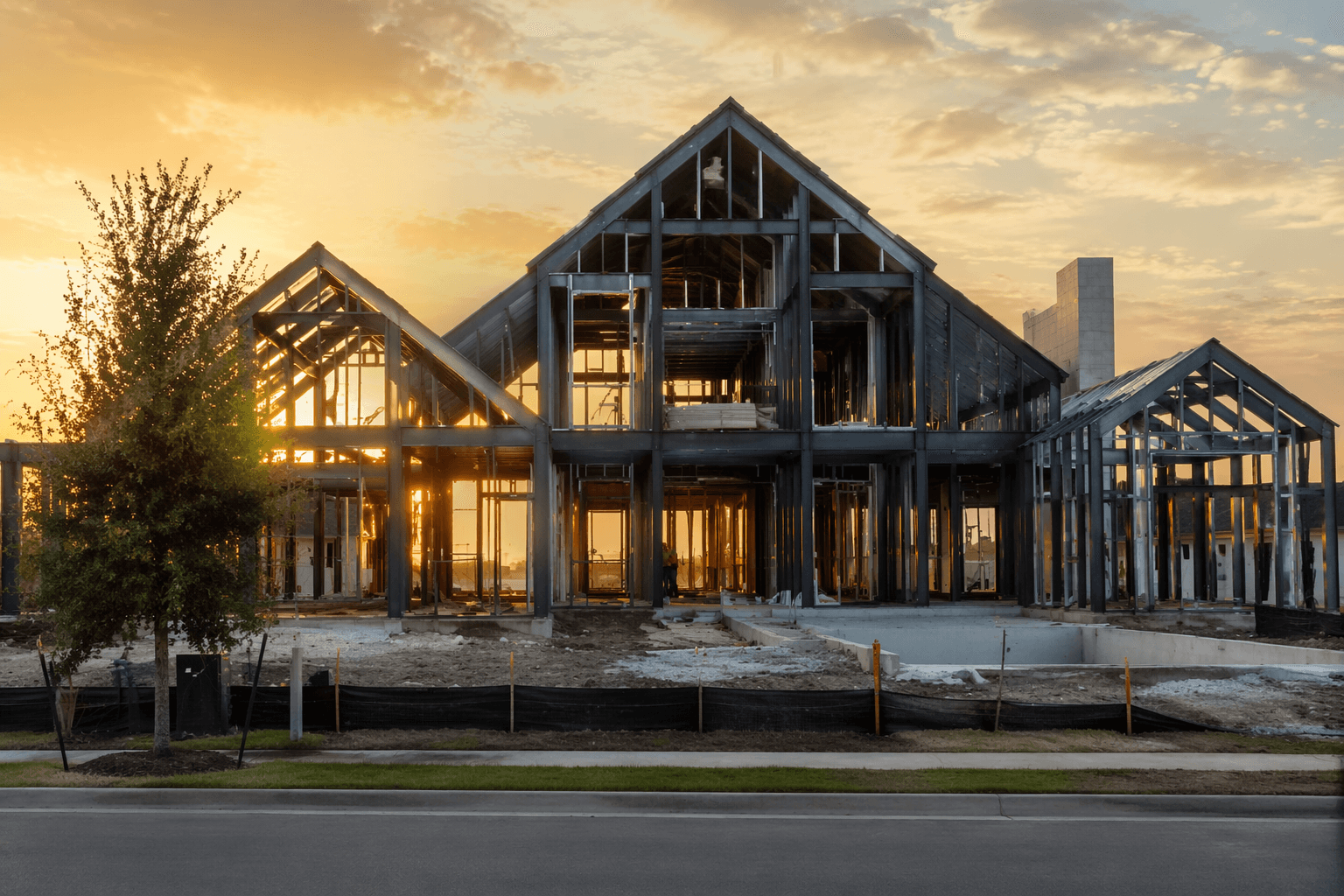
If Willow Bend represents the fading of the enclosed mall, Collin Creek in Plano shows how redevelopment becomes a long construction project with a new urban form at the end. Collin Creek Mall opened on July 29, 1981, as one of the county’s first major malls, then closed in 2019 for redevelopment. By May 2025, Plano officials said work had reached a milestone: the 1,976-space underground parking garage was finished, allowing above-ground construction to move ahead.
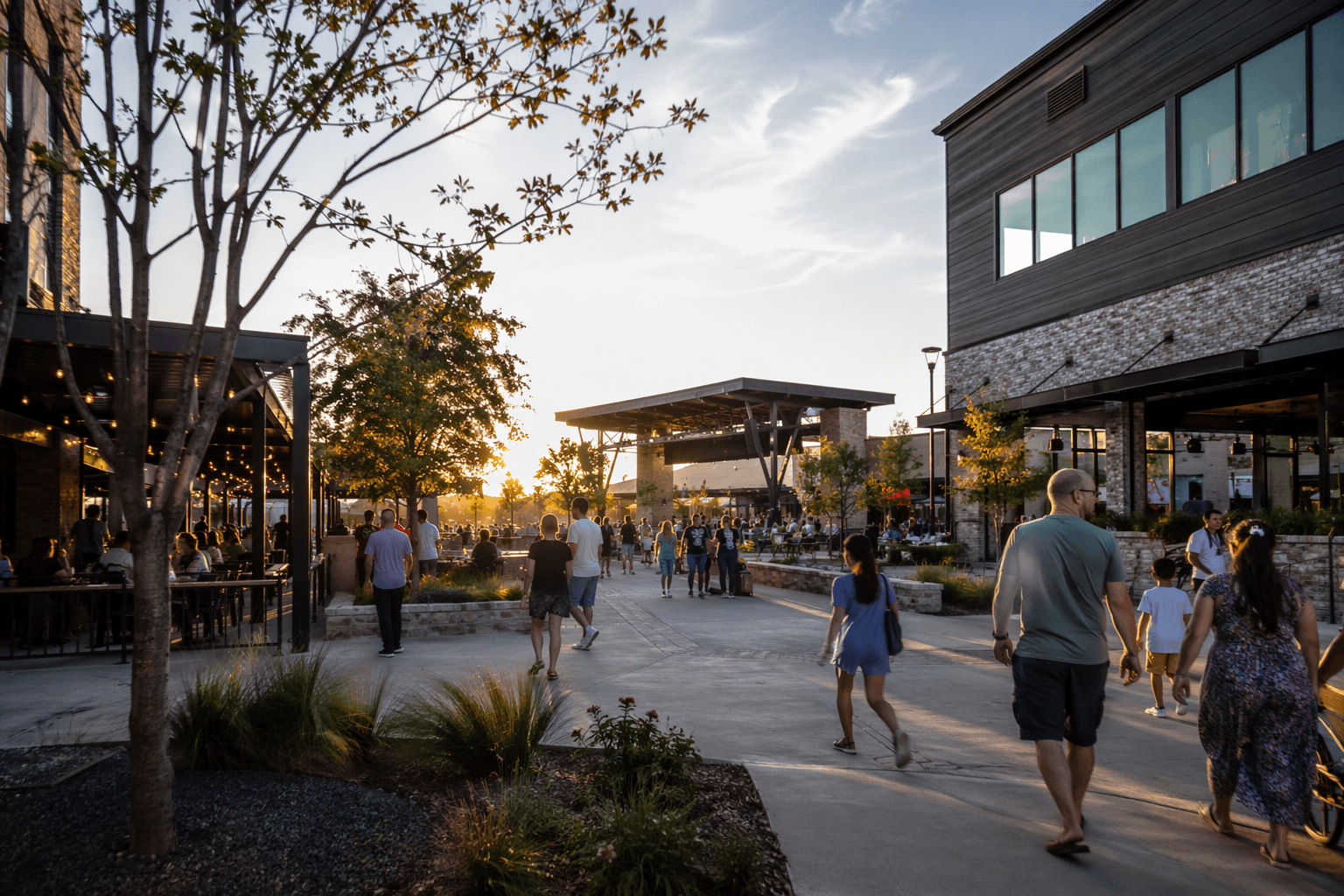
The planned rebuild is far bigger than a retail refresh. Later reporting described a future Collin Creek with about 1.3 million square feet of office space, 35,000 square feet of restaurants and retail, 3,000 residences, eight acres of city parks and 1.6 miles of walking and running trails. That mix matters because it changes the site from a place people visit once in a while into a place they may live near, work in, or pass through every day.
For Plano, that means the mall’s former footprint becomes part of the city’s neighborhood structure. It is no longer just about where people parked for holiday shopping. It is about where they may walk a dog, meet for dinner, or commute to an office without leaving the district.
Stonebriar shows which retail model still holds
Not every mall story in Collin County is about decline. Stonebriar Centre in Frisco opened on August 4, 2000, and by 2026 reporting it was still a 1.7 million-square-foot regional center anchored by Nordstrom, Macy’s and JCPenney, while adding new uses like Dick’s House of Sport. That matters because it shows the market has not abandoned large retail entirely. Instead, it has split into different outcomes: some centers are still strong enough to stay primarily retail, while others are being converted into mixed-use districts.
Stonebriar’s continued relevance helps explain the geography of spending in North Texas. In a fast-growing city like Frisco, a major center with strong anchors can still capture family spending, especially when it layers in newer experiential uses. But even there, the model is changing. The addition of concepts like Dick’s House of Sport signals that malls survive best when they do more than sell goods. They have to offer reasons to linger.
What this means for traffic, dining and neighborhood identity
The bigger lesson from Collin County is that retail reinvention is now a planning issue, a transportation issue and a quality-of-life issue all at once. The North Central Texas Council of Governments’ March 2025 mixed-use study said mixed-use development can support live-work-play communities and attract employers and workers by creating walkable places. That theory is already visible in Plano and Frisco, where former mall land is being rebuilt to handle more housing, more office space and more restaurant traffic.
For families, that means the old weekend mall trip is being replaced by a more layered pattern of daily movement. A place like The Bend or Collin Creek is designed to capture breakfast, school pickup, dinner, exercise and office traffic, not just a single shopping errand. It also changes neighborhood identity. A former mall site can stop being a dead edge in the city and become a place that gives a district its own center of gravity.
That is why the mall story in Collin County is really a story about where the county is headed. The old retail boxes are not disappearing into irrelevance. They are being turned into the next version of suburban life, one that is denser, more flexible and built for a county that keeps adding people, jobs and reasons to stay close to home.
This article was produced by Prism’s automated news system from verified source data, official records, and press releases, then run through automated quality and moderation checks before publishing. The system is built and supervised by the people who set the standards it runs under. Read our full AI policy.
Know something we missed? Have a correction or additional information?
Submit a Tip