Collin County STAAR scores rise, but recovery remains uneven
English scores climbed, but Algebra I still lagged pre-pandemic levels and Allen, Prosper and Wylie led Collin County’s later accountability ratings.
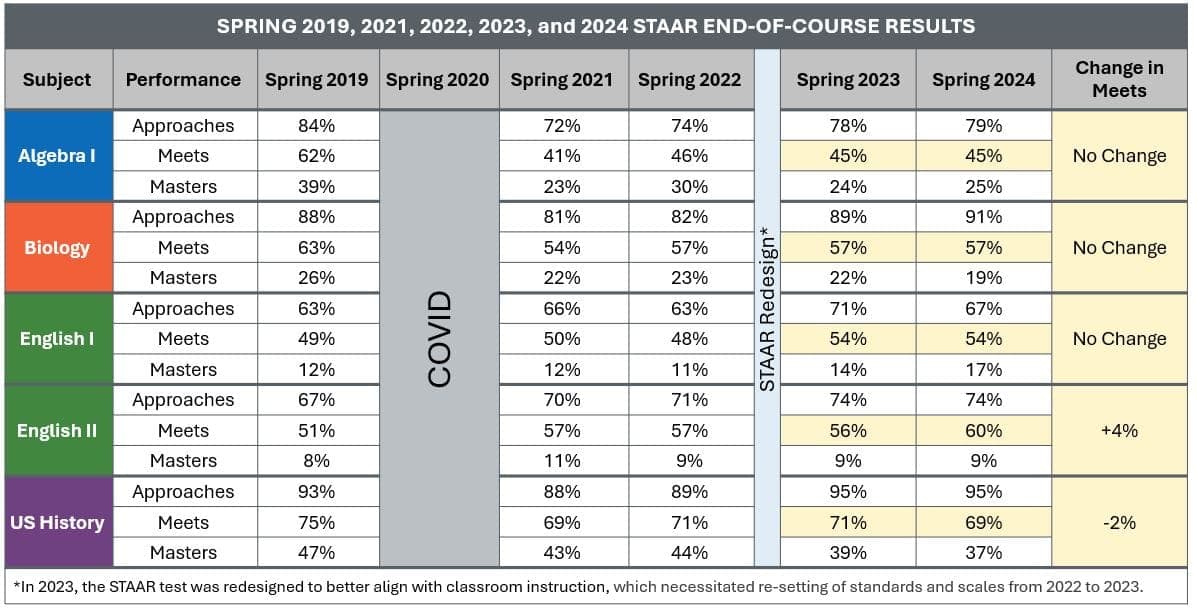
Collin County high schools posted higher STAAR end-of-course scores, but the rebound remains uneven, with some districts still not back to their pre-pandemic marks. The Texas Education Agency released the spring 2024 results for Algebra I, English I, English II, Biology and U.S. History on June 7, 2024, giving families a snapshot of how students are doing in the classes that matter most for graduation and college readiness.
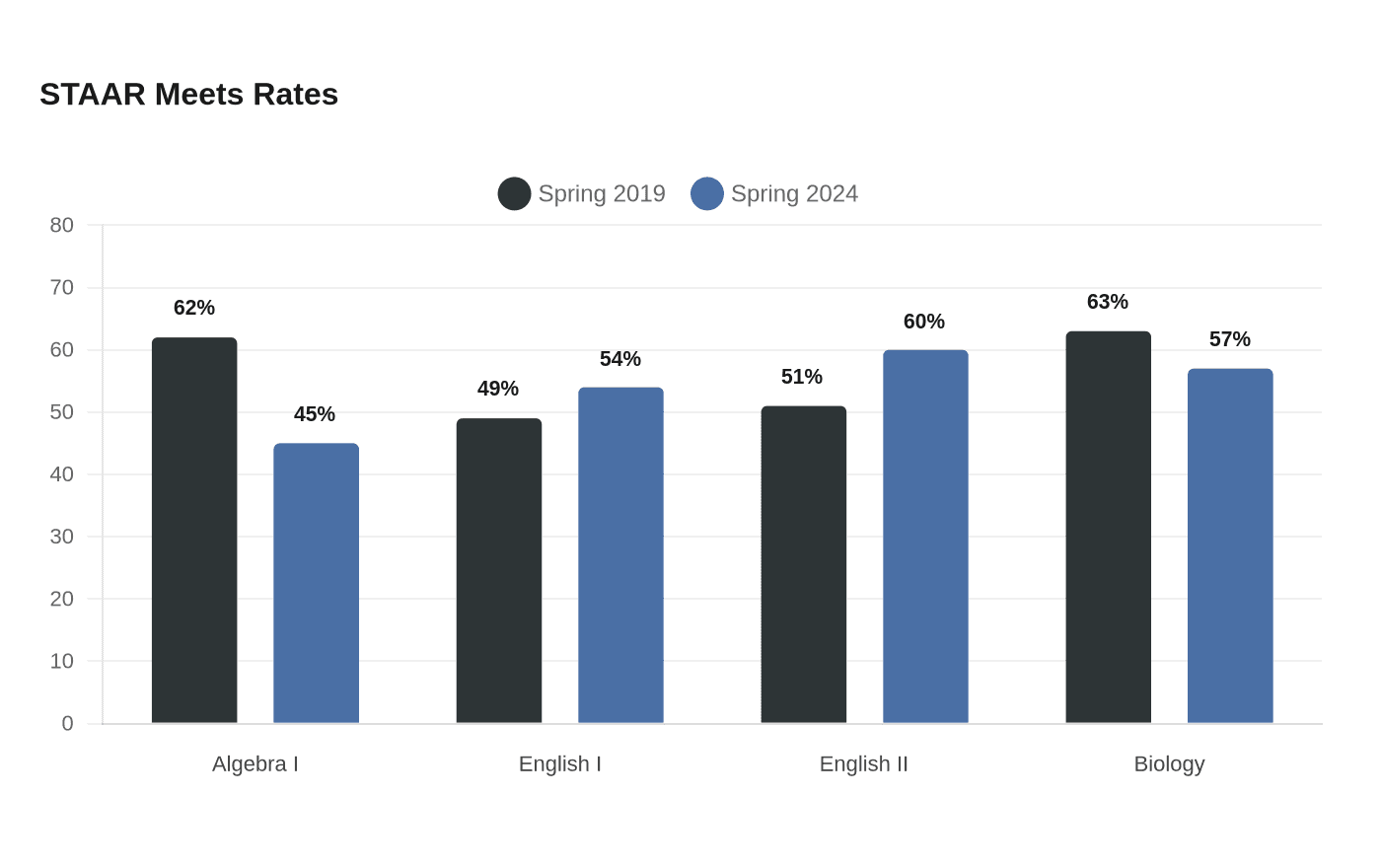
The state’s own numbers show why the recovery looks incomplete. English I “meets” performance rose from 49% in spring 2019 to 54% in spring 2024, and English II climbed from 51% to 60%. Algebra I moved in the opposite direction, falling from 62% to 45% over the same period, while Biology slipped from 63% to 57%. TEA said statewide results were mostly steady after the 2023 STAAR redesign, but not all subjects have returned to their old levels.

That subject-by-subject split matters in Collin County, where families often use STAAR scores as an early read on whether a student is on track for AP courses, dual credit, graduation plans or workforce training. The latest countywide gains show progress, but they do not mean every campus or district is back where it was before COVID-19 disrupted instruction, tutoring schedules and staffing patterns.
Later accountability ratings reinforced that some local systems are recovering faster than others. In TEA’s 2024-25 A-F ratings, Allen tied Prosper at 91, and Wylie also ranked at the top of Collin County. Those results point to districts that have been able to sustain stronger academic performance as enrollment keeps growing across the county.
For parents, the most useful way to read this year’s STAAR numbers is by subject, not by the headline average. English gains suggest some recovery strategies are taking hold, while Algebra I remains the clearest warning sign for students who enter high school behind. Biology is still below its 2019 mark, too, which means science support remains important for students aiming at selective college programs and technical pathways.
The June 7 release also gave districts a fresh baseline for intervention planning, from summer remediation to school-year tutoring and course placement decisions. In Collin County, the central story is not a full rebound but a split recovery: pockets of strong performance in districts like Allen, Prosper and Wylie, alongside lingering gaps that families will keep seeing in high school transcripts and next year’s accountability debates.
This article was produced by Prism’s automated news system from verified source data, official records, and press releases, then run through automated quality and moderation checks before publishing. The system is built and supervised by the people who set the standards it runs under. Read our full AI policy.
Did this article answer your question?