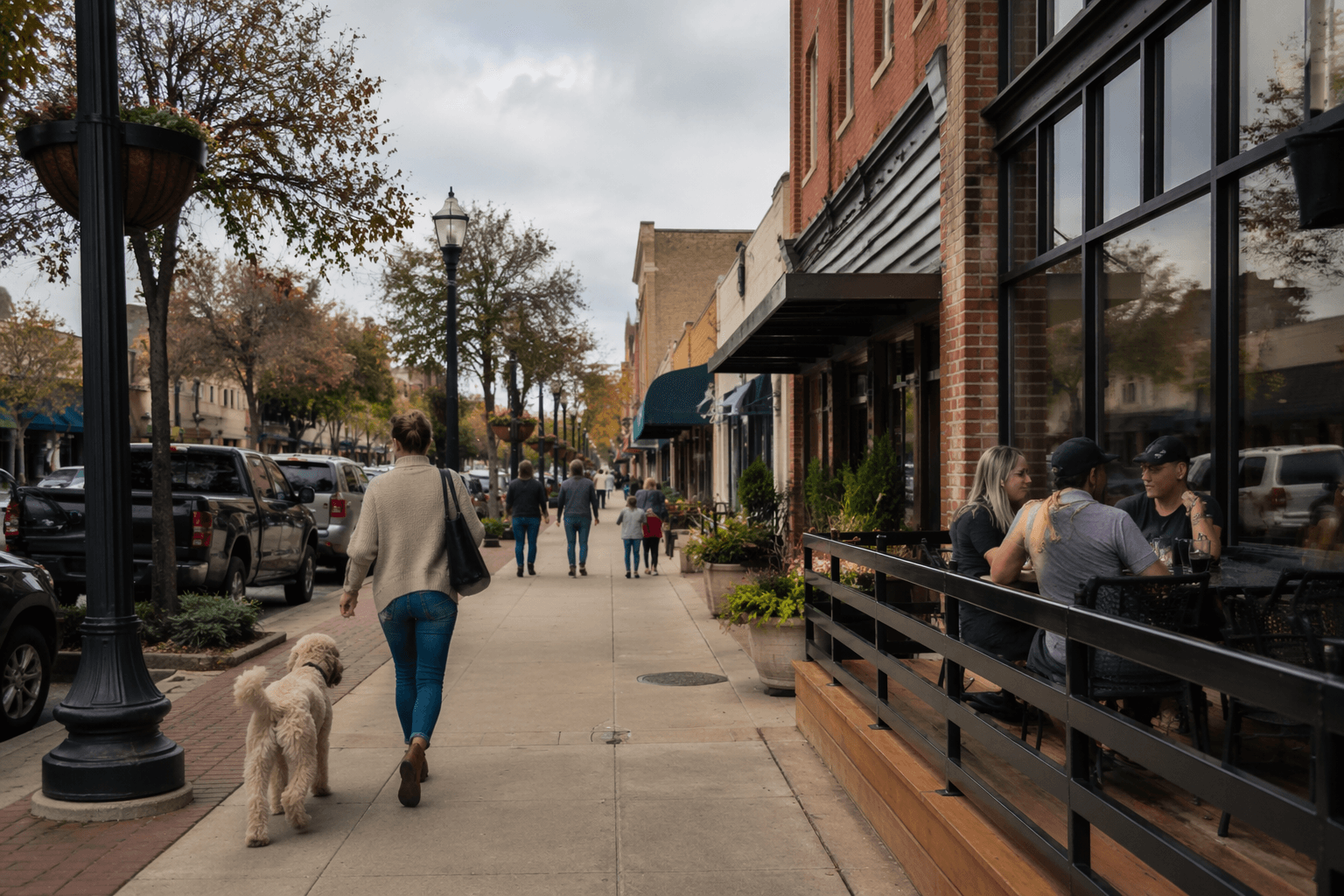
Frisco Projected to Hit Full Residential Buildout Within 10 Years
Frisco has only 16% of its land left undeveloped, and the city's top economic development official says full residential buildout could arrive within a decade.

Frisco is running out of room to grow. With only 16% of its land left undeveloped, the city 30 miles north of downtown Dallas is approaching a turning point that its top economic development official says could arrive within a decade.
Jason Ford, president of the Frisco Economic Development Corp., told the Dallas Business Journal that economic tailwinds picking back up could mean the city reaches full residential buildout within 10 years. Once that threshold is crossed, Ford projects commercial development will become the dominant growth driver. He noted that higher mortgage rates and limited lot availability have slowed things down in the near term, but said Frisco has historically added about 10,000 residents a year.
U.S. Census data underscores how far the city has already come. Frisco's population grew more than 17% between 2020 and 2024, surpassing 235,000 residents. In 1990, the city's population sat at roughly 6,000.
Even as available land tightens, construction activity remains substantial. Frisco issued 1,285 single-family permits in 2025, ranking second only to Celina among area cities, a figure that reflects what local observers describe as steady but controlled growth.
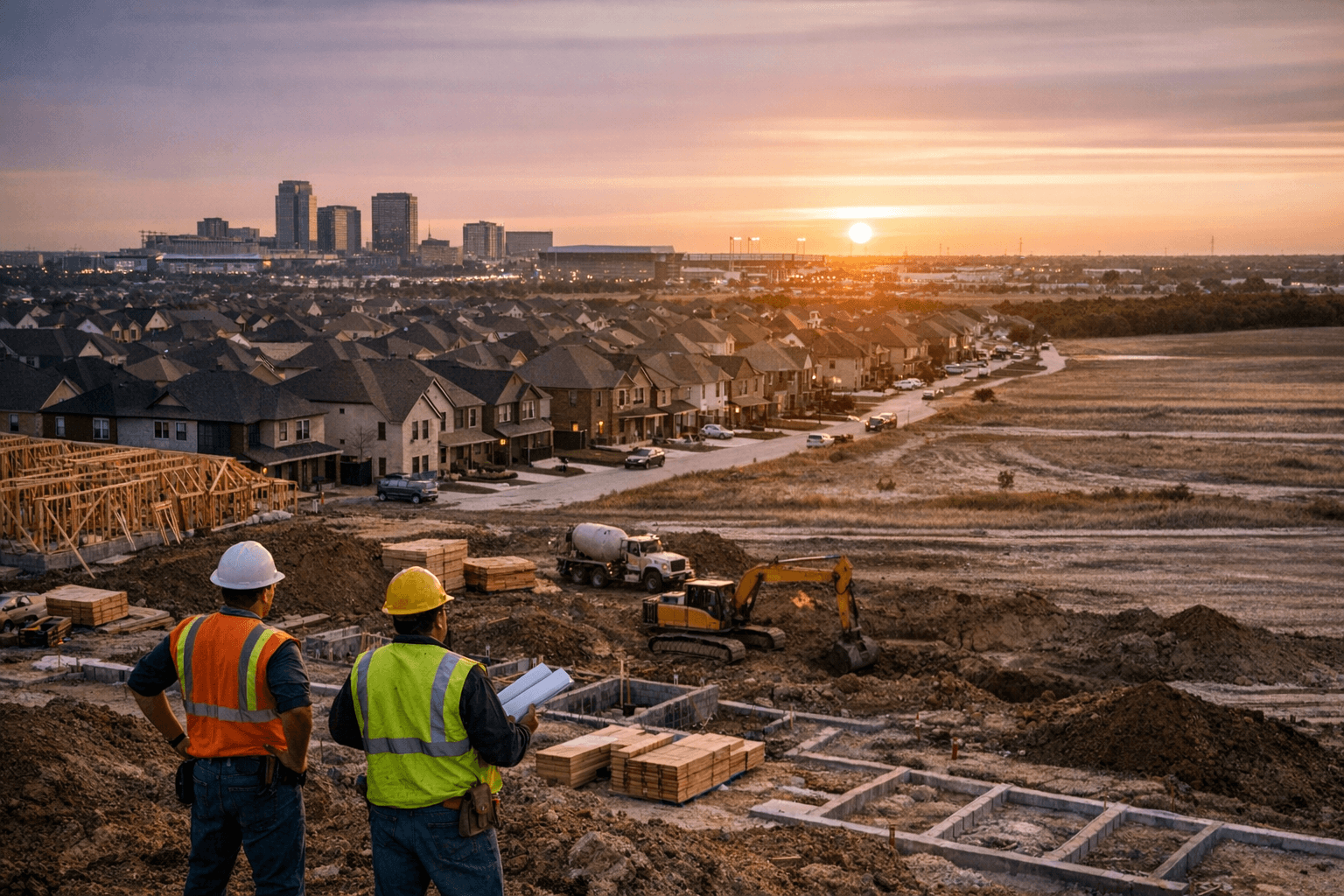
The scale of what is still being built illustrates why the runway is shrinking fast. The Fields project, a $10 billion mixed-use development spanning 2,500 acres, could add up to 14,500 residential units and 10 million square feet of office space, while reserving one-third of its land for open green areas. The project is also extending Legacy Drive north to Highway 380. Developer Fehmi Karahan has described Frisco's broader approach as "smart growth," a strategy that Mayor Jeff Cheney suggested other cities are now trying to replicate. At the annual Group One Frisco Forecast, Cheney said, "Celina is retelling the Frisco story 20 years later."
The city's growth has reshaped the Dallas North Tollway corridor, where new development through Plano and Frisco has produced skylines and commercial density that resemble an urban core more than a traditional suburb. Frisco now has nine high schools, up from one in 2002, and its cultural footprint has expanded to include the PGA of America headquarters and plans for the Frisco Center for the Arts.
Frisco's trajectory sits within a broader Collin County surge: the county's population now exceeds 1.2 million and is projected to double by 2060. For Frisco itself, the next chapter appears less about adding residents than about building the commercial infrastructure to serve the ones already there.
This article was produced by Prism’s automated news system from verified source data, official records, and press releases, then run through automated quality and moderation checks before publishing. The system is built and supervised by the people who set the standards it runs under. Read our full AI policy.
Did this article answer your question?