Heard museum in McKinney offers trails, wildlife and birding across 289 acres
The Heard is McKinney’s best place to see native prairie up close, with 289 acres, 6.5 miles of trails and birdlife that still depends on it. Families, teachers and birders get a real field lesson.
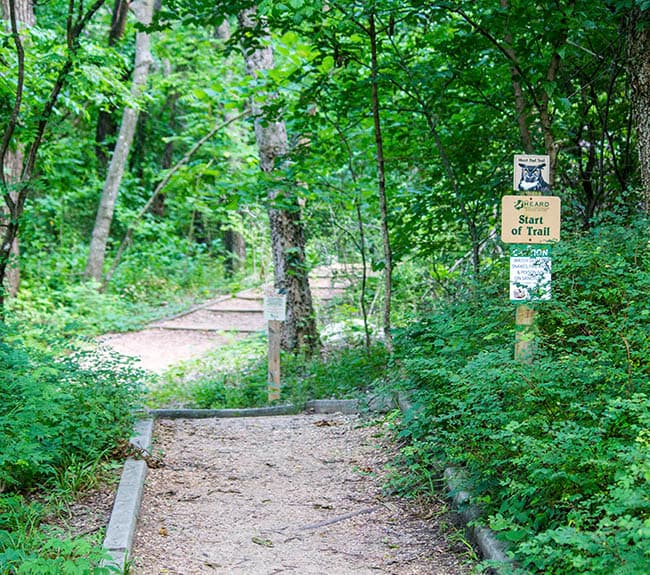
Spread across 289 acres in the Blackland Prairie Ecological Region, the Heard Natural Science Museum & Wildlife Sanctuary is one of the few places in Collin County where a child can stand in native prairie, watch birds move through wetlands and woods, and see conservation work happening on the ground. The sanctuary offers a rare mix of hiking, habitat, and outdoor learning as the county fills in with roads, rooftops and new development.
Why the Heard matters now
Collin County’s population was estimated at 1,297,179 on July 1, 2025, and McKinney’s was estimated at 236,001, up from 195,308 at the 2020 Census. A preserved place like the Heard is one of the clearest local places to see what the Blackland Prairie looked like before much of it was converted to neighborhoods and commercial sites.
Texas Parks and Wildlife identifies the Blackland Tallgrass Prairie as a distinct ecological system tied to the region’s geology and soils. It once covered more than 19,000 square miles in Texas, but very little of that landscape remains intact today. The Heard’s prairie and wetlands are part of a living record of North Texas ecology and show what restoration can still recover.
A founder story rooted in McKinney
The sanctuary opened on October 1, 1967, and the museum puts annual visitation at more than 100,000. Its creation traces back to Bessie Heard, who founded it at age 80. It was the result of one woman’s vision for the future and her commitment to the community and North Texas, a legacy that still shapes the site’s mission of education, conservation, and preservation.
It was never meant to be only a private nature preserve. It was designed as a place where McKinney residents, school groups, and visitors could learn from the landscape itself.
What the 289 acres actually hold
Visitors can explore more than 6.5 miles of self-guided or interpreted nature trails through five distinct habitats: Blackland prairie, wetlands, bottomland forest, upland forest, and the White Rock escarpment. Those zones create different experiences on the same property, which is why the Heard works for trail walking, birding, family outings, and habitat study all at once.
The Heard manages roughly 60 combined acres of Blackland Prairie restoration sites, and it is also working to return 65 acres of grassland to native plant vegetation. The sanctuary’s 50-acre wetlands complex, created in 1990, helps slow floodwater, filter runoff, and improve habitat quality.
Best trail choices for a first visit
The trail system is one of the Heard’s most practical strengths because each route highlights something different.
- Hoot Owl shows upland and bottomland terrain.
- Wood Duck leads to wetlands boardwalk views.
- Bluestem runs through prairie.
- Sycamore offers shade.
- Laughlin Loop gives hikers a hilly mix.
A short prairie walk may be enough for young children, while older students or birders can spend longer moving through multiple habitats. The trails are not wheelchair or stroller accessible except for jogging strollers, which is important for parents and grandparents to know before deciding which outing will work best.
Why birders keep coming back
More than 220 bird species have been observed there, and 61 nesting species have been documented. The sanctuary has been an Important Bird Area since 2000.
The wetlands, prairie, and wooded edges create different wildlife-viewing zones, so a visitor can see very different activity within a single trip. The Heard gives local birders a place to observe species tied to native grassland, water, and forest edge without leaving McKinney.
A real outdoor classroom for local families and schools
The Heard’s education programs are broad enough to serve many kinds of learners. They include guided nature trails, live animal presentations, preschool programming, homeschool science classes, summer camps, adult and teacher workshops, scouting programs, and merit-badge classes. Field trips can combine animal presentations, guided trails, and field studies, while homeschool students can move through classroom activities, outdoor field investigations, laboratory science, small-group activities, and take-home study packets.
Children do not just hear about habitats here. They see prairie plants, wetlands, and forest edges in a working conservation site. For teachers, it is a local way to connect biology and ecology to actual land in Collin County.
Native plants, restoration, and a larger local lesson
The Heard’s native-plant garden demonstrates how native species can be used in an urban setting. Some of the trees and shrubs there were donated by the late Benny Simpson, a native plant researcher at the Texas A&M Research Center in Dallas.
This article was produced by Prism’s automated news system from verified source data, official records, and press releases, then run through automated quality and moderation checks before publishing. The system is built and supervised by the people who set the standards it runs under. Read our full AI policy.
Did this article answer your question?