Heritage Farmstead Museum preserves Collin County’s pre-suburban past
Heritage Farmstead Museum turns a 1891 Plano farmstead into a hands-on window on Collin County’s rural past, with 15 historic buildings, livestock, and programs for families and schools.

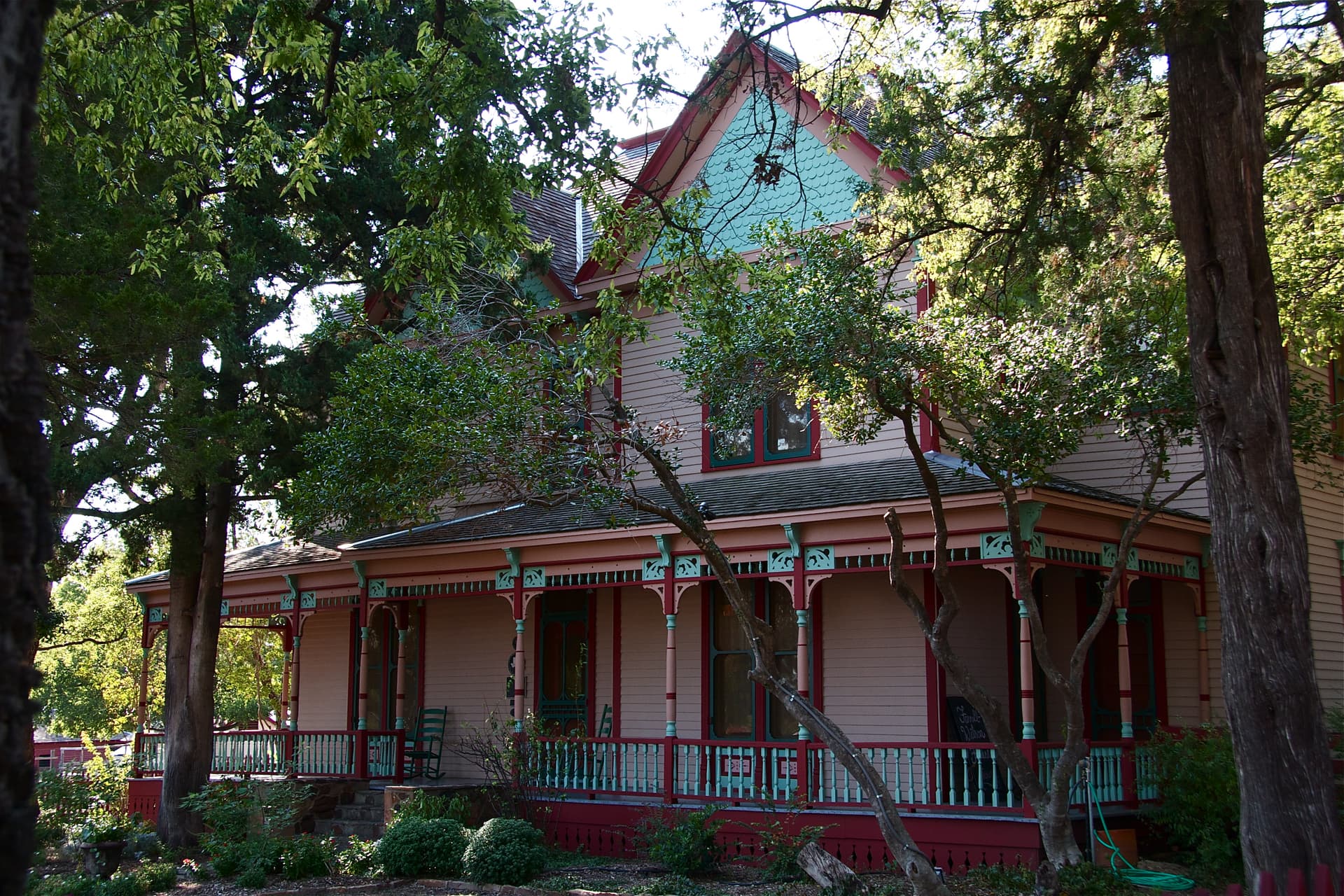
Tucked off West 15th Street in Plano, Heritage Farmstead Museum keeps a piece of Collin County that suburban growth could have erased. The 1891 farmstead preserves a Victorian home, barns, outbuildings, livestock, and more than 10,000 objects and archival materials tied to Blackland Prairie life. For families, teachers, and anyone trying to understand how Plano changed, the site is a working reminder that the county’s present-day sprawl sits on top of an agricultural past.
A farmstead that outlasted suburban Plano
Heritage Farmstead Museum interprets Blackland Prairie life in North Texas from 1891 to 1939, a period that brackets the moment when Plano was still a small farming town and the decades before Collin County became one of the fastest-growing parts of Texas. The Texas State Historical Association says the museum occupies a former sheep ranch and is the only remaining evidence that Plano was once a small rural farming community. That makes the site more than a preserved house; it is physical proof of a way of life that shaped the county before highways, master-planned neighborhoods, and retail corridors redrew the map.
The timing matters. Plano was incorporated in 1873, its public school system was organized in 1891, and by 1890 the town had about 1,200 residents. The farmstead was built in 1891, when the city was still far from the suburban hub it would later become. In that sense, the museum does not sit outside local history. It sits at the hinge point between the county’s farming era and the development era that followed.
The property’s family history is tied to the Farrell-Wilson name, and secondary historical references identify the house as the Ammie Wilson House or Farrell-Wilson Farmstead. Names linked to the site, including Mary Alice Farrell, Hunter Farrell, Ammie Wilson, Dr. Henry Dye, David Minor, and Ron Tyler, help trace how local memory has been carried forward alongside the buildings themselves. The result is a site that reads like a family archive you can walk through.

What is preserved on the grounds
The museum describes the site as a 4-acre historic farmstead with 15 historic buildings, including the restored 1891 Wilson House and 1895 Pole Barn. Its collections and exhibits page says the current exhibition offers a comprehensive overview of Blackland Prairie farm culture and history from about 1890 to 1936, while the museum’s broader interpretive frame runs from 1891 to 1939. Those dates show how carefully the institution has anchored the experience in a specific era rather than a vague sense of old-fashioned life.
That physical depth is part of what makes the museum unusually rich. More than 10,000 objects and archival materials give context to the rooms, outbuildings, and farm landscape, so visitors are not just looking at preserved structures. They are seeing the tools, domestic items, and documents that help explain how North Texas families worked, ate, traveled, and adapted to changing times.
The museum also carries institutional recognition that underscores its significance. It identifies itself as an American Alliance of Museums accredited institution, and the property has a State of Texas historical marker, Plano Landmark Association designation, and a listing in the National Register of Historic Places. Those designations do not replace the experience on the ground, but they help explain why the site is treated as a serious cultural resource, not just a nostalgic display.
What families and schools can do there now
Heritage Farmstead Museum is active, not static, and that is what makes it useful for local readers looking for something concrete to do. Regular public hours are Thursday through Saturday from 10 a.m. to 2 p.m., which makes the site accessible for weekend outings and short visits. The farm grounds are ADA-compliant, with decomposed granite walkways that improve access across the property.
Little Farmer Fridays are designed for preschoolers ages 2 to 5 and include a story, a craft, a livestock visit, and a wagon ride. The museum says the program runs as a two-hour come-and-go experience, which gives parents a manageable window for younger children and makes the visit feel less like a lecture than a morning outdoors with a purpose. That format also suits grandparents, caregivers, and mixed-age family groups looking for something local and low-pressure.
School tours run in the spring and fall, which puts the farmstead directly into the calendar for teachers planning units on settlement, agriculture, and community change. Because the experience is built around historic buildings and living-history interpretation, students can connect textbook lessons to a place where they can see barns, outbuildings, livestock, and the restored home in one setting. Summer camps extend that educational role beyond the school year and keep the museum woven into family routines rather than confined to field-trip season.

Why the museum matters in a fast-growing county
Collin County’s growth has made preserved rural places rarer, not less relevant. Heritage Farmstead Museum shows what gets lost when farmland disappears: the everyday skills, land use, and labor patterns that once defined life in Plano and across the Blackland Prairie. It also gives the county a place where children can encounter that history in motion, through animals, wagon rides, and guided tours rather than through labels on a wall.
That matters for community memory and for access. A site with ADA-compliant paths, family programming, and school tours is not only preserving buildings from 1891. It is keeping a public space usable for the people who live in the county now, while explaining the county that came before. In a place where development often moves faster than memory, Heritage Farmstead Museum remains one of the clearest ways to see Collin County’s pre-suburban past still standing.
This article was produced by Prism’s automated news system from verified source data, official records, and press releases, then run through automated quality and moderation checks before publishing. The system is built and supervised by the people who set the standards it runs under. Read our full AI policy.
Did this article answer your question?