Richardson joins Collin County inmates celebrating rehabilitation certificates, second chances
At the McKinney jail, inmates received rehabilitation certificates as Keresa Richardson watched, putting Collin County’s reentry push under a public-safety spotlight.
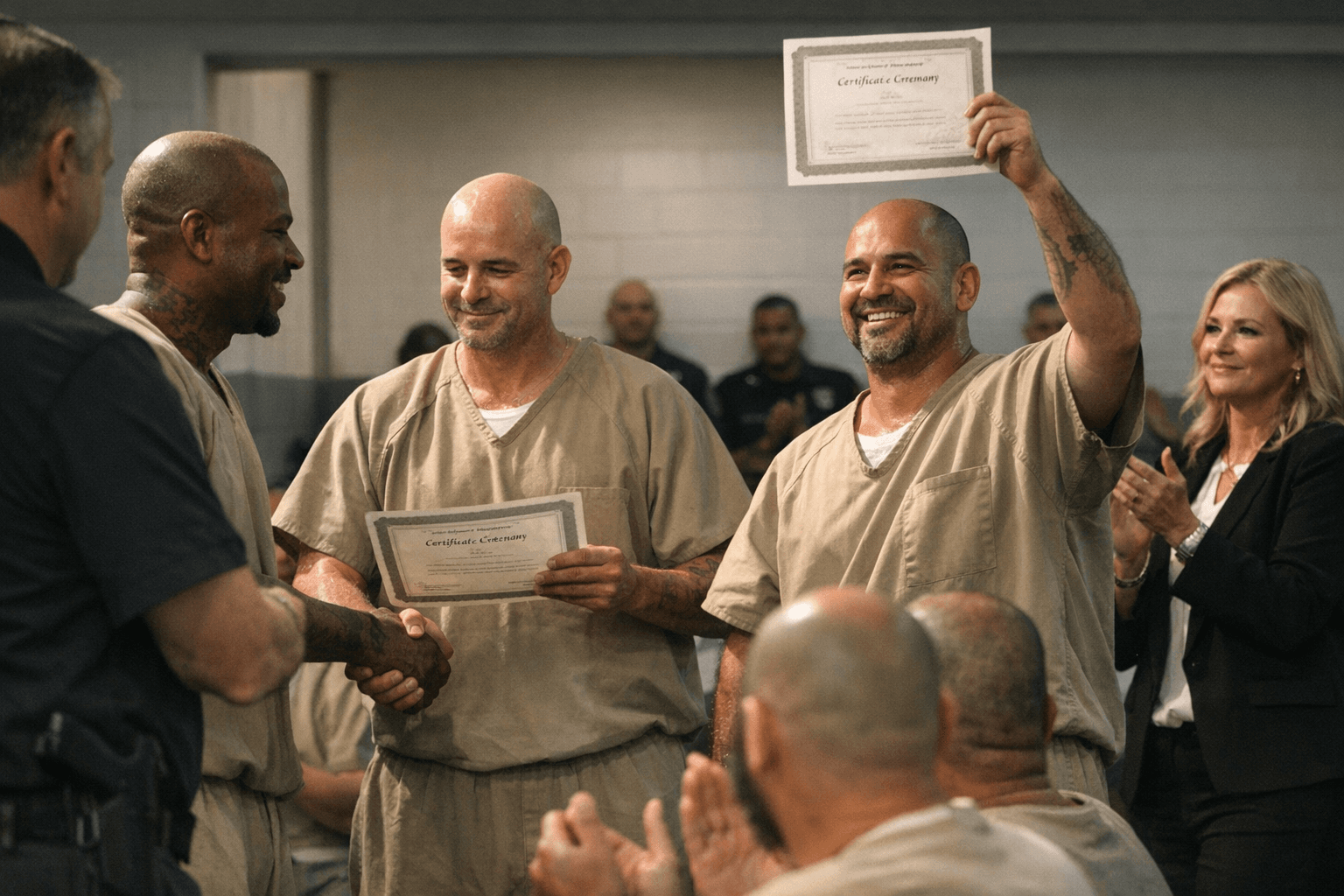
At the Collin County Detention Facility in McKinney, inmates marked a milestone that jail officials say is meant to matter after release: rehabilitation certificates tied to programs designed to cut repeat jail time. Rep. Keresa Richardson, who represents Texas House District 61, joined the ceremony and applauded the county’s second-chance effort at 4300 Community Ave.
The certificates were more than a ceremony item. Collin County says its inmate programming is voluntary and free, with offerings built around personal development, education, therapeutic services and faith-based support. Officials say the goal is to reduce recidivism by helping participants address the root causes of criminal behavior and leave with a better foundation for reentry into society.
That programming now stretches across a wide catalog inside the direct-supervision jail, which must meet Texas Commission on Jail Standards requirements. The list includes AA, Celebrate Recovery, Breaking Free, Overcomers, Moral Reconation Therapy, S.C.O.R.E., GED classes, EDOVO and other education and rehabilitation options. County officials also say the jail works with chaplains, volunteers, community organizations and local education providers to deliver the services.
The county’s shift toward rehabilitation gained momentum when Sheriff Jim Skinner announced IGNITE in May 2023 at the detention center. IGNITE stands for Inmate Growth Naturally and Intentionally Through Education. Local reporting described Collin County as the first jail in Texas to join the model, which was created in Genesee County, Michigan, in 2020 by Sheriff Chris Swanson.
Skinner has said about 90% of people in the jail will eventually return to the community, a reality that makes the certificates and coursework part of a public-safety strategy, not just a morale boost. A 2024 profile of the program said the detention center had already held a second graduation for male and female inmates. More recent county reporting said about 94% of current inmates had been incarcerated before, underscoring why officials are focusing on education and job training.
Collin College has become a major partner in that effort. In June 2025, the college said it had funded life-skills courses for more than 100 inmates through an Adult Education and Literacy grant from the Texas Workforce Commission. For county leaders, including the sheriff’s office and detention staff, the measure of success is not the ceremony itself but whether those certificates help people avoid another jail stay once they walk back into Collin County.
This article was produced by Prism’s automated news system from verified source data, official records, and press releases, then run through automated quality and moderation checks before publishing. The system is built and supervised by the people who set the standards it runs under. Read our full AI policy.
Did this article answer your question?