Texas Supreme Court to Weigh Mall Owner Duty in Allen Shooting Lawsuit
James Cho was 3 years old when eight people were killed at Allen Premium Outlets. Now the Texas Supreme Court will decide if the mall's owner shares legal responsibility.
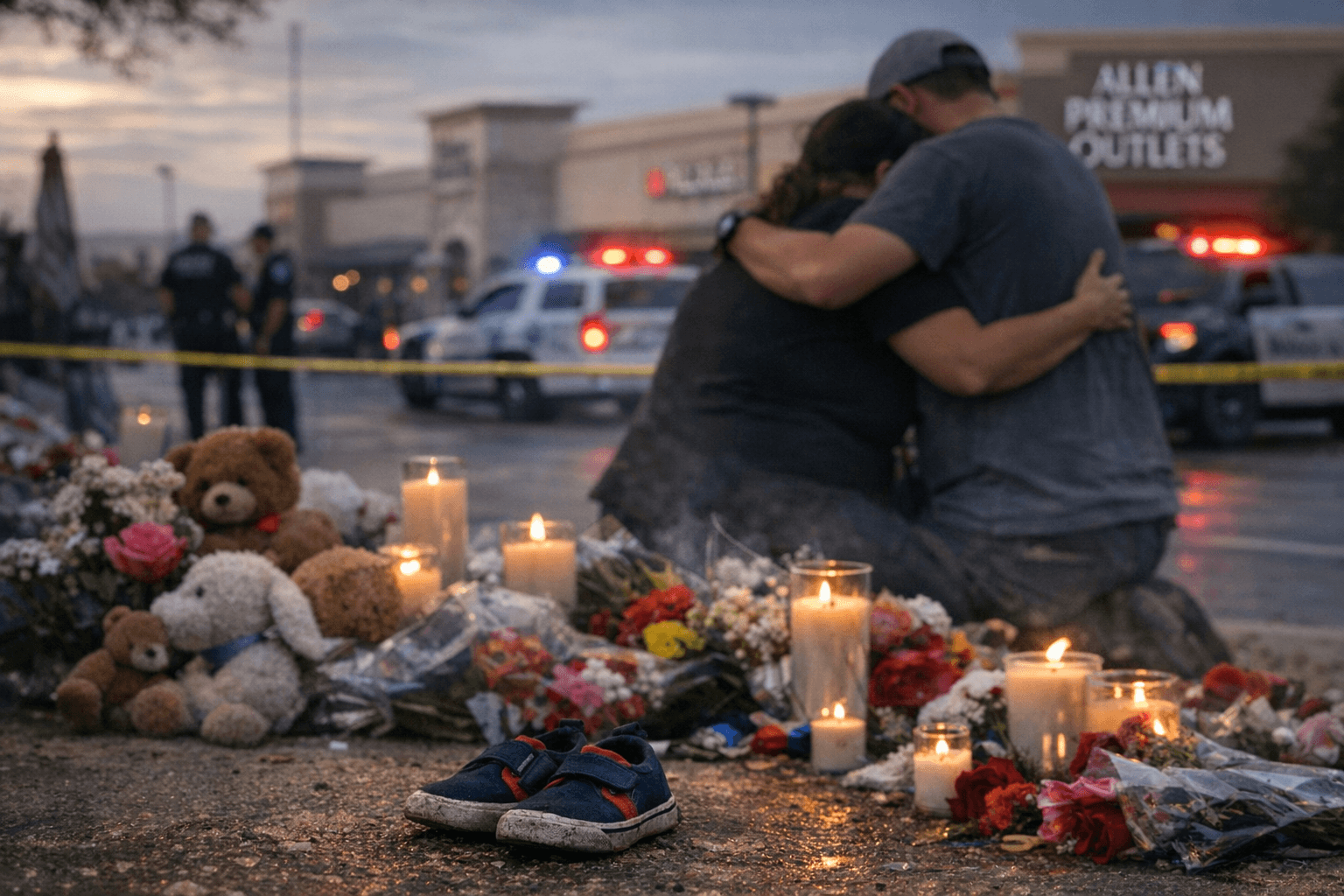
James Cho was 3 years old when Mauricio Garcia opened fire at Allen Premium Outlets on May 6, 2023, killing James, his parents Kyu and Cindy, and five other shoppers within minutes. Nearly three years later, whether the mall's owner bears any legal responsibility for that afternoon is a question the Texas Supreme Court agreed Monday to answer.
The court accepted an appeal in a civil lawsuit brought in 2024 by families of several victims against Simon Property Group, the real estate giant that owns Allen Premium Outlets, and Allied Universal Security Services, the mall's contracted security firm. Oral arguments are scheduled for September 16, 2026.
At the heart of the case is a question with significant consequences for every shopping center, stadium, and entertainment venue in Texas: does a property owner who invites the public onto its premises owe a legal duty to protect visitors from a foreseeable mass-shooter attack?
Families allege that Simon Property Group and Allied Universal failed to adequately secure the Collin County property, pointing to the fact that only one security guard was on duty when Garcia arrived armed with an AR-15-style rifle and a handgun. The lawsuit also notes the mall had logged more than 3,000 police calls in the three years before the attack and that Garcia's social media posts suggest he scouted the property weeks in advance, selecting it in part because of its inadequate security posture.
Jeffrey B. Simon, the attorney representing the families, said the high court's review will address "crucial matters of law and public safety" about whether property owners must act to prevent foreseeable mass violence on their properties.
Simon Property Group has denied responsibility, arguing it cannot be held liable for the independent criminal acts of a third-party wrongdoer and that extending premises-liability law to cover mass shootings would set an unfair and sweeping precedent. The company petitioned the Texas Supreme Court after both a Dallas County trial judge and the Fifth District Court of Appeals refused to dismiss the families' claims.
The eight people killed that day were Kyu Song Cho, 37; Shin Young "Cindy" Kang, 35; James Cho, 3; Aishwarya Thatikonda, 27, a McKinney engineer; Daniela Mendoza, 11; Sofia Mendoza, 8; Christian LaCour, 20; and Elio Cumana-Rivas, 32. Seven others were injured. Garcia, who wore a tactical vest bearing a "Right Wing Death Squad" patch, was killed by Allen police at the scene.
The court's ruling will carry implications well beyond the Allen Premium Outlets footprint. A decision recognizing a broader duty to guard against mass shootings would create new legal exposure for retail operators and entertainment venues across Texas, potentially reshaping how properties like Legacy West or Stonebriar Centre approach security staffing, surveillance, and active-shooter planning. A narrower ruling would make it significantly harder for future plaintiffs in similar situations to pursue civil remedies against property owners at all.
For the families involved, the September hearing represents the first time Texas's highest civil court will directly confront the question of accountability that has driven their case since 2024. The answer will arrive in a state that has experienced some of the deadliest mass shootings in American history, and in a county that is still measuring the distance between that Saturday afternoon and any semblance of resolution.
This article was produced by Prism’s automated news system from verified source data, official records, and press releases, then run through automated quality and moderation checks before publishing. The system is built and supervised by the people who set the standards it runs under. Read our full AI policy.
Did this article answer your question?