Baylor researcher shows 3D printing helps blind students learn science
At Gatesville Public Library, Baylor’s Bryan Shaw showed how 3D-printed protein models could help blind students in Coryell County learn science by touch.
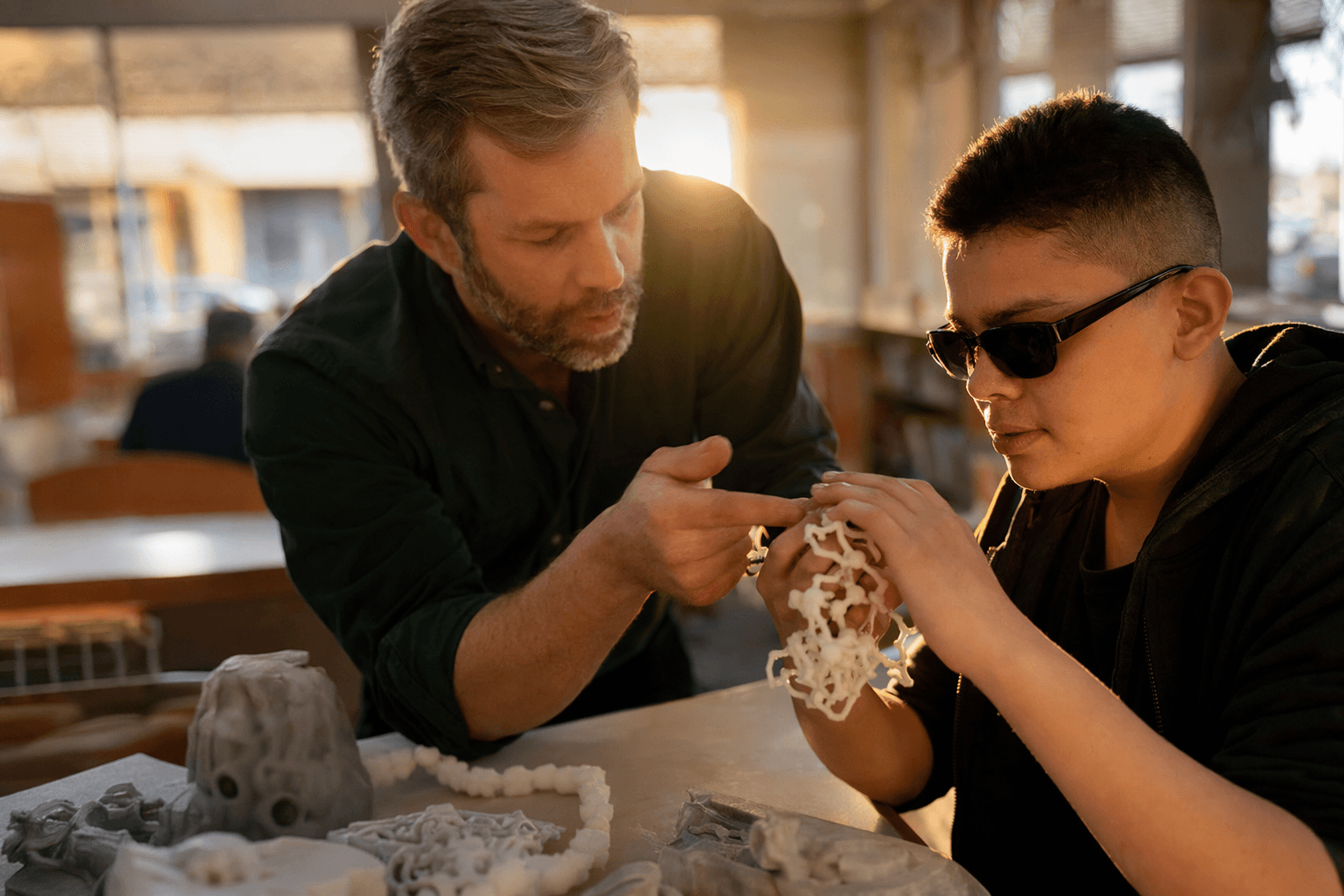
Vision Connect’s April 15 meeting at the Gatesville Public Library put a practical question in front of Coryell County families and educators: how do blind students learn science when so much of it is built around images on a screen? Baylor University professor Bryan Shaw told the group that 3D printing can turn protein structures into objects students can feel, a change that could matter for local schools and visually impaired residents in Gatesville.
Shaw’s lab, The Shaw Research Group, uses rapid prototyping to create atomically accurate protein models from X-ray crystal structures. Baylor says the models include proteins such as hemoglobin and calmodulin, and that the tactile versions let students experience protein structure and allostery through touch instead of relying only on visual diagrams.
The outreach is aimed at children and young adults who are visually impaired, and Baylor says the models are already being used in school districts throughout Central Texas to teach blind high school students. The university has said the work has also drawn national attention, including coverage on NBC News. For Coryell County teachers and volunteers, the key issue is whether that same approach can reach Gatesville classrooms, science clubs, and students who otherwise may never get hands-on access to advanced STEM concepts.
That potential extends beyond the classroom. Shaw also described assistive technologies that could help visually impaired people function in laboratory settings, widening the impact from school lessons to job training and scientific careers. Baylor has reported that the broader problem is large, noting that 216 million people experience moderate to severe visual impairment. In that context, the work is not just about a single presentation in Gatesville, but about building a path into science for students who have often been left out of it.
Shaw made the talk personal as well. He said he regularly speaks to groups, but thought the Gatesville audience was the best he had visited because he also learned information that could help his blind 17-year-old son with the Texas Workforce Commission. That exchange showed how a small meeting in Coryell County can send useful ideas back toward Baylor’s own families while bringing cutting-edge research closer to local people who may need it most.
For Gatesville and the rest of Coryell County, the message was clear: a 3D printer in a Baylor lab can become more than a research tool. It can become a bridge to science for blind students, one model at a time.
Know something we missed? Have a correction or additional information?
Submit a Tip