Copperas Cove ISD Trustees Approve First Bond Installment, Facilities and Daycare Partnership
Trustees approved the first bond installment, facility repairs, and an early childhood partnership, unlocking funds for school upgrades and promising lower taxpayer costs.
Copperas Cove ISD trustees approved the sale of the first installment of a voter-approved bond and signed off on multiple facility projects and an early childhood partnership, moves district leaders say will begin a design and construction phase while limiting near-term tax pressure on residents.
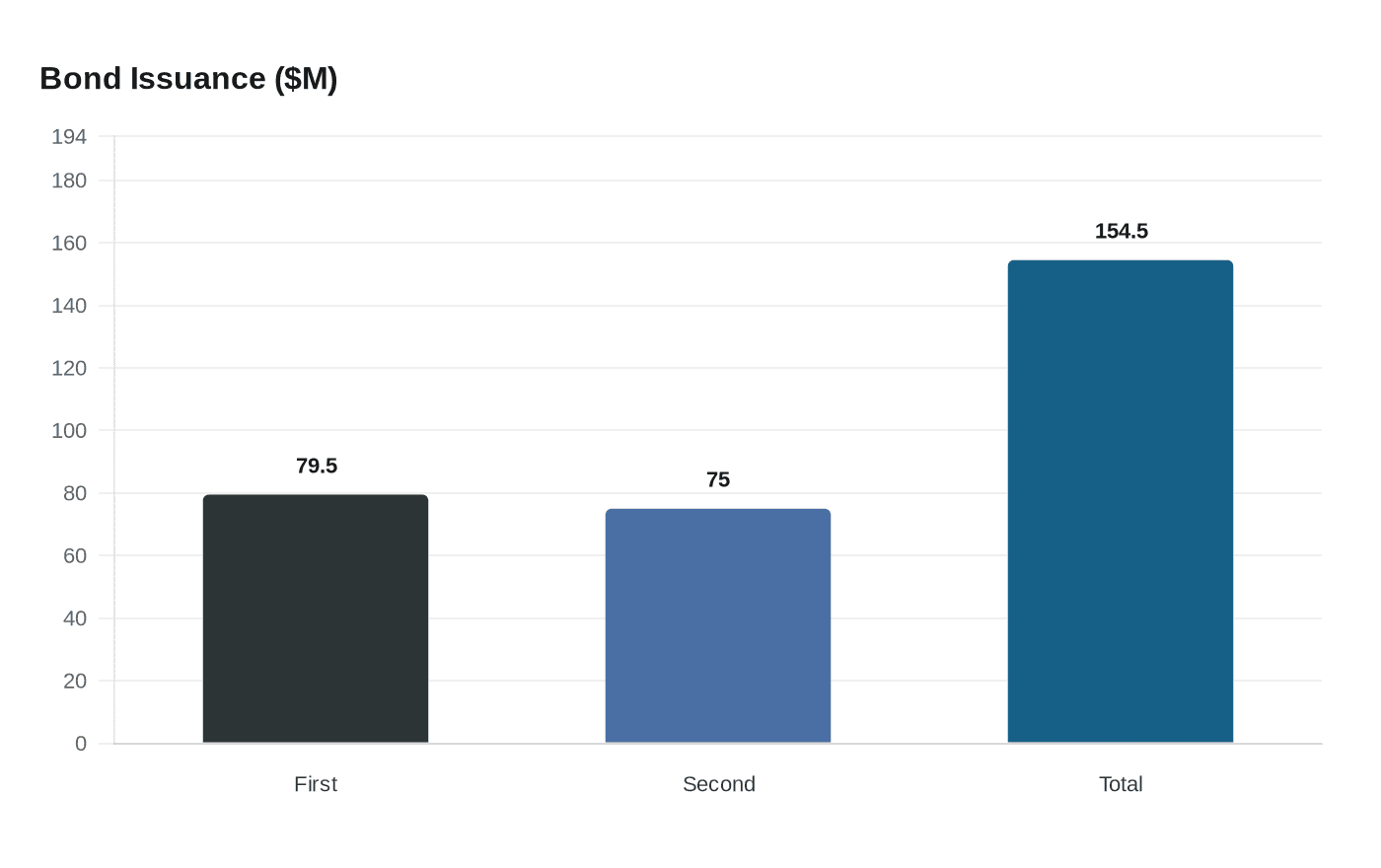
Board members voted to issue roughly $79 million in the first series of bonds, with district materials calling the sum “just more than $79.5 million” and a financing breakdown showing $67 million for Proposition A and $12.1 million for Proposition B. The Minneapolis underwriter Piper Sandler submitted the winning bid from a field of 15 proposals, producing a true interest cost of about 4.12 percent on the sale. The bonds carry a 30-year amortization and include a 10-year optional prepayment window. Officials say the lower-than-expected rate could save the district about $25 million over the life of the bonds and that the district will begin making debt service payments in August 2026, with the first payment listed as Aug. 15 on the district schedule.
“Now that we’ve sold the first series of bonds, our district can begin the design phase of ensuring a modern learning environment for every student. This lower interest rate on the first series will help us continue to serve as a good steward of our community’s taxpayer dollars, which we promised to do throughout this process and will continue to do moving forward,” Superintendent Dr. Brent Hawkins said, framing the sale as the start of capital work on campuses across the Cove ISD footprint.

Financial advisor Doug Whitt of SAMCO Capital told trustees the district will phase the tax impact, citing the plan voters debated last fall. “Of the 45 cents that we discussed with the voters, we are only asking for 30 cents of that this summer when you set your budget and your I & S tax rate. So we're going to phase this in as your construction and your bonds get phased in, and the big picture today is that we're going to start out with a tax rate less than we promised.”
Trustees also approved immediate projects outside the bond sale. They authorized a single-ply roof system for Clements/Parsons Elementary at a listed cost of $939,400 and approved resurfacing and repair of the Bulldawg Stadium track after Superintendent Hawkins presented slides showing cracks and foliage pushing through the surface and athletes testified the condition contributed to recent injuries. The board approved a Schneider Electric contract to perform an investment-grade energy audit; Hawkins said the audit “will allow us to explore ways to reduce electrical costs in our district. Energy usage typically accounts for the second-highest expense in the district’s budget. By looking to make our facilities more energy-efficient, it will allow us to stretch every dollar of revenue to provide the greatest opportunities for our students.” Trustees purchased a Kubota mini-excavator for $62,135.20 and celebrated completion of new turf on the high school baseball and softball fields, with board members scheduled to throw first pitches for baseball on Feb. 17 and softball on Feb. 21.
The board unanimously approved an early childhood education agreement to partner with nearby daycare centers to expand early learning options; district officials said more details will be communicated to the community later.
District communications list the voter-approved bond total as $154.5 million, while some local reporting referenced $165 million; the district plans a second issuance of roughly $75 million within the next 12 to 18 months to complete the program. For residents, that means design and construction work will move forward and the district expects lower net interest costs than projected, even as officials phase in the tax rate increase discussed with voters. The next steps include campus design work, the Schneider Electric energy audit, and the follow-up bond issuance that will fund the remainder of the approved projects.
This article was produced by Prism’s automated news system from verified source data, official records, and press releases, then run through automated quality and moderation checks before publishing. The system is built and supervised by the people who set the standards it runs under. Read our full AI policy.
Did this article answer your question?