Copperas Cove students build Solar Bugs in hands-on solar lesson
Fairview/Jewell Elementary students built Solar Bugs with Schneider Electric, turning a solar lesson into a hands-on STEM experience with real-world value.
A small craft project with a larger lesson
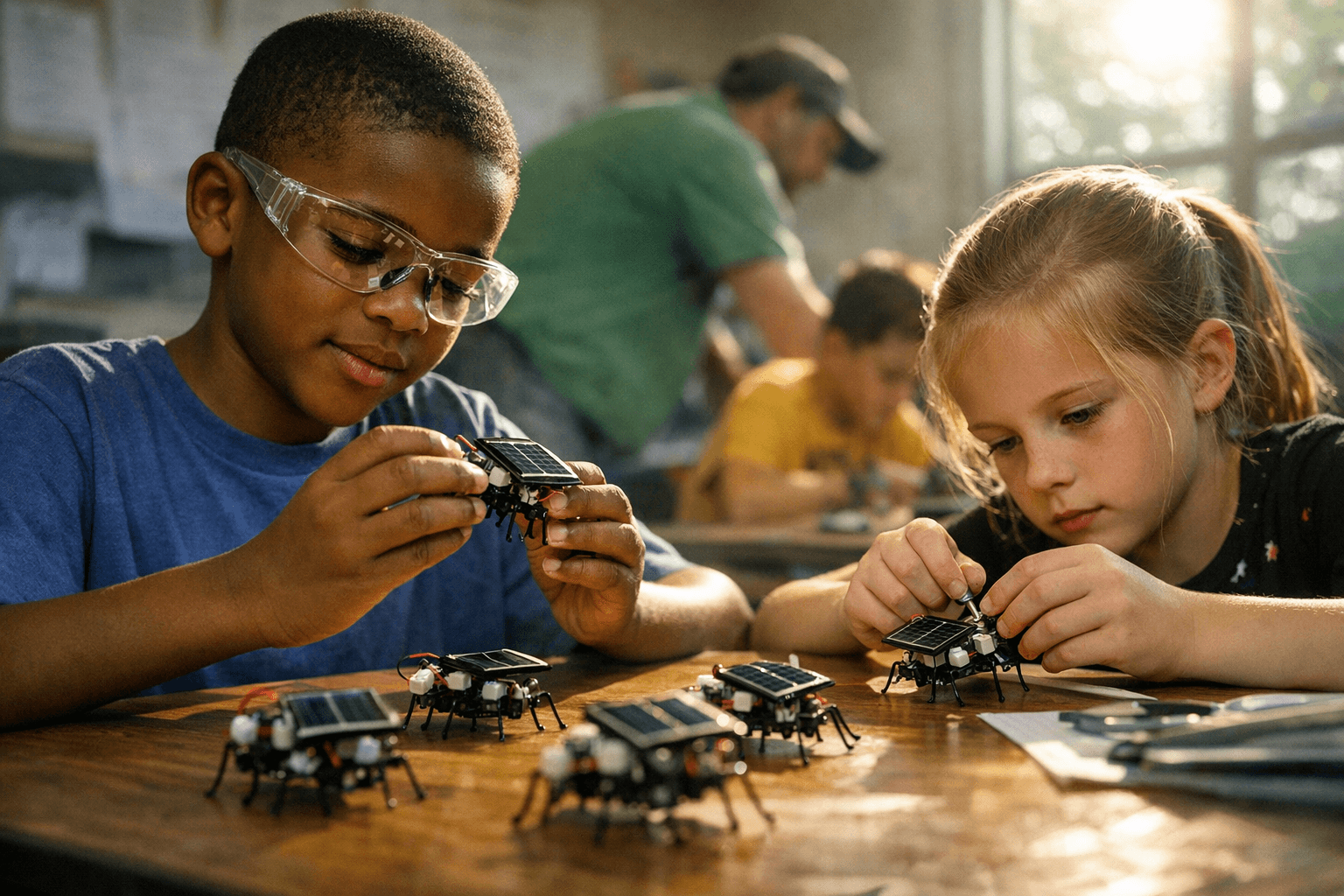
Fairview/Jewell Elementary students turned a solar-energy lesson into something they could build, watch, and remember. Copperas Cove ISD partnered with Schneider Electric for an arts-and-crafts activity that helped elementary students make their own Solar Bugs, giving the topic a hands-on shape instead of treating it like a lecture.
That matters because the district was not just showing children how solar power works. It was introducing them to an idea they could physically test, which is often how younger students begin to understand science. When a lesson is playful, age-appropriate, and built around movement, it can make an abstract topic like energy feel concrete enough to stick.
How the Solar Bugs lesson worked
The district said the activity was designed to teach solar energy in an engaging way, and the format reflected that goal. Students at Fairview/Jewell Elementary School used an arts-and-crafts approach to build Solar Bugs, then watched those creations come to life through solar power.
The lesson took place on Monday, April 13, 2026, and CCISD highlighted it in a live-feed post and a short video. The timing matters because it shows the district using short, visible, student-centered activities to reinforce bigger academic goals. In practice, children are more likely to remember a lesson when they can touch it, build it, and see it move.
That is especially true in elementary school, where first impressions about science can shape later confidence in STEM subjects. A project like this does more than fill an afternoon. It gives students an early, low-pressure entry point into engineering thinking, energy concepts, and problem-solving.
Why the Schneider Electric partnership stands out
The Schneider Electric partnership is one of the most important parts of the story. CCISD was not simply running a classroom craft on its own. It brought in outside expertise, which can help schools connect lessons to real industries and real careers.
For local students, that kind of partnership sends a practical message: solar energy is not just a chapter in a textbook. It is part of a larger economy that includes energy management, sustainability, and technical work that people actually do for a living. Even at the elementary level, that exposure can help students start linking classroom learning to future pathways in science, technology, and engineering.
This is where the public value goes beyond the craft itself. When children see a company like Schneider Electric working with their school, they are getting an early look at how businesses and schools can solve problems together. That kind of collaboration helps make STEM feel less remote and more connected to the world around them.
Part of a broader sustainability push in Copperas Cove ISD
The Solar Bugs lesson also fits into a wider pattern in Copperas Cove ISD. In late March 2026, the district said four campuses and a staff member at a fifth were recognized for work with the Youth Environmental Ambassadors! program. Fairview/Jewell Elementary has also appeared in prior sustainability recognition from the Cen-Tex Sustainable Communities Partnership for recycling and other sustainability measures.
That background matters because it shows the solar lesson was not a one-off feel-good moment. It was part of a district culture that has been leaning into sustainability, environmental awareness, and practical problem-solving. In other words, the Solar Bugs activity sits inside a longer effort to make environmental learning visible across campuses.
CCISD’s broader profile reinforces that point. The district serves 11 campuses and reported 7,761 students in the 2024-25 school year, according to the National Center for Education Statistics. NCES also lists a student-teacher ratio of 13.26 to 1, a figure that helps explain why hands-on instruction can be valuable in classrooms where teachers are working to make lessons active and personal.
What it signals for families in Coryell County
For families in Copperas Cove and across Coryell County, the lesson offers a clear signal about what CCISD wants school to look like. The district has been emphasizing more than test preparation. It is also trying to show that students can explore, create, and learn from community partners in ways that feel relevant to modern life.
That message may resonate especially strongly in a district that says it is a 100% Purple Star district and has reported that about 47% of its students are military-connected. In the Fort Cavazos area, schools often serve families who value stability, practical preparation, and opportunities that connect directly to future jobs. A lesson about solar energy fits neatly into that environment because it combines science, hands-on learning, and awareness of the kinds of technical fields that help drive the regional economy.
CCISD has also said its enrollment page highlights 45 career certifications, dual-credit opportunities, a focused early literacy effort, and award-winning academic programs. Put alongside the Solar Bugs activity, those offerings show a district trying to build a pipeline from early curiosity to later career readiness. Students do not suddenly become engineers, technicians, or problem-solvers in high school. They start by learning that science can be something they can touch, test, and understand.
Why this small lesson has lasting value
The Solar Bugs activity may have been short, but the lesson behind it reaches much further. It gave elementary students a memorable introduction to solar energy, reinforced the importance of sustainability, and showed how a local district can work with an industry partner to enrich classroom learning.
That combination of creativity, relevance, and community partnership is what gives the story its staying power. In Copperas Cove ISD, a small solar craft became a practical lesson in how energy works, how schools prepare students, and why early STEM exposure can matter long before those children are choosing classes or careers.
This article was produced by Prism’s automated news system from verified source data, official records, and press releases, then run through automated quality and moderation checks before publishing. The system is built and supervised by the people who set the standards it runs under. Read our full AI policy.
Did this article answer your question?