Coryell County commissioners table data center ban, seek state review
Coryell County commissioners put a proposed data-center ban on hold, pressing Austin for clearer rules before they act. The fight now turns to water, power and land use.
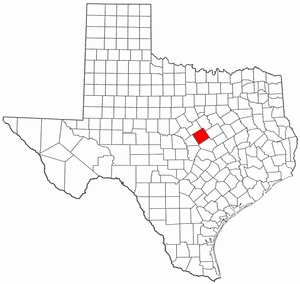
Coryell County commissioners tabled a resolution Tuesday that would have banned data centers across the county, choosing to slow the process and push state leaders to re-examine the rules before taking a harder line on a fast-growing type of development.
The move leaves the county in a holding pattern on an issue with direct stakes for landowners, utilities and nearby communities. County documents cited concerns over environmental impact and utility usage, and the debate centered on whether data centers would strengthen the local tax base or place too much strain on electricity supply, water demand, noise levels and rural infrastructure.
Officials made clear the court was not rejecting the idea outright. Instead, commissioners said they wanted more time to refine the wording of any resolution and better understand how much authority Coryell County actually has if a project comes forward outside city limits. One commissioner described the proposal as a call to action aimed at state lawmakers, not a law or statute.
That distinction matters for property owners and developers looking at Coryell County, where the county’s leverage may be limited even as the pressure to respond grows. The resolution would not have been a total ban in the absolute sense, but a pause on county-level approval while officials pursued more research and state review. Christine Littlefield, a local resident, said she supported the commissioners’ decision to keep looking into the issue.
Coryell County is not acting in a vacuum. Johnson County commissioners unanimously approved a non-binding resolution calling for responsible data-center development, and Johnson County Judge Christopher Boedeker said the county does not believe it has the power to stop a proposed data center plan. Wise County went further, formally opposing open-loop evaporative cooling systems or other high-volume potable-water technologies in water-constrained regions unless sustainable supply and mitigation safeguards are shown.
Statewide, the pressure is intensifying quickly. On April 1, 2026, the Electric Reliability Council of Texas said it was tracking about 410 gigawatts of large-load interconnection requests, roughly 87% of them data centers. On April 15, ERCOT projected demand in the region could reach about 367,790 megawatts by 2032, and the grid operator said it is moving toward a batch-study framework for large-load interconnections.
The growth is already visible in Central Texas. Oppidan filed plans for a 5-megawatt data center in Temple in 2025, and Rowan Digital Infrastructure has proposed a much larger hyperscale campus on about 700 acres in Temple. With projects also active or proposed in Temple, Killeen, Waco and Hillsboro, Coryell County’s pause signals that local officials want to define their limits before the next wave of development lands on their doorstep.
This article was produced by Prism’s automated news system from verified source data, official records, and press releases, then run through automated quality and moderation checks before publishing. The system is built and supervised by the people who set the standards it runs under. Read our full AI policy.
Did this article answer your question?