Gatesville school became Texas’ first juvenile training institution
Coryell County’s Gatesville school put Texas on the road to separating youth from adult prisoners, then became the site where court-ordered reform reshaped juvenile justice.

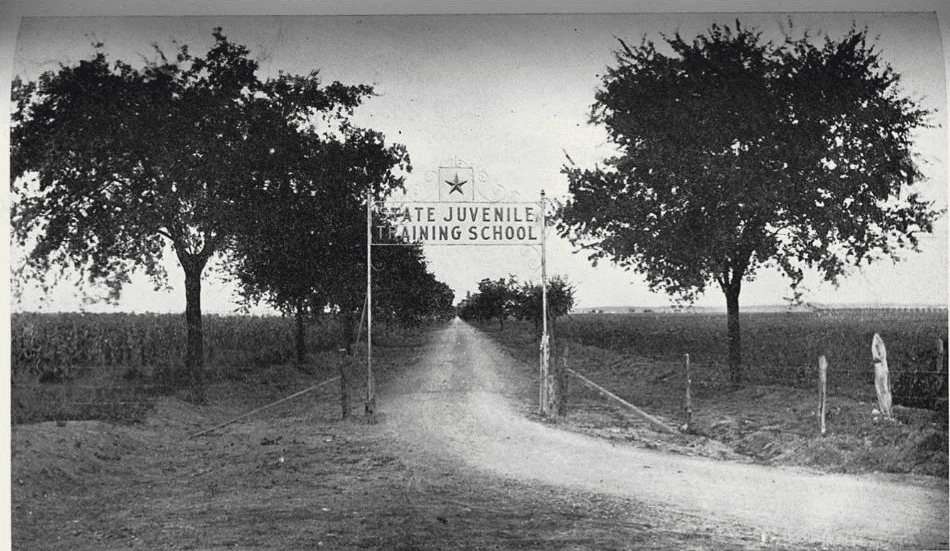
Three miles northeast of Gatesville, Coryell County became the proving ground for Texas’ first juvenile training and rehabilitation institution. When the school opened in January 1889, it housed 68 boys who had previously been incarcerated with adult felons, and the state was testing a new idea with consequences that reached far beyond this county seat.
How Gatesville became Texas’ first juvenile justice experiment

Texas had been circling the problem for decades before Gatesville opened. The Legislature had acknowledged the need for separate facilities for child offenders as early as 1859, but the decisive step came with House Bill 21 of the 20th Texas Legislature in 1887, which created the House of Correction and Reformatory. That law made Gatesville the place where Texas finally turned policy into a working institution.
Ben E. McCulloch served as the first superintendent. The school’s earliest purpose was blunt: keep boys away from adult felons and build a separate correctional track for them. In that sense, Coryell County was not just hosting a state campus. It was where Texas began to redraw the line between punishment and juvenile rehabilitation.
Changing names, changing ideas
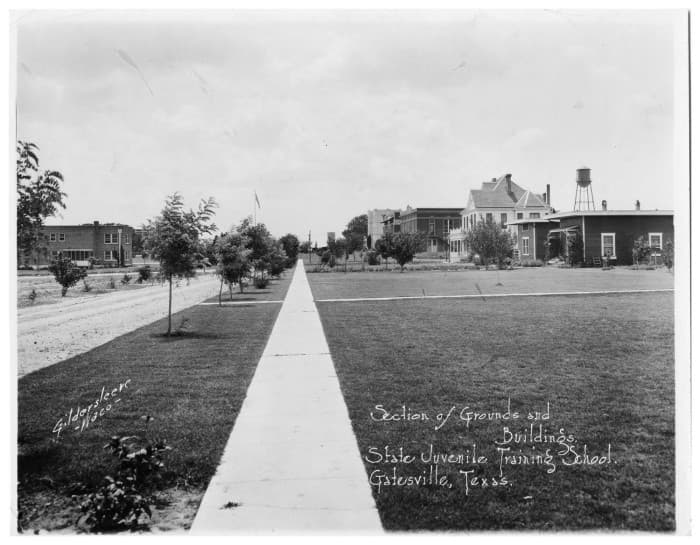
The institution’s name changes track the state’s shifting view of juvenile justice. In 1909 it became the State Institution for the Training of Juveniles, in 1913 it was renamed the State Juvenile Training School, and in 1939 it took the title Gatesville State School for Boys. Each new name reflected a different promise about what the state thought it was doing with children in custody.
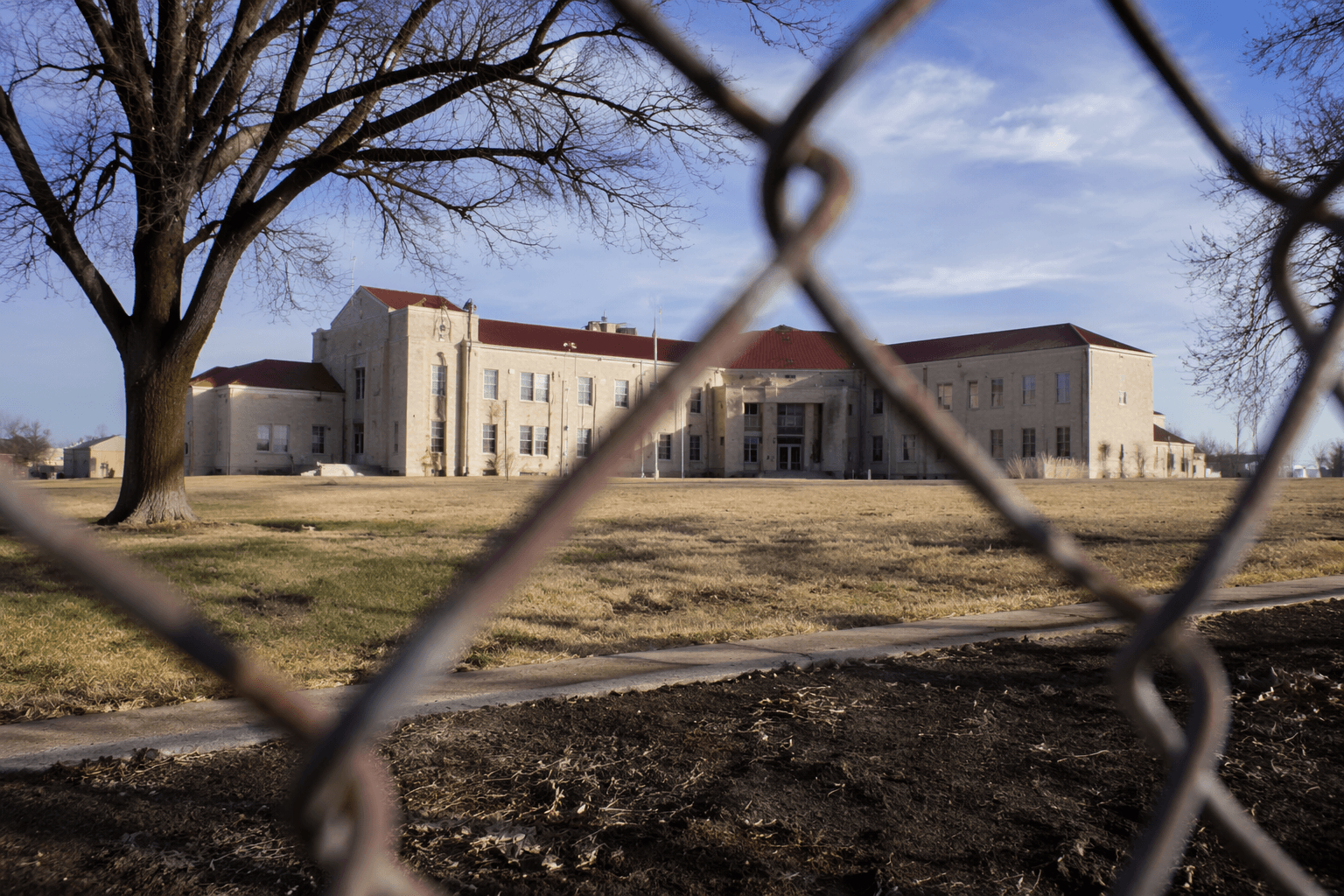
By 1940, the school held 767 males who were under 17 when committed. Residents attended academic and vocational classes, but they also worked the land, farming 900 state acres and 2,700 leased acres. That mix of schooling, labor, and confinement defined the model for decades: Gatesville was built as a training institution, but it functioned as a vast correctional campus with state land, inmate labor, and a growing bureaucratic footprint.
The administration also changed hands as Texas built a more formal juvenile system. The State Youth Development Council began running the school in 1949, and the campus enrolled 406 boys in 1950. In 1957, the Texas Youth Council took over, carrying the institution deeper into an era when the state was trying to professionalize youth corrections even as it kept relying on large congregate facilities.
A campus that grew into a correctional city
Gatesville did not remain a single school for long. On September 5, 1962, the state opened Mountain View School for Boys in Gatesville as a maximum-security facility for chronic, serious offenders who had previously been held at Gatesville. That addition made the local correctional presence more layered and more visible, as the county became home to multiple state institutions serving different levels of custody.
By 1970, the Gatesville campus had expanded into five units: Hilltop, Riverside, Valley, Hackberry, and Terrace. That same year, 1,830 young male offenders were housed there. For Coryell County, the scale mattered. This was no small local facility tucked out of sight, but one of the largest juvenile correctional concentrations in Texas.
The federal case Morales v. Turman captured the same reality from inside the system. At trial, the Gatesville school population stood at 1,149, and the case identified seven subschools associated with the campus: Valley, Hackberry, Riverside, Terrace, Hilltop, Live Oak, and Sycamore. The litigation targeted both the adjudicatory and post-adjudicatory stages of Texas juvenile justice, a reminder that the problem was not only where boys were sent, but what happened to them after the state took control.
The lawsuit that forced Texas to rethink juvenile custody
Morales became the turning point because it exposed how much discretion and how little accountability the old system allowed. The Supreme Court’s warning, quoted in the case, that a child can receive “the worst of both worlds” when he gets neither adult protections nor meaningful child-centered care, fit the Gatesville model with uncomfortable precision. The lawsuit grew out of firsthand scrutiny of conditions on the ground, including attorneys attempting to interview boys at Gatesville in January 1971.
Federal judge William Wayne Justice issued a ruling in the case in 1974, by which time Gatesville had about 1,500 boys and more than 250 staff members. The institution’s size and the court fight surrounding it helped push Texas toward sweeping reforms in youth corrections. What had been built as a pioneering separate system for children had become a symbol of how centralized juvenile institutions could drift into a model that invited judicial intervention.
The policy shift that followed was not cosmetic. The case helped accelerate the move away from giant training schools and toward smaller, more dispersed placements that were easier to supervise and less likely to reproduce the same failures at scale. Gatesville’s long run shows how one county campus could shape statewide standards, then force the state to abandon the very model it had built there.
What changed after closure, and what remains in Coryell County
Gatesville State School for Boys closed in 1979. After that, the Texas Youth Council moved youth into smaller schools in Brownwood, Crockett, Gainesville, Giddings, and Pyote, along with foster homes, group homes, halfway houses, and residential treatment centers. That shift marked the end of the large centralized campus era in Texas juvenile corrections.
Even after the boys’ school closed, the correctional presence in Gatesville did not disappear. The former campus later became home to adult prisons, including the Christina Crain Unit and the Hilltop Unit. Coryell County’s role in Texas corrections therefore did not end with the juvenile school’s closure. It evolved, carrying forward the legacy of a place where the state first tested, then later reconsidered, how it treats young offenders.
For Gatesville and Coryell County, the story is not just that a school once stood here. It is that Texas built its first major juvenile correctional system here, defended it here, litigated it here, and then dismantled it here after the courts forced a new standard. The county helped define the modern Texas juvenile justice system by showing exactly where the old one failed.
This article was produced by Prism’s automated news system from verified source data, official records, and press releases, then run through automated quality and moderation checks before publishing. The system is built and supervised by the people who set the standards it runs under. Read our full AI policy.
Know something we missed? Have a correction or additional information?
Submit a Tip