Gatesville Texas and North Carolina share a name, not a history
Gatesville, Texas and Gatesville, North Carolina share a name, but their records point to two separate origins. In Coryell County, the real story begins at Fort Gates and ends with local pride.
A name that looks like a family tie, but is not
The Gatesville name can send a search bar, a mail tray, or a road trip in the wrong direction, but the two towns are tied more by coincidence than by bloodline. Gatesville, Texas, and Gatesville, North Carolina sit about 1,150 miles apart, serve very different populations, and grew from different historical roots.
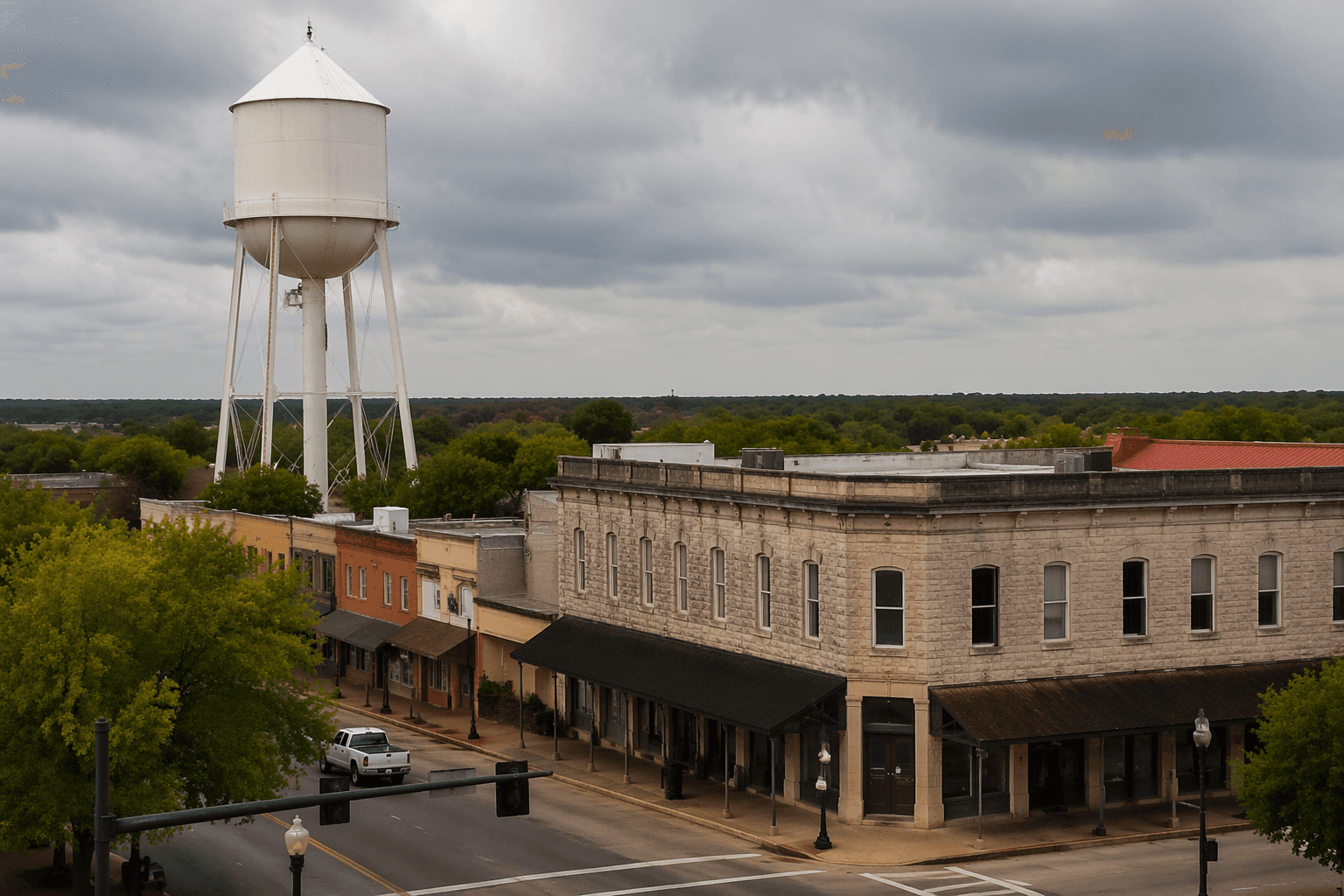
That gap matters because names shape identity. In Coryell County, Gatesville is not just a duplicate on a map. It is the county seat, a frontier town, and a place whose story is anchored in Fort Gates, the Leon River, and a civic identity that has been built and rebuilt over generations.
North Carolina’s Gatesville started as a courthouse community
The North Carolina town began as Gates Court House, then was renamed Gatesville in 1830 to 1831. It is the county seat of Gates County, a role that gives it local importance even though the town itself is small, with just 267 residents counted in the 2020 census.
Its namesake reaches back to Horatio Gates, the Revolutionary War commander. That history makes the North Carolina Gatesville a courthouse town with an eighteenth-century political pedigree, not a frontier settlement tied to westward expansion.
The contrast with Texas is immediate. Gates County had 10,478 residents in the 2020 census, a reminder that the county is much larger than the town that sits at its center. The name stayed, but the scale and the setting never matched the Texas version.
How the Texas Gatesville grew out of Fort Gates
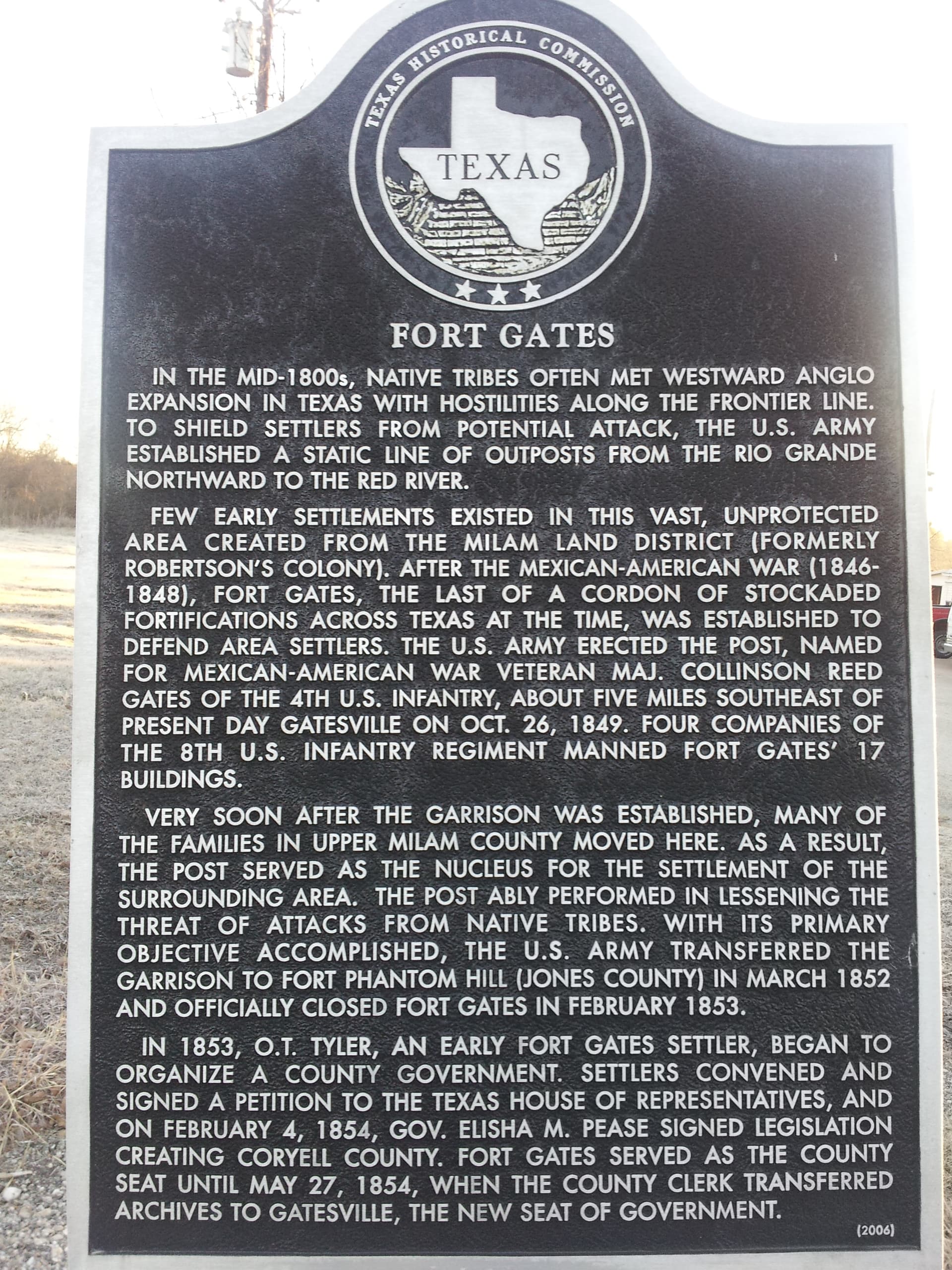
Gatesville, Texas, traces its own origin story to a military outpost. Coryell County says the county was created by the Texas Legislature in 1854, and that Gatesville grew up around Fort Gates, which was established in 1849 to protect settlers from hostile Indians.
The Texas State Historical Association adds an important twist: Fort Gates was officially abandoned in 1852, yet the Fort Gates community still became the first settlement in Coryell County and briefly served as the county seat from February 4 to May 27, 1854 before county government moved to Gatesville. That short-lived county-seat shift is one of the clearest clues to how the town’s name took hold.
The fort itself began as Camp Gates, founded on October 26, 1849 by Captain William R. Montgomery. It later took the name of Brevet Major Collinson Reed Gates, and the town that developed nearby eventually inherited the Gatesville name. That detail matters because it shows the Texas name came from a military and frontier chain of events, not from the North Carolina courthouse town.
The result is a local origin story that belongs to Coryell County alone. Fort, settlement, county seat, town name: each step came from the ground here, not from a shared migration of namesake towns.
What the numbers say about the two places
The distance between the two Gatesvilles is more than geographic. The U.S. Census Bureau puts Gatesville, Texas at 16,135 people in the 2020 census, with an estimated 16,388 in 2024. Gatesville, North Carolina had 267 people in the 2020 census.
That population gap helps explain why the two towns are so easily confused online. The Texas city is large enough to serve as a county seat, anchor regional traffic, and support a broader local economy. The North Carolina town is tiny by comparison, a county-seat community with a very different footprint and daily rhythm.
The setting is different too. Gatesville, Texas sits in Coryell County, which is part of the Killeen–Temple metropolitan statistical area. Gatesville, North Carolina sits in the northeastern corner of its state, on the Virginia border. Same name, different states, different histories, different roles.
Gatesville’s identity today is bigger than the map
If the town’s name began at a frontier post, its modern identity stretches well beyond that origin. The Coryell Museum and Historical Center calls Gatesville the Spur Capital of Texas and promotes the world’s largest spur collection. That civic branding is not just a tourism slogan. It is a claim about what the town chooses to remember about itself.
The correctional system also shapes that identity in practical ways. The Texas Department of Criminal Justice lists the Christina Melton Crain Unit in Gatesville as a female prison established in August 1980. It sits three miles north of town on Highway 36 in Coryell County, has a capacity of 1,440, and employs 711 people.
TDCJ’s unit directory shows Gatesville is home to multiple female correctional facilities, making prisons a major part of the local economy and identity. For a town the size of Gatesville, that footprint affects jobs, traffic, public services, and how outsiders understand the place. It is part of the modern civic reality, alongside the county courthouse and the museum cases full of spurs.
Why the name still matters in Coryell County
The best lesson in the Gatesville comparison is not that two towns happen to share a word. It is that local identity is built from different layers of history, and those layers do not travel neatly from one state to another. In North Carolina, Gatesville is a renamed courthouse town tied to Horatio Gates. In Texas, Gatesville is a county seat born from Fort Gates, military defense, settlement pressure, and the rough edge of the frontier.
Coryell County’s own history reaches much deeper than either town name. The county’s history page says habitation in the area dates back to about 4500 BC, with Tonkawa, Lipan Apache, Kiowa, and Comanche peoples present at different times. That longer timeline puts the town’s nineteenth-century naming story in perspective: Gatesville is only one chapter in a place with a much older human record.
That is why the “sister city” label can be misleading if it suggests a shared past. Gatesville, Texas stands on its own, with its own fort, its own county-seat history, its own museum identity, and its own place in Coryell County life. The name may be shared, but the story belongs here.
This article was produced by Prism’s automated news system from verified source data, official records, and press releases, then run through automated quality and moderation checks before publishing. The system is built and supervised by the people who set the standards it runs under. Read our full AI policy.
Know something we missed? Have a correction or additional information?
Submit a Tip