Local geographic entries inform flood planning and health equity in Coryell County
Authoritative local reference entries document Clear Creek, Hog Mountain, and Twin Mountains, providing geographic details that matter for emergency planning, environmental health, and community access to resources in Coryell County. Those durable records offer practical context for residents, emergency responders, educators, and policymakers shaping hazard mitigation and health services.
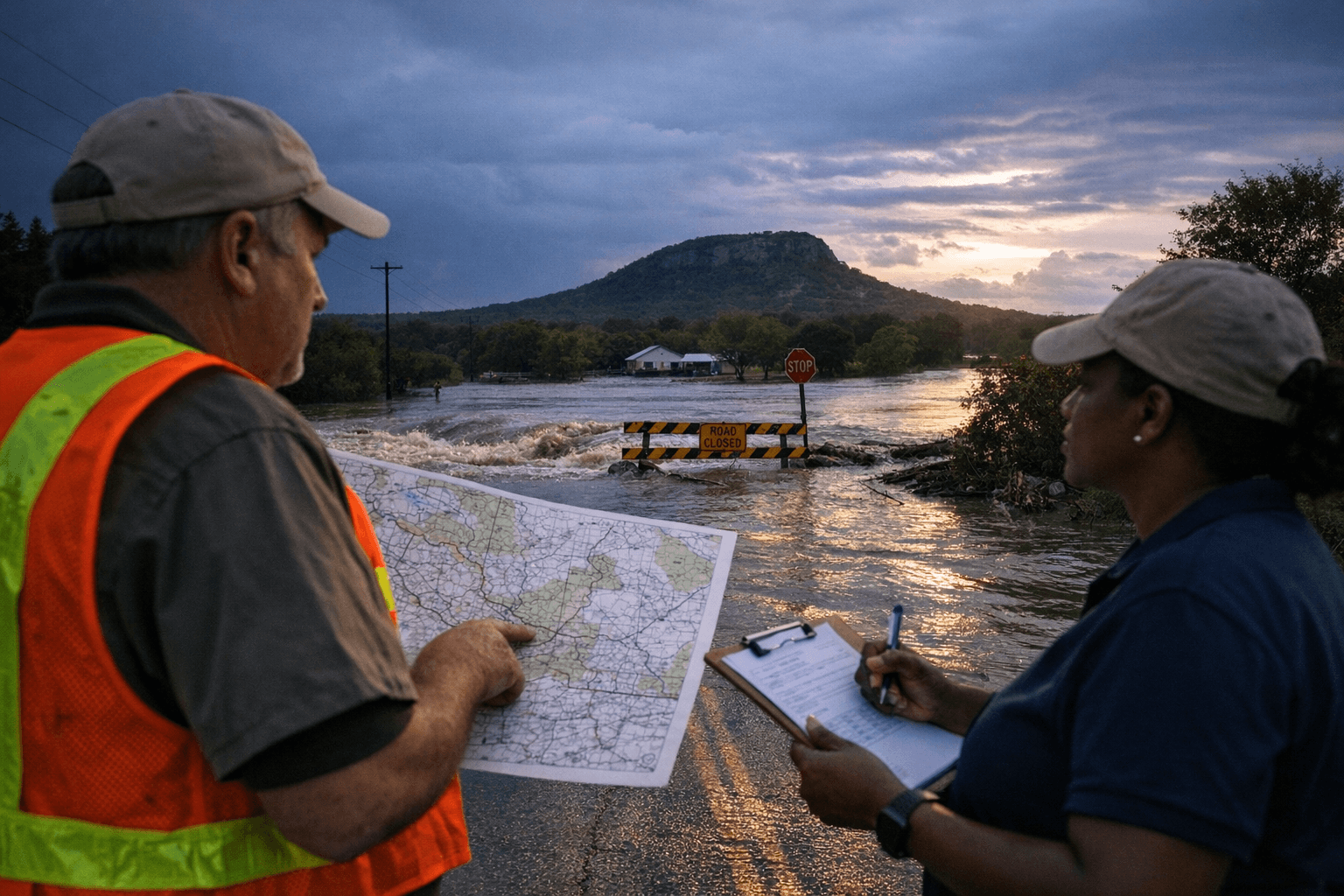
A set of authoritative reference entries cataloging Coryell County’s physical features offers more than historical background; it supplies practical geographic facts that affect public safety, environmental health, and social equity across the county. The entries summarize locations, courses, and elevations for features including Clear Creek, Hog Mountain, and Twin Mountains, details that local leaders and residents can use to inform planning and response.
Clear Creek is documented as rising near Copperas Cove and flowing into the Lampasas River, a course that links upstream land use and stormwater to downstream water quality and flood risk. Hog Mountain is recorded north of Copperas Cove with documented elevations that influence drainage patterns, wildfire behavior, and the siting of communication infrastructure. Twin Mountains, northwest of Copperas Cove, are noted for their position in the county landscape and serve as reference points for navigation, recreation, and emergency mapping.
Those geographic facts matter for everyday public health and community resilience. Clear Creek’s connection to the Lampasas River has implications for drinking water safety, mosquito and vector habitat after heavy rains, and contamination risks during floods. Elevation and ridge information from Hog Mountain and Twin Mountains influence where emergency radio towers and broadband equipment can be most effective for telehealth and dispatch communications, particularly for residents in more remote or underserved areas. Recreational access to higher ground affects opportunities for physical activity and mental health, but unequal access to trailheads and facilities can reinforce existing health disparities.
For emergency planners and public health officials, integrating these durable geographic entries into hazard mitigation, water monitoring, and outreach campaigns can reduce risks. Land-use decisions that ignore documented creek courses and elevations can increase flood exposure for lower-income neighborhoods and rural residents who already face barriers to care. Incorporating clear maps and locally grounded information into evacuation route planning, vaccine or clinic outreach, and water quality alerts helps target resources where they are most needed.
Community members, schools, and reporters can use these reference entries as reliable background when discussing development proposals, emergency preparedness, or environmental stewardship. Local officials can strengthen resilience by linking this geographic information to public health priorities - mapping flood-prone areas, prioritizing infrastructure upgrades, and ensuring communication coverage for remote communities. In Coryell County, the geography on the map is also a public health tool; treating it as such can help make preparedness and services more equitable and effective.
This article was produced by Prism’s automated news system from verified source data, official records, and press releases, then run through automated quality and moderation checks before publishing. The system is built and supervised by the people who set the standards it runs under. Read our full AI policy.
Did this article answer your question?