Whiskey, cash and land helped make Gatesville Coryell County seat
A whiskey-soaked frontier bargain fixed Gatesville’s courthouse square in 1854, and Richard G. Grant’s land still explains where Coryell County’s center sits today.
The bargain that built the county seat
A whiskey-fueled frontier deal helped decide where Coryell County would put its heart. Richard G. Grant’s offer of cash, land, and a courthouse site near the Leon River turned Gatesville into more than a settlement; it became the county’s civic center, and the layout still shapes downtown today.
What happened in 1854 matters because it was not just a name on a map. The courthouse square, the streets around it, and the local power geography all trace back to a practical bargain: Grant put forward $2,000 in cash, land for a courthouse and public square, streets laid out in several directions, and even cemetery property if officials chose his tract. In a young county with little money and a lot of ambition, that was enough to change the future.
How Coryell County came to choose a seat
Coryell County was formed from Bell County on February 4, 1854, then organized on March 4, 1854. The county was named for James Coryell, a Texas Ranger and early explorer killed by Indians near Fort Milam on May 27, 1837. Long before county government arrived, the land had already seen centuries of human movement, with habitation stretching back to about 4500 BC and with the Tonkawa, Lipan Apache, Kiowa, and Comanche passing through at different times.
That longer history helps explain why the county-seat decision carried so much weight. Coryell County was still a frontier place when leaders reportedly had to borrow $25 just to buy record books and office supplies. In that setting, the choice of where to locate the courthouse was not a ceremonial matter. It was an act of construction, one that would determine where records were kept, where elections were held, where merchants clustered, and where the county’s authority would be seen every day.
Why Grant’s tract won out
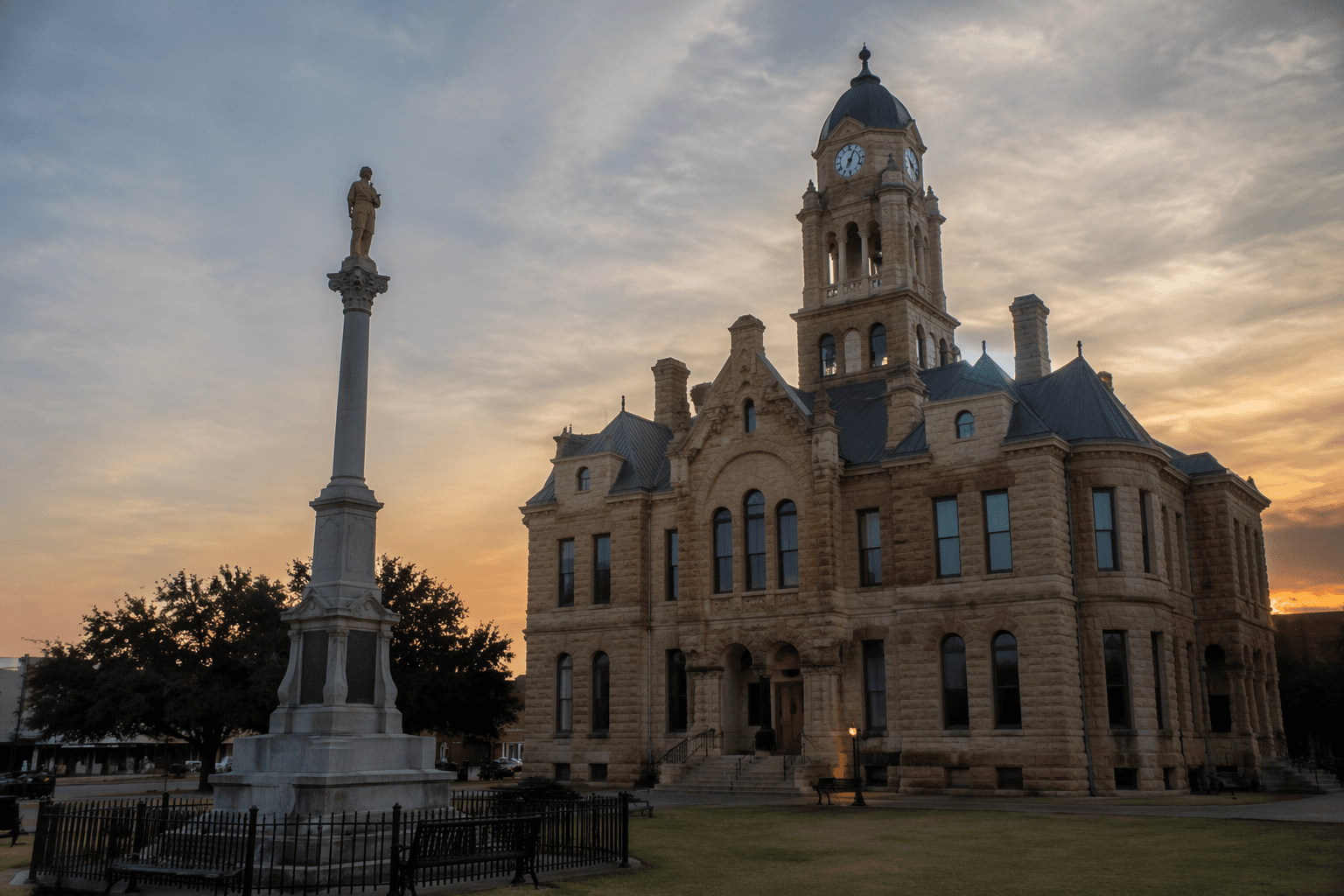
Grant was not simply selling land. He was offering a townsite that could function as a county center. The tract sat near the Leon River, and the proposal included the basic ingredients of a settlement that could grow into a seat of government: a courthouse square, roads in several directions, and land reserved for the dead as well as the living. That combination made his offer hard to ignore in a region where practical access often mattered more than abstract plans.
There was competition. Other settlers wanted the seat at nearby Fort Gates, and the Fort Gates area had its own momentum. Historic Texas says Fort Gates had been established in 1849 to protect settlers from marauding Indians, then abandoned in 1852 when the frontier line moved farther west. By then, settlers in the Fort Gates area numbered about 250, and they began campaigning for the county seat. But Grant’s pitch prevailed, and the county-seat election on May 27, 1854 settled the question in Gatesville’s favor.
Grant celebrated the decision by organizing a public sale of town lots, a move that turned the election result into a development plan. The town was not just chosen, it was marketed. That is one reason the courthouse square became so central to Gatesville’s identity: it was built into the town from the start, not added later as an afterthought.
Why Gatesville took the name and grew around the square
Gatesville took its name from nearby Fort Gates, tying the new county seat to the earlier military outpost that had helped open the area to settlement. The Texas State Historical Association says Gatesville was established on land donated by Richard G. Grant shortly after the county was organized in 1854, and that James C. Newton became the first postmaster when the post office was established in July 1854. Those early details show how quickly the town shifted from disputed frontier ground to a functioning county town.
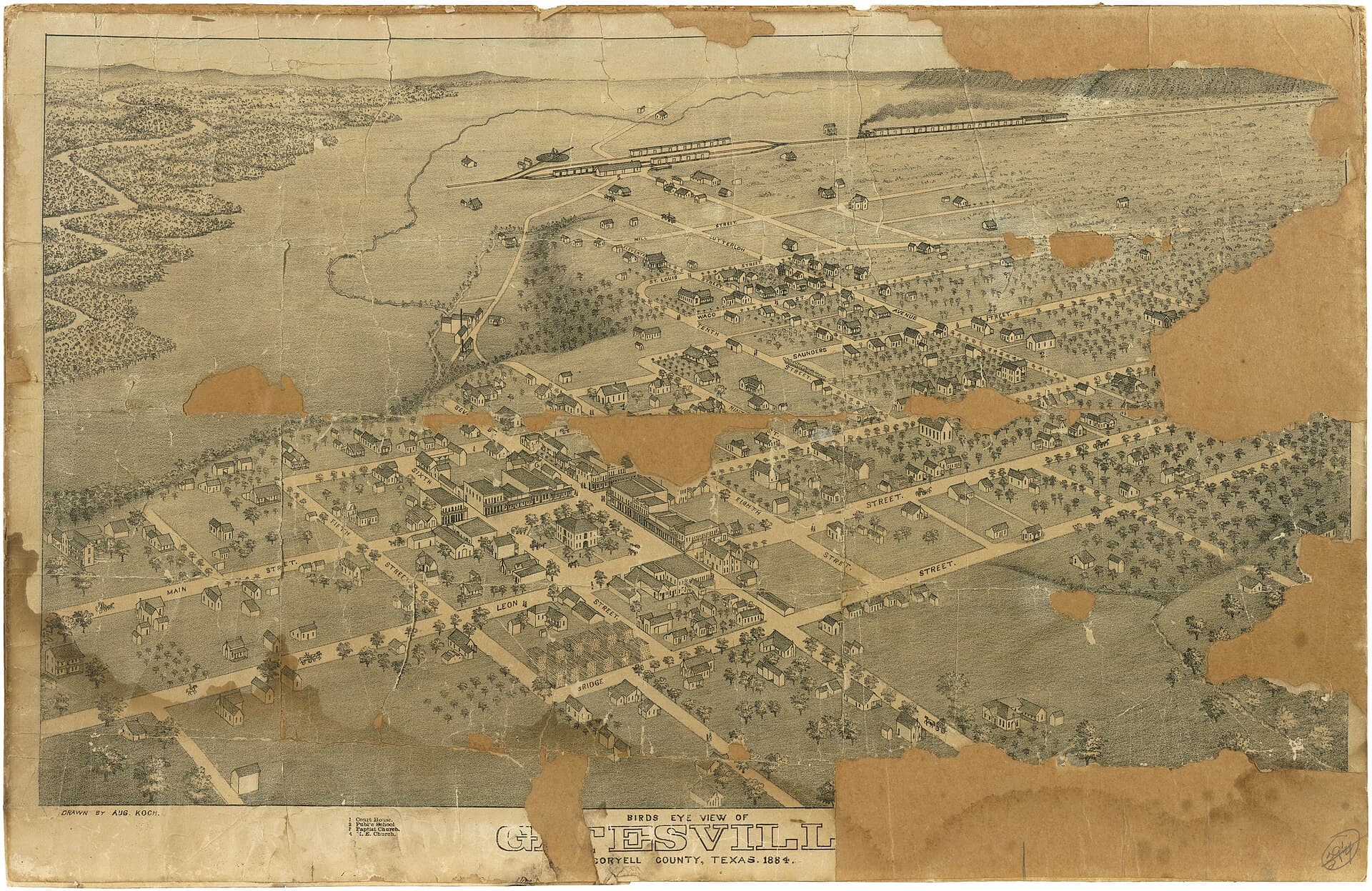
The same historical record also shows how isolated the place was. Supplies had to be hauled by wagon from Houston, about 200 miles away, a reminder that every nail, ledger, and barrel had to travel a long way before it reached local hands. The town grew slowly in the late 1850s and little, if any, during the Civil War, which makes the county-seat decision look even more important in hindsight: Gatesville did not explode into a city overnight, but the civic choice made in 1854 gave it a permanent advantage.
What the old bargain still means today
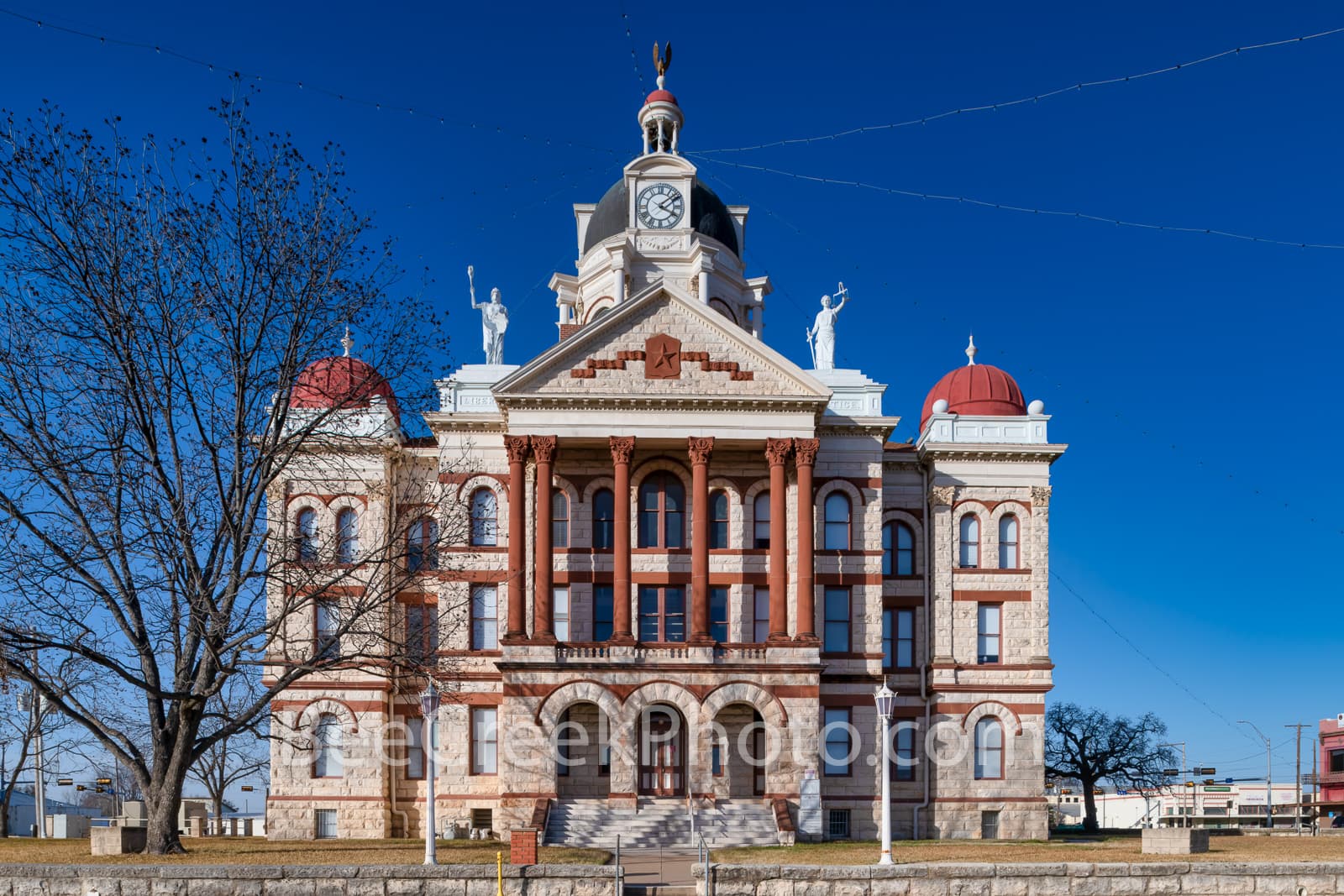
The clearest sign of the bargain’s legacy is that county government stayed tied to Grant’s land. A county historical marker says the 1897 Coryell County courthouse was also erected on land donated by early settler R.G. Grant. That continuity matters. It means the civic center residents use today is not just historically nearby, it is literally rooted in the same land deal that settled the county-seat fight more than a century and a half ago.
That is why the story still resonates far beyond a colorful frontier anecdote. Gatesville’s downtown core, its courthouse square, and the surrounding business center grew from a decision about where power would sit on the landscape. The county seat was not assigned from above, nor did it simply drift into place. It was purchased, negotiated, and laid out with streets, public space, and official buildings in mind.
The result is visible every time people go downtown for county business. The center of Coryell County remains where a landowner, a cash-strapped local government, and a divided frontier community made a practical deal in 1854. In Gatesville, the past is not just remembered on a marker. It still sets the map.
This article was produced by Prism’s automated news system from verified source data, official records, and press releases, then run through automated quality and moderation checks before publishing. The system is built and supervised by the people who set the standards it runs under. Read our full AI policy.
Did this article answer your question?