Bivalve’s oyster legacy lives on aboard New Jersey’s tall ship
Bivalve’s oyster story is still alive at the Bayshore Center, where a restored tall ship, museum, and working waterfront keep Cumberland County’s bayshore economy in view.
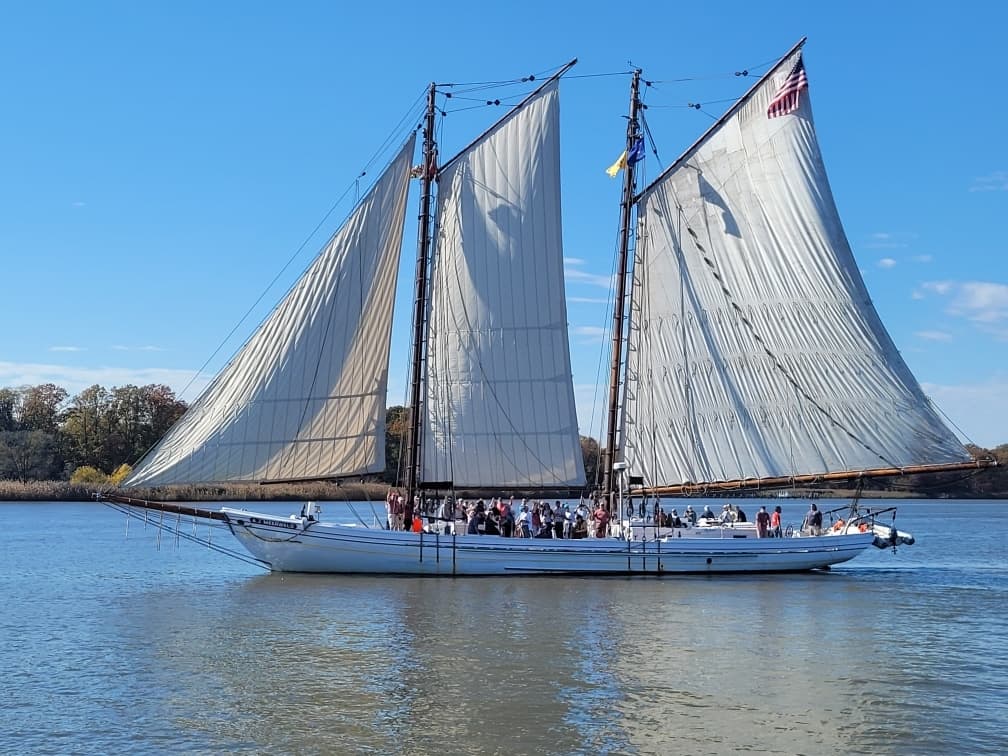
Bivalve is one of Cumberland County’s clearest reminders that oyster history here was never just scenery. At the Bayshore Center in Commercial Township, that past still has a working presence: a restored oyster schooner, a museum in the old shipping sheds, and a waterfront setting that ties local labor, shipping, and environmental education into one stop on the Maurice River.
A working waterfront with a visible past
The anchor of the site is the A.J. Meerwald, New Jersey’s official tall ship. Launched in 1928, the schooner was added to the National Register of Historic Places on November 7, 1995, and is described as an authentically restored Delaware Bay oyster schooner. It measures 115 feet overall, 85 feet on deck, and has a 23-foot beam, but its value in Bivalve goes beyond size or age. It gives the county a living link to the hundreds of oyster schooners that once worked Delaware Bay before the shipbuilding economy collapsed during the Great Depression.
Tall Ships America describes the vessel as an experiential classroom that sails from Bivalve and teaches students from fourth grade through senior citizens. The lessons are not confined to maritime nostalgia. They extend to oyster history and present-day water-quality issues, which keeps the ship tied to questions Cumberland County still faces along its bayshore today.
The sheds that built the industry
The surrounding site tells the larger story. The Delaware Bay Museum sits in the historic Oyster Shipping Sheds and Wharves, originally built in 1904 by the Central Railroad of New Jersey. The New Jersey Historic Trust says those sheds were the centerpiece of the early 20th-century Maurice River Cove oyster industry and that they employed thousands of workers while defining the regional economy.
That industrial scale is still visible in the landscape around Bivalve. Historical-marker records note that there were originally 30 oyster sheds, and six were purchased by the Bayshore Discovery Project in 2001 using Cumberland County Empowerment Zone funds. That detail matters because it shows how much of the old waterfront was once devoted to oysters, and how much preservation work has been required to keep even part of that history intact for the public.
What the museum adds to the visit
The Delaware Bay Museum opened in 1991 to document the people and history that made the oyster industry possible. It is now part of the Bayshore Center complex, alongside the organization’s administrative offices and the Oyster Cracker Café, all inside the old shipping sheds.
The setting gives the museum a strong sense of place. It is on the Maurice River, which the museum describes as a National Wild and Scenic River, and it is surrounded by wetlands in Historic Bivalve. That location makes the museum more than a display case for artifacts. It places the oyster story inside the broader ecology that shaped the work in the first place, from river conditions to the health of Delaware Bay itself.
The Bayshore Center says its mission is to help people understand the human impact on New Jersey’s aquatic environment through education, advocacy, and programs. That mission broadens the experience for visitors. The site is not only about what oysters meant in the past, but about how water quality, land use, and working waterfronts continue to affect the county now.
What visitors can do right now
A trip to Bivalve works best when you treat it as an all-day stop rather than a quick photo opportunity. The museum, the ship, the café, and the surrounding waterfront each give you a different piece of the story.
- Visit the Delaware Bay Museum to see how the oyster trade shaped Bivalve and the Maurice River Cove.
- Tour or sail aboard the A.J. Meerwald to experience a restored oyster schooner as a classroom, not just a display.
- Spend time along the waterfront to see how the old shipping sheds still frame the site’s working history.
- Stop at the Oyster Cracker Café and the Bayshore Center’s public spaces to make the visit practical for a family day out.
Admission is straightforward. The museum charges $7 for adults, $5 for seniors and veterans, and children are admitted free. Admission is also free with a sail ticket, which makes the museum easy to combine with a trip aboard the schooner.
How sailing fits into the experience
The A.J. Meerwald is not kept as a static exhibit. The Bayshore Center offers public sails and charters from April through October, and public sail listings have shown a ticket price of $50 per person. Those sail dates stretch across spring, summer, and fall, giving visitors repeated opportunities to see the ship in use rather than behind a rope.
That matters for Cumberland County because the ship’s purpose is educational as much as interpretive. Onboard, the story of oyster harvesting becomes concrete: how the bay was worked, how the schooners operated, and why water conditions still matter. For families, school groups, and summer travelers, the sail turns regional history into something that moves, sounds, and feels like the bay itself.
Why Bivalve still belongs in Cumberland County’s present tense
Bivalve’s value is not limited to heritage preservation. The site supports tourism, keeps a distinctive bayshore story visible, and gives local residents a place where maritime labor history and environmental education overlap. In a county where economic identity has often shifted with the bay, the restored schooner and the museum in the 1904 sheds keep that story anchored to a real place.
The result is one of the county’s most durable public assets: a waterfront that still explains how Cumberland County worked, what it shipped, and why the health of the bay remains central to its future.
This article was produced by Prism’s automated news system from verified source data, official records, and press releases, then run through automated quality and moderation checks before publishing. The system is built and supervised by the people who set the standards it runs under. Read our full AI policy.
Did this article answer your question?
