Bridgeton Japanese American residents link ICE protests to wartime trauma
Bridgeton’s Japanese American families said ICE activity reopened wartime wounds, as May Day protests and a May 13 meeting spread fear across a city that is 59.3% Latino.
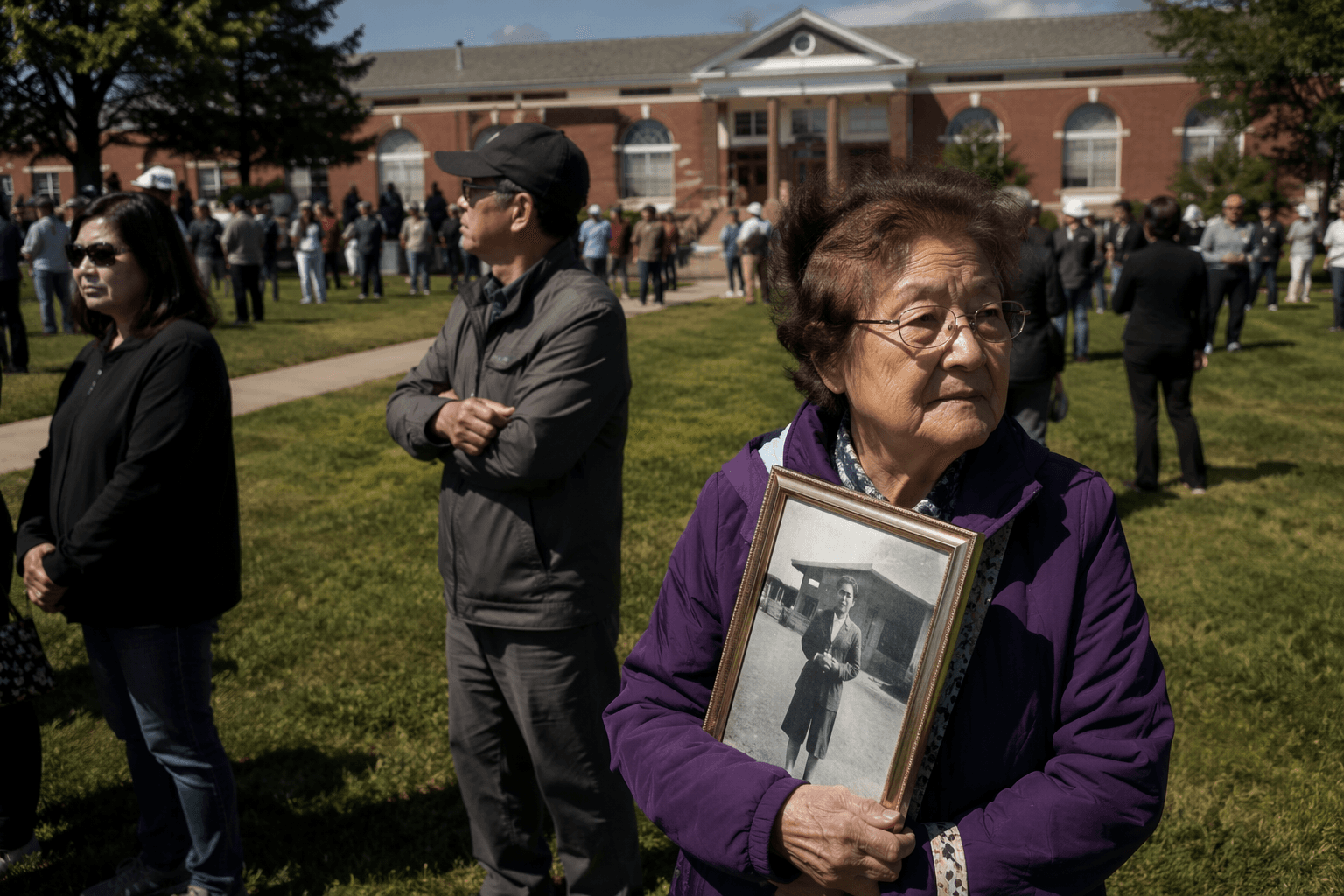
Bridgeton’s Japanese American residents said recent ICE activity stirred memories of wartime incarceration that never fully left their families, turning a local immigration fight into a test of historical memory and community trust.
At a May Day crowd in Bridgeton, Kelly Kuwabara said she saw painful parallels between what happened to her family during World War II and what immigrant families are facing now. More than 80 years after Japanese American families were forced from their homes, Kuwabara and other descendants said the city’s current enforcement climate felt uncomfortably familiar, especially in South Jersey, where many Japanese American families rebuilt their lives after detention.
The backdrop matters in Bridgeton, a city of 28,307 spread across 6.2 square miles, where 59.3% of residents are Hispanic or Latino and 25.7% are foreign-born. Cumberland County, with a population estimate of 157,148, is 37.1% Hispanic or Latino and 12.7% foreign-born. In a place where immigration shapes school halls, job sites and neighborhood routines, fear around ICE does not land as an abstract national issue. It lands in empty streets, in whispered rumors and in households wondering who may be next.
That fear also taps into a longer local history centered on Seabrook Farms in Seabrook, where Japanese Americans resettled after the war. After President Franklin D. Roosevelt signed Executive Order 9066 on February 19, 1942, nearly 113,000 people of Japanese ancestry were forced from the West Coast, two-thirds of them American citizens. The National Park Service says no person of Japanese ancestry in the United States was convicted of serious espionage or sabotage during the war. It also says about 2,500 evacuees went to Seabrook Farms’ New Jersey plant, and NJ.com reported that by the end of 1944 nearly 1,000 former Japanese American detainees were working in Cumberland County, later growing to 2,500.
That history helps explain why Bridgeton-area Japanese American families see Seabrook not as a footnote but as the place where displacement turned into community. Their reaction to ICE activity also fit a wider wave of activism across New Jersey, where May Day marches centered on worker rights, immigrant rights and economic justice. In Bridgeton, a May 13 community meeting added to the sense of urgency, with residents discussing ICE raids, rumors, detention and deportation.

For Kuwabara, Frank Ono, John Fuyuume and other local descendants, the issue was not only policy. It was whether Cumberland County would again allow fear to fracture the social fabric of a city built by people who had already lived through one government campaign of forced removal.
This article was produced by Prism’s automated news system from verified source data, official records, and press releases, then run through automated quality and moderation checks before publishing. The system is built and supervised by the people who set the standards it runs under. Read our full AI policy.
Know something we missed? Have a correction or additional information?
Submit a Tip