Bridgeton walk showcases New Jersey’s largest historic district
Bridgeton’s historic core packs about 2,200 structures into a walkable district, from Potter’s Tavern to bank houses on Broad Street. A few hours on foot can trace more than 300 years of local history.
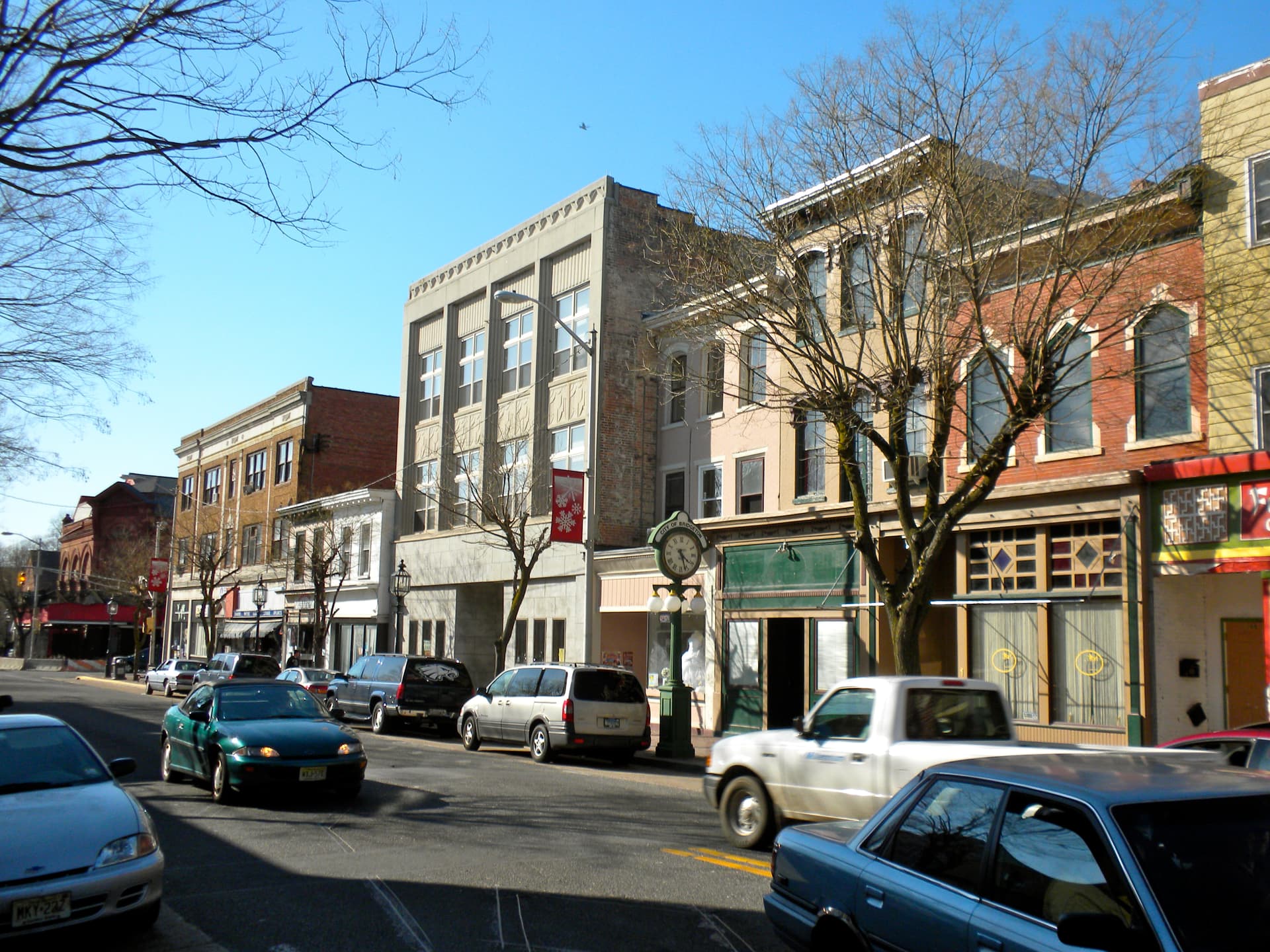
Bridgeton’s historic district covers about a quarter of the city and holds roughly 2,200 residential, commercial, industrial and ecclesiastic structures. It rewards the kind of local day trip that costs little, requires no schedule beyond your own pace, and still delivers a dense slice of Cumberland County history. The official Historic Bridgeton Walking Tour makes that history easy to read on foot, especially around Broad Street and the Cohansey River, where colonial foundations, Revolutionary-era stories and 19th-century prosperity sit close together.
Why Bridgeton belongs on a walking list
The city describes it as the largest historic district of any municipality in New Jersey, a distinction backed by its formal preservation record. The district was first inventoried in 1979, placed on the New Jersey State Register on February 22, 1982, and added to the National Register of Historic Places on October 29, 1982.
Instead of one preserved block, you get a district that spans architectural eras from early Federal buildings to the 1920s, with examples of carpenter Victorian architecture mixed into the city’s older commercial and civic fabric. Some structures were documented by the Historic American Buildings Survey in the 1930s.
A city story that begins in the 1600s
The walk reaches back to 1686, when Richard Hancock built a sawmill and workers’ houses near what is now Pine Street and the Broad Street bypass. By 1716, a bridge crossed the Cohansey River, and by 1749 Cohansey Bridge had become the county seat.
Cohansey Bridge had fewer than 150 residents, and Bridgetown had about 200 inhabitants by the time of the Revolution.
Potter’s Tavern gives the route its strongest anchor
No stop on the walk carries more Revolutionary-era weight than Potter’s Tavern. Built in 1770, it sits on Broad Street directly across from the Cumberland County Courthouse and is listed on the National Register for architecture, communications and politics. The Cumberland County Historical Society ties the building to The Plain Dealer, New Jersey’s first newspaper, and says at least thirteen editions were produced there.
The tavern also sits at the center of one of Bridgeton’s best-known public moments. The Declaration of Independence was read aloud outside Potter’s Tavern on August 7, 1776.
Potter’s Tavern also shows how preservation in Bridgeton has worked in practical terms, not just symbolic ones. After the Revolution, it was converted into a two-family dwelling around 1788, later fell into serious disrepair, and was purchased by the City of Bridgeton in 1958. Ownership then shifted to the County of Cumberland, and the building is now leased to the Cumberland County Historical Society.
Stops that help you read the district
A good self-guided walk works best when the landmarks are specific enough to tell you what kind of town you are standing in. Several named stops help build that picture in a short outing.
- Potter’s Tavern connects the route to colonial print culture, Revolutionary politics and the city’s courthouse block.
- Ebenezer Miller’s house survives from pre-revolutionary times, giving the walk another direct link to Bridgeton’s earliest residential landscape.
- The Brearley Masonic Lodge and the Nail House add civic and industrial depth, showing how the district extends beyond one era or one use.
- The first Cumberland National Bank building reflects the city’s commercial rise and the financial infrastructure that followed Bridgeton’s growth after the Civil War.
- The David Sheppard House helps round out the residential side of the district, where prosperity showed up in home design as much as in storefronts.
- The Old Cumberland Bank Building, now the Bridgeton Free Public Library, and the General James Giles House sit within the broader historic landscape that makes the district feel continuous rather than fragmented.
Together, the named buildings trace early journalism, banking, machine industry and post-Civil War prosperity.
What to notice as you look up and down Broad Street
Bridgeton’s architecture is best understood in layers. Georgian and Federal forms give way to Greek Revival and Victorian details, with Palladian windows, columned porticos, bay windows, gabled dormers and gingerbread trim showing how styles changed as the town expanded. The district also includes carpenter Victorian buildings and properties that may be eligible for individual listing.
The mix of residential, commercial, industrial and ecclesiastic structures leaves a streetscape that records Bridgeton’s growth as an industrial and commercial center.
How to make the most of a few hours
The easiest way to approach the district is as a short, flexible loop built around Broad Street, the courthouse area and the surviving landmarks close to the Cohansey River. Start with Potter’s Tavern, then work outward to the other named sites that fit your pace and the time you have. From there, you can move to bank buildings, Victorian houses and civic landmarks without turning the outing into a drive.
The New Jersey Historic Preservation Office lists it as district ID 1020, with National Register reference number 82001043 and the same 1982 register dates already tied to the city’s own records.
This article was produced by Prism’s automated news system from verified source data, official records, and press releases, then run through automated quality and moderation checks before publishing. The system is built and supervised by the people who set the standards it runs under. Read our full AI policy.
Did this article answer your question?
