Cumberland County parents urged to follow infant sleep safety guidelines
A sleeping baby can face a deadly risk if the crib is too soft, the bed is shared or blankets pile up. Cumberland County families can use free state help tonight to lower that risk.
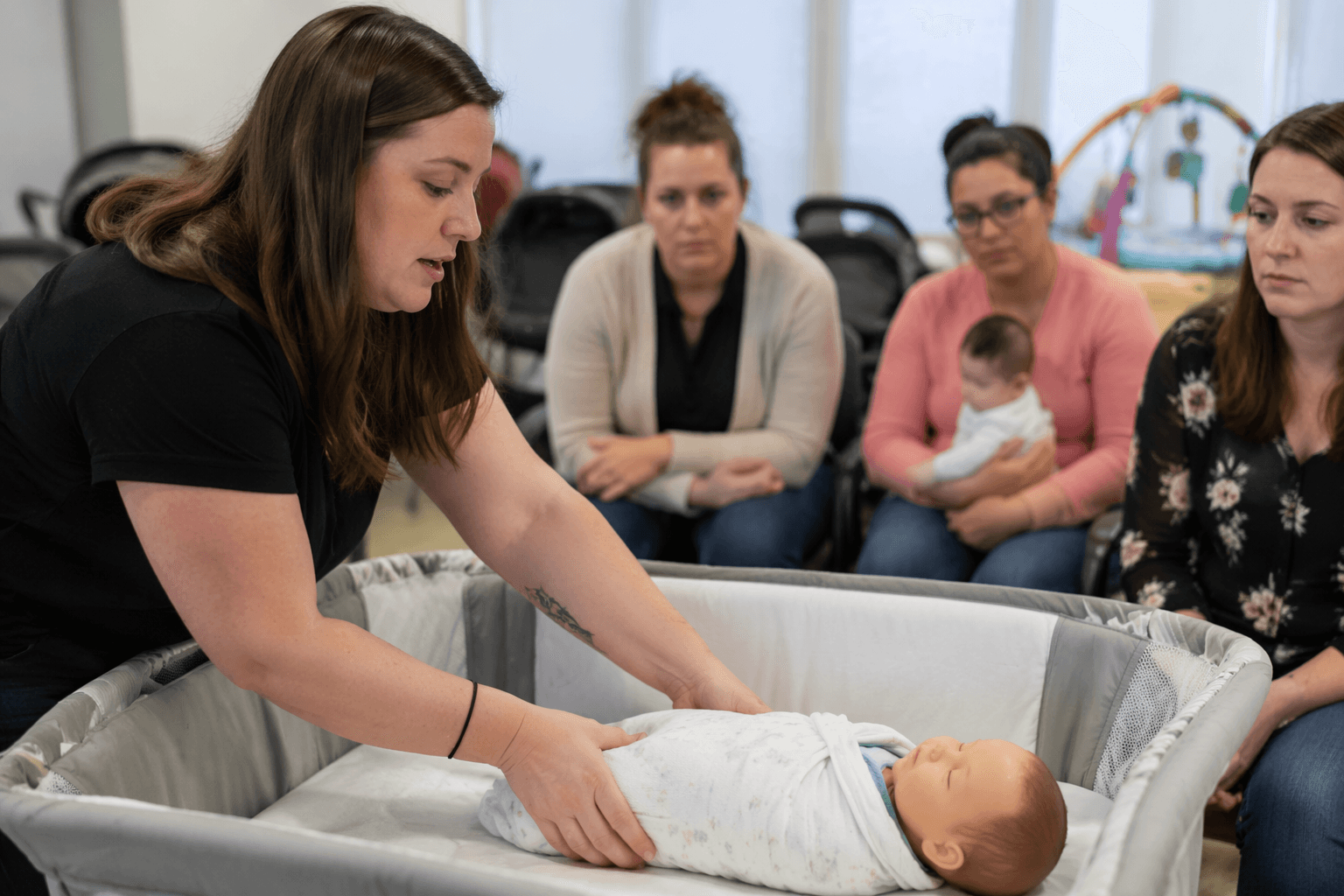
Sleep safety is a public-health issue in Cumberland County
A baby asleep on a couch, in an adult bed or under loose blankets can face a deadly risk even when the room looks calm and familiar. In Cumberland County, that risk is being treated as a public-health problem because Sudden Unexplained Infant Death, or SUID, still claims too many infants in the first year of life.
SUID is an umbrella term that includes Sudden Infant Death Syndrome and other sleep-related infant deaths. Many of these deaths remain unexplained even after autopsy and scene investigation, but researchers have identified conditions that raise the risk and can be changed. That is the point of the message reaching families in Bridgeton, Millville and across the county: the safest sleep setup is a habit, not a guess.
The emotional toll on families is enormous, which is why the response is broader than prevention alone. It also includes bereavement support, education and systems that can bring guidance into homes before a crisis happens.
What safe sleep means tonight
The core advice from the Centers for Disease Control and Prevention and the American Academy of Pediatrics is consistent and practical. Put babies on their backs for naps and nighttime for the first 12 months, unless they roll over on their own. Use a firm, flat sleep surface and keep the baby in the same room as an adult, but not in the same bed.
The biggest mistakes are the ones that feel easiest in the moment. Soft bedding, pillows, stuffed items, loose blankets, overheating and sleep on couches or recliners all increase risk. Even a short nap in an unsafe spot can become dangerous, especially when caregivers are tired and tempted to let a baby sleep wherever it is most convenient.
- Place the baby on the back for every sleep.
- Use a crib, bassinet or play yard with a firm, flat surface.
- Keep the sleep area bare, with no pillows, blankets or bumpers.
- Share a room, not a bed.
- Avoid overheating, which can happen when babies are wrapped too warmly or placed in a hot room.
The safest sleep setup is also the simplest one. A bare, flat sleep space removes the objects and positions that can block breathing or lead to accidental suffocation.
Why New Jersey’s numbers matter
New Jersey has made real progress, and that progress shows what sustained prevention work can do. According to New Jersey State Health Assessment Data, the state’s 2021 to 2023 SUID rate was 0.48 deaths per 1,000 live births, about half the national rate of 0.99. NJSHAD says New Jersey had the second-lowest SUID rate in the nation during that period, behind Massachusetts.
That lower rate did not happen by accident. The SIDS Center of New Jersey, a Rutgers-affiliated program established in 1987 and supported by the New Jersey Department of Health, has spent decades pushing risk-reduction education statewide. Rutgers says the center’s research helped shape American Academy of Pediatrics risk-reduction policies, a sign that local prevention work in New Jersey has influenced national guidance.
NJSHAD also identifies SIDS as the third leading cause of infant mortality in both New Jersey and the United States. That makes safe sleep one of the most important and most actionable infant health messages public health can deliver. In plain terms, one safe sleep decision made tonight can matter as much as any pamphlet or policy discussion.
How the SIDS Center of New Jersey helps families
The SIDS Center of New Jersey is not just an education office. NJSHAD says it carries out the state mandate to provide bereavement support, study risk factors and deliver multilingual, culturally and racially sensitive education. Rutgers says the center works statewide through telephone support, educational mailings, home visits by specially trained counselors, sibling groups and referrals to peer-support and faith-based systems, all at no charge.
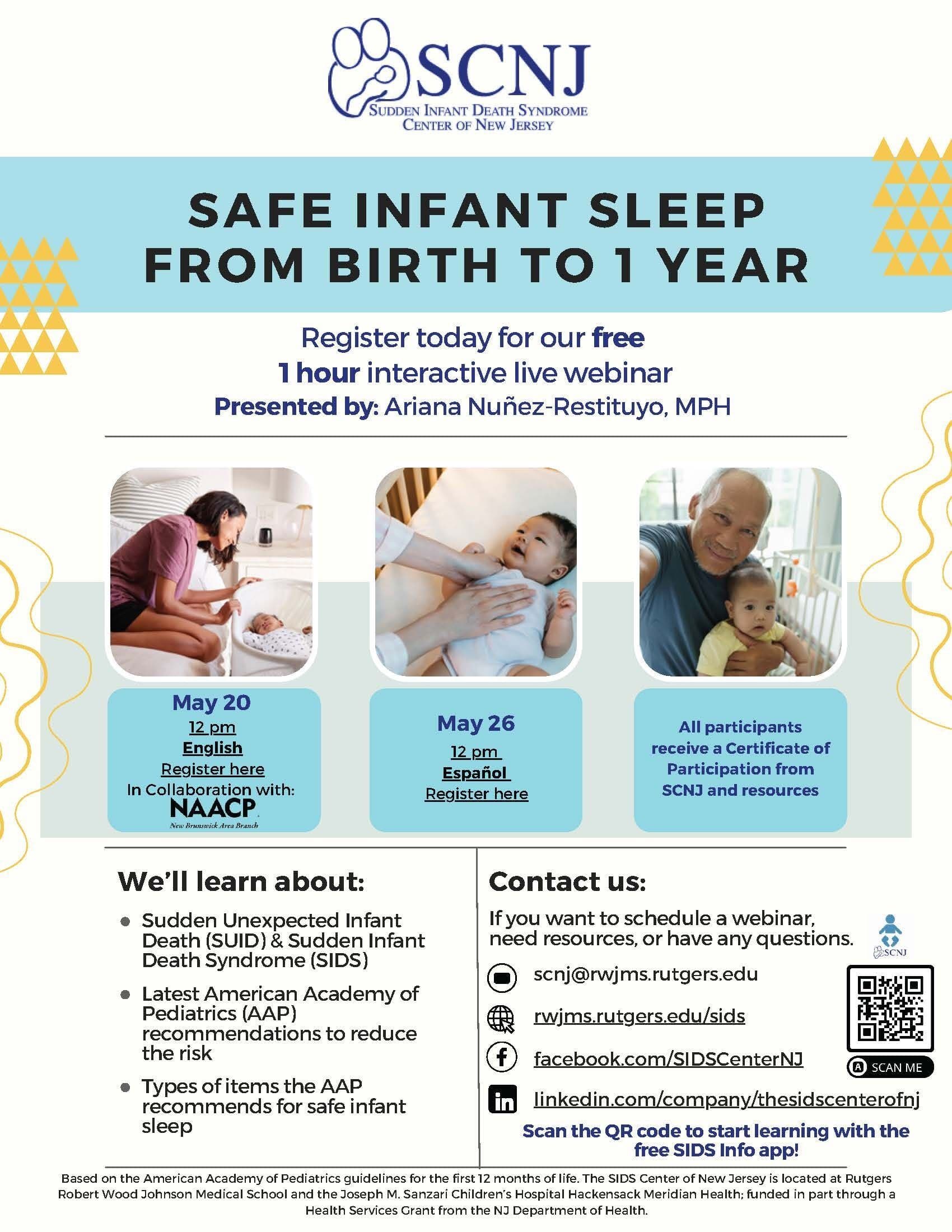
That matters for families who need more than a flyer. A parent who has just brought a newborn home may need a quick answer about blankets. A grandparent may need a respectful explanation of why a baby should not sleep in an adult bed. A caregiver may need help understanding why a pacifier, a firm mattress or room-sharing can lower risk without removing comfort.
The center also offers a free mobile app in English and Spanish. Rutgers describes the app as an award-winning tool, part of a wider effort that includes print materials, websites, phone apps, short and longer videos and live presentations offered online and in person. The point is access: safety information only works if families can get it in a form they can use.
Why the message has to be culturally sensitive
Safe sleep advice works best when it is delivered with respect, not judgment. NJSHAD’s emphasis on multilingual and culturally and racially sensitive education reflects a basic public-health reality: families bring different traditions, living situations and levels of trust in medical institutions. A message that sounds scolding can push people away, while a message that acknowledges family history and explains the medical reasons for change can save lives.
That approach is especially important in a county like Cumberland, where households differ in language, housing, work schedules and caregiving arrangements. A parent in Vineland, a grandparent in Bridgeton and a home-visiting counselor all need the same facts, but they may need them delivered in different ways. Respectful education helps families make the change without feeling that their culture or experience is being dismissed.
Where Cumberland County families can turn
Families in Cumberland County can ask pediatric offices, hospitals, clinics, home-visiting programs and community organizations for safe-sleep education materials and referrals to the SIDS Center of New Jersey. The Rutgers program works with hospitals, clinics, child-welfare providers, community groups and first-responder systems across the state, so the local pathway often starts with a familiar face in health care or family support.
The practical step for tonight is simple: clear the sleep space, lay the baby on the back, keep the crib flat and bare, and keep the baby close but not in the adult bed. For parents, grandparents and caregivers in Cumberland County, that routine is one of the most effective ways to reduce a risk that is still claiming infants across the country.
This article was produced by Prism’s automated news system from verified source data, official records, and press releases, then run through automated quality and moderation checks before publishing. The system is built and supervised by the people who set the standards it runs under. Read our full AI policy.
Did this article answer your question?