Cumberland County Winter: Clear Sightlines, Birdwatching, Tracks and Trails
Winter's leafless trees and quieter woods in Cumberland County sharpen sightlines for birdwatching, make tracks easier to read, and offer public health and ecological benefits.
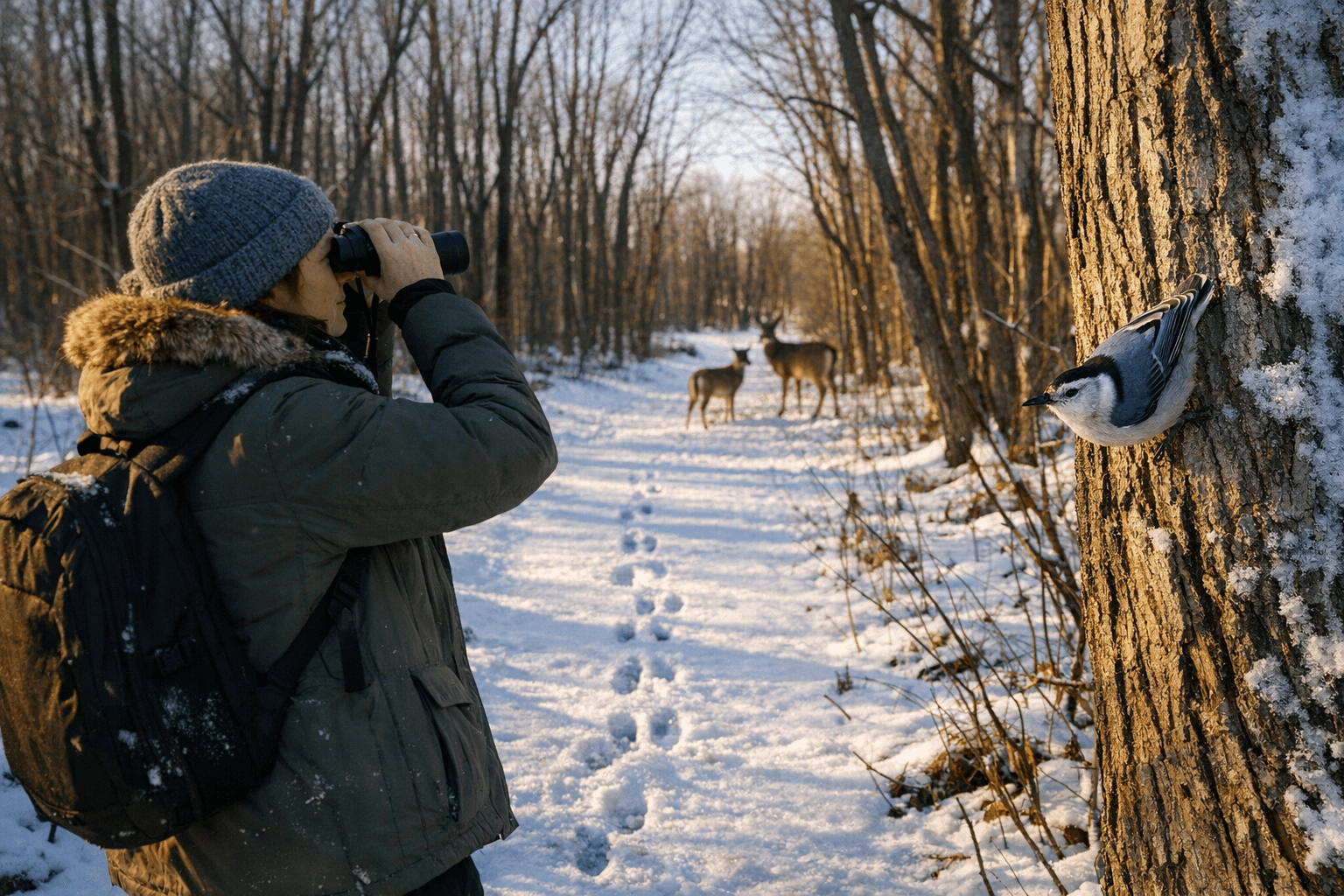
Leafless canopies across Cumberland County's woodlands and preserves have opened long sightlines that make winter a surprisingly rich season for outdoor observation. Clearer views, quieter trails and the contrast of tracks in snow or frozen mud help residents spot birds and identify mammal routes that are masked by summer growth.
On January 20, 2026, conditions around preserves and the Cowtown area illustrated how seasonal shifts change outdoor experiences. Without leaves, hawks and songbirds become easier to pick out against pale winter sky, and trails through Millville, Vineland and Bridgeton woodlots felt objectively quieter. Lower insect and tick activity in cold months reduces, but does not eliminate, risk of tickborne illness, and groundwater recharge from winter precipitation benefits streams, wetlands and drinking supplies across Cumberland and neighboring counties.
Ecologically, winter drives predictable responses. Many plants enter dormancy, conserving energy in roots and stems, while woody vegetation and exposed understory reveal travel corridors used by deer, foxes and smaller mammals. Those corridors leave clear impressions for walkers to interpret: faint parallel lines from deer hooves, bounding prints from coyote or fox, and tail marks in soft mud. For birdwatchers, wintering waterfowl and resident species often stage in salt marsh edges and open ponds, where binoculars are especially productive.
Public health and community impacts extend beyond recreation. Clearer sightlines and lower tick populations reduce immediate vector exposure during hikes, which matters for residents who rely on trails for exercise and mental health. Winter conditions also highlight equity issues: access to safe, maintained trails depends on transportation, trail upkeep and signage. Cumberland County parks and municipal leaders face choices about where to allocate limited resources for trail maintenance, parking and winter signage so that people from all neighborhoods can benefit.
Practical steps help maximize safety and enjoyment. Bring layered clothing, waterproof boots with traction, binoculars and a field guide or app to record sightings. Stick to blazed trails, pack out trash and let someone know your route if you head into larger preserves. If mobility or transit is an issue, seek out nearby green spaces in your neighborhood or community parks that offer shorter, accessible loops.
Winter invites a slower, more observant pace on Cumberland County trails. Clear sightlines make the landscape legible in new ways, offering both quiet recreation and practical public health benefits. As the season progresses, county planners, park stewards and residents will need to balance maintenance and access so that everyone can safely enjoy the tracks, trails and birds that winter reveals.
This article was produced by Prism’s automated news system from verified source data, official records, and press releases, then run through automated quality and moderation checks before publishing. The system is built and supervised by the people who set the standards it runs under. Read our full AI policy.
Did this article answer your question?
