Cumberland County’s 14 municipalities shape its distinct local identity
Cumberland County’s town lines decide more than maps. Bridgeton, Vineland and the smaller townships send residents to different offices, records and services.
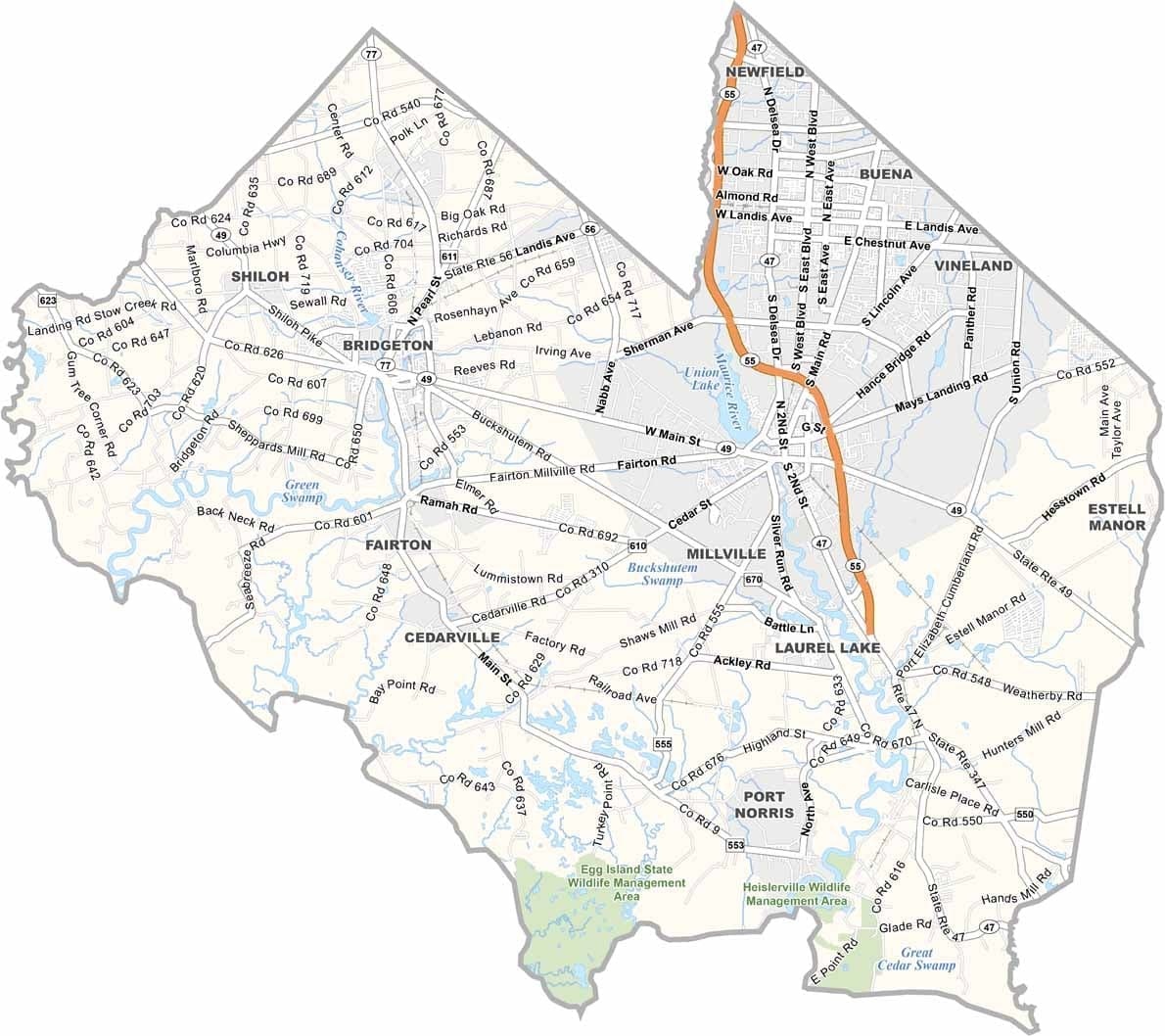
In Cumberland County, crossing a municipal line can change who handles your local roads, where you go for records, and which town government shapes the daily business of your address. The county’s 14 municipalities give it a patchwork identity that feels less like one suburban stretch and more like a series of distinct places linked by shared county services.
What changes when you cross a municipal line
Municipal government is the layer that most directly affects daily life in New Jersey, and Cumberland County is no exception. Towns and townships handle zoning, local roads, land use and municipal boards, while county government sits above that layer and coordinates broader services such as planning, parks, transportation, recreation, health and land records. That means a move from one Cumberland County municipality to another can change the office you call for development questions, the board that hears your land-use case, or the local setup for police and other town services.
The county’s own administrative structure shows how much of that work is split between local and county offices. Cumberland County government lists Planning, Tourism & Community Affairs, the Recreation Commission, the Health Department, public land records and census information among its departments and services. The county also published a Transportation Plan in March 2013, a reminder that mobility and infrastructure are coordinated at the county level even as daily life remains rooted in each municipality.
The 14 municipalities that define the county
Cumberland County is divided into 14 local governments: Bridgeton City, Vineland City, Millville City, Commercial Township, Deerfield Township, Downe Township, Fairfield Township, Greenwich Township, Hopewell Township, Lawrence Township, Maurice River Township, Shiloh Borough, Stow Creek Township and Upper Deerfield Township. That list matters because each place has its own character, scale and local routines, from compact borough streets to broad agricultural townships and bay-edge communities.
The county’s shape is easier to understand when you think of it as a cluster of distinct settlements rather than one continuous place. Bridgeton, Vineland and Millville form the main urban anchors, but the county quickly shifts toward farmland, pine barrens and Delaware Bay marshes as you move outward. That geography affects how people travel for shopping, school, county offices and public services, and it helps explain why one county can contain such different lived experiences.
Bridgeton, Vineland and Millville carry the county’s public face
Bridgeton is the county seat and the traditional civic center. It sits on the Cohansey River and has been inhabited for thousands of years by Indigenous peoples before European contact, a history that still shapes its identity as a river town. The Advisory Council on Historic Preservation describes Bridgeton as having a population of about 25,000, a scale that gives it more weight than a small borough while still preserving a distinct local center.
Vineland is the county’s largest city and a major commercial and residential hub. Census-based profiles list it at 61,006 residents and 68.4 square miles, with a population density of 891.9 people per square mile, making it the county’s largest municipality by both population and land area among the named places in the county data. For many residents, Vineland is where retail, services and everyday errands naturally concentrate, even when they live elsewhere in the county.
Millville adds a different identity again, one tied to arts, glassmaking and downtown redevelopment. WheatonArts and other glass-history sources connect the city and the county to more than a century of glassmaking history, giving Millville a cultural profile that reaches beyond government and commerce. The city helps explain why Cumberland County is not just administratively divided, but culturally varied.
A county of farms, marshes and civic centers
Cumberland County is the fifth-largest county in New Jersey by land area, and Rutgers’ New Jersey Data Book places it among the state’s most geographically expansive counties. Census Reporter lists the county at 155,678 people in 2024 and 483.4 square miles, numbers that underscore how much space those 14 municipalities cover. The contrast between population concentration and open land is part of what makes the county feel so different from one town line to the next.
The county’s founding date reinforces that long arc. Cumberland County was founded in 1748, the same year it separated from Salem County, and the Cumberland County Clerk’s public land records page says county land records have been recorded since that same year. That continuity matters in practical terms too: property questions, historical deeds and other records often reach back to the county’s earliest years.
Around Bridgeton, Vineland and Millville, the county’s map opens into environments that look and function differently. Greenwich Township and Maurice River Township connect the county to Delaware Bay and its marsh landscapes, while other townships are shaped by farming and lower-density settlement. Shiloh Borough adds the smaller-borough scale that sits alongside larger townships and cities, showing how many different settlement patterns live under one county name.
Where residents actually go for services
For day-to-day problems, the municipality matters first, but the county often becomes the next stop. A resident may start with a township hall for local issues, then end up with county Planning, the Health Department, the Recreation Commission or the clerk’s public land records when the question crosses municipal lines. That is why the county seat in Bridgeton still matters: it remains the civic reference point for records, planning and broader county business.
Cumberland County’s service structure also reflects its cultural and practical reach. Explore Cumberland County says the county has more than 60 cultural organizations, a sign that local identity is maintained not only through government boundaries but through museums, arts groups and community institutions spread across the municipalities. In a county like this, town lines are not just cartographic marks. They are the borders that shape taxes, school and service arrangements, public records, and the places residents actually go when something needs to get done.
This article was produced by Prism’s automated news system from verified source data, official records, and press releases, then run through automated quality and moderation checks before publishing. The system is built and supervised by the people who set the standards it runs under. Read our full AI policy.
Did this article answer your question?