Greenwich Tea Burning of 1774 Demonstrates Early Cumberland County Resolve
On December 22, 1774, about forty young Whigs in Greenwich seized and burned a cargo of tea stored in the cellar of Daniel Bowen after a British brig, the Greyhound, sailed up the Cohansey. The episode underscores Cumberland County's active role in colonial resistance and offers lasting lessons for local civic identity, institutional accountability, and community engagement.
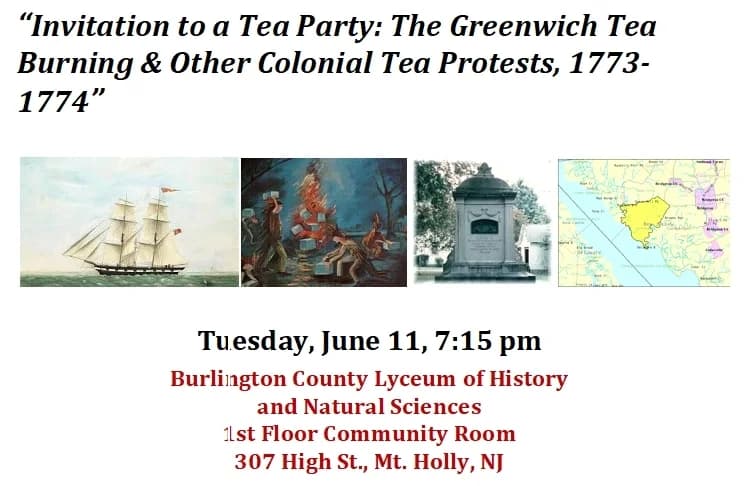
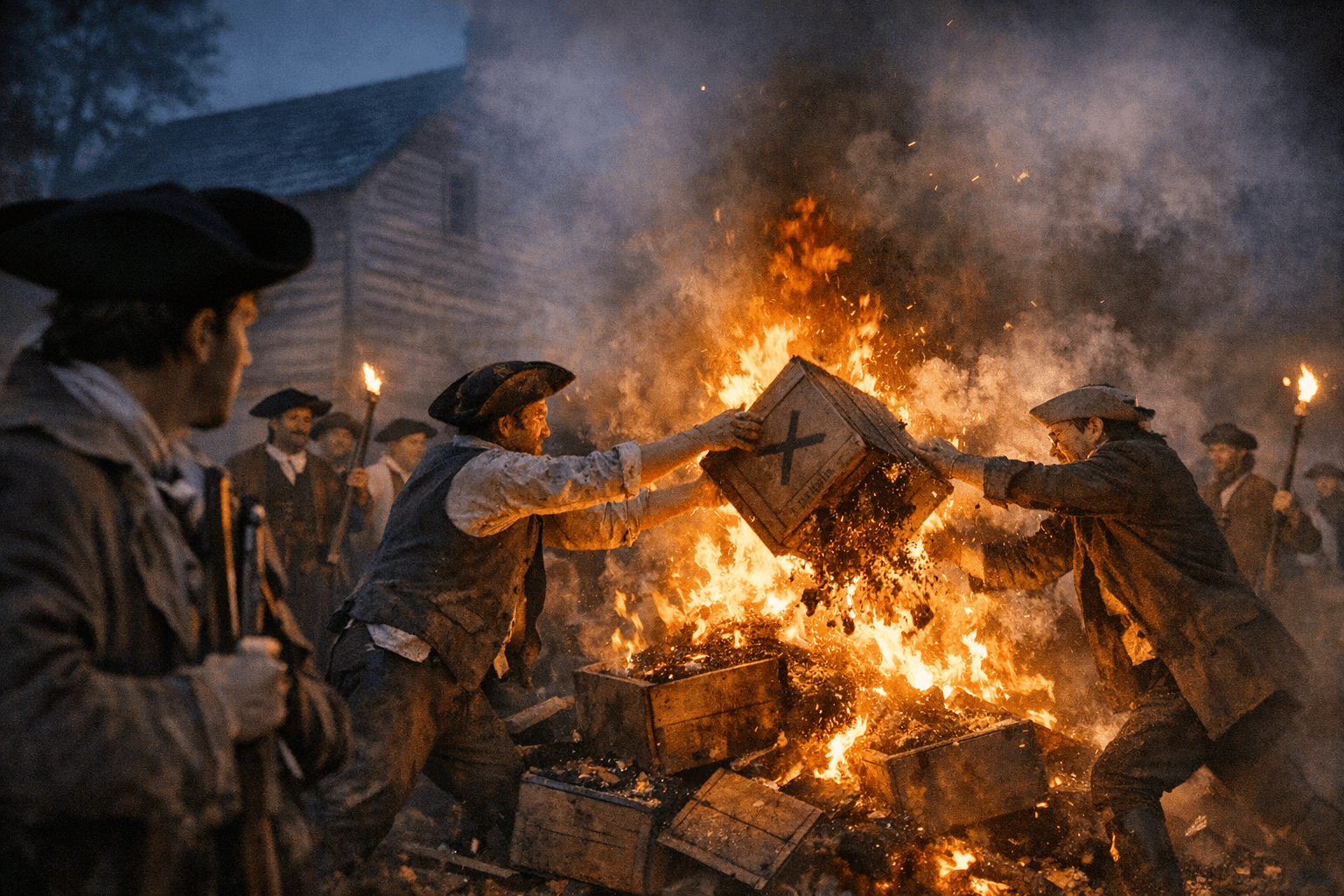
On the evening of December 22, 1774, a company of roughly forty local Whigs, disguised as Indians, entered the cellar of Daniel Bowen's house in Greenwich, seized the entire cargo of tea that had been stored there, and hauled the tea chests into an adjoining field where they were burned in what contemporaries described as one general conflagration. The shipment had arrived on the British brig Greyhound, which had sailed about four miles up the Cohansey creek and stopped at Greenwich, the first landing from the stream's mouth into Delaware Bay. The crew had placed the tea in Bowen's cellar after finding an English sympathizer, known locally as a Tory.
Local citizens had noticed the unusual storage arrangement and quickly formed a temporary committee of five to manage the situation until a county committee could be appointed. That ad hoc civic response highlights how residents of Cumberland County organized institutions of local oversight in real time, asserting control over a contentious economic and political issue.
Greenwich itself provided a durable setting for the incident. Founded in 1675 by John Fenwick and predating Philadelphia, the town retained a physical layout and civic memory that connected colonists to an established sense of place. Ye Greate Street, laid out in 1684 and largely unchanged by the end of the 18th century, remained a focal point for community life when the Greyhound arrived.
For contemporary Cumberland County, the event matters beyond heritage. The tea burning illustrates early practices of grassroots accountability, coalition building, and rapid local governance that prefigured more formal institutions. Those patterns are relevant to present-day debates over how citizens hold local officials, merchants, and outside interests to account. The incident also emphasizes the role of waterways like the Cohansey in shaping economic and political interactions between the county and broader markets.
Preserving and interpreting episodes like the Greenwich tea burning can inform civic education, historical preservation priorities, and community discussions about public participation. As Cumberland County assesses its historical sites and public programs, the 1774 events offer a concrete example of local agency shaping policy outcomes. Recognizing that legacy can sharpen expectations for transparency and citizen engagement in current governance while honoring the specific, sometimes contentious, ways communities have exercised collective power.
This article was produced by Prism’s automated news system from verified source data, official records, and press releases, then run through automated quality and moderation checks before publishing. The system is built and supervised by the people who set the standards it runs under. Read our full AI policy.
Did this article answer your question?
