Greenwich Township preserves one of New Jersey’s oldest historic landscapes
Ye Greate Street still follows its 1684 line, and Greenwich now regulates porch repairs, fences, and additions to keep one of New Jersey’s oldest landscapes intact.
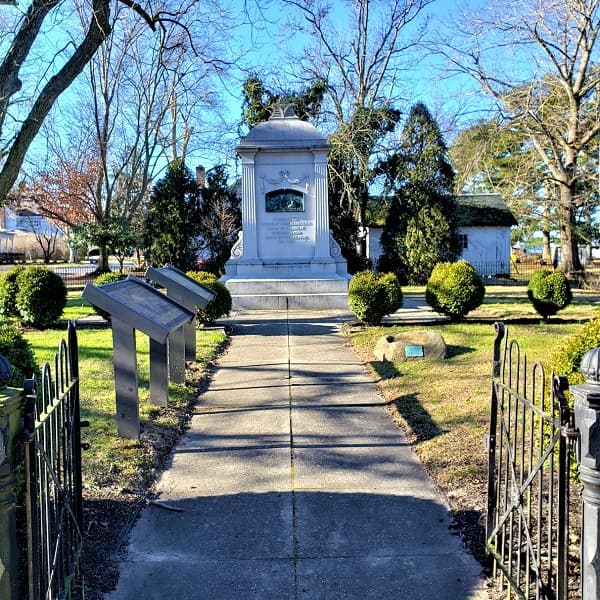
Ye Greate Street still runs where it was laid out in 1684, and that unbroken street line is what makes Greenwich Township more than a preserved backdrop. It is a working neighborhood where historic protections shape ordinary property decisions, from porch replacements to fence lines, while residents and officials try to keep the county’s oldest settlement landscape intact.
A colonial street that still defines the township
Greenwich’s historic core grew out of John Fenwick’s settlement on the Cohansey River, where the township became the first principal settlement of Cumberland County and one of the region’s early ports of entry under British rule. The Greenwich Historic District stretches along Ye Greate Street from the Cohansey River to Othello, also known as Upper Greenwich or Head of Greenwich, and the street’s course has never changed.
The district was added to the National Register of Historic Places on January 20, 1972. The New Jersey Historic Trust describes it as a 350-acre historic district with 19 contributing buildings, many documented by the Historic American Buildings Survey. Its significance reaches beyond architecture alone. The district is tied to agriculture, architecture, commerce, and politics, and the township’s history materials also connect it to shipbuilding, fishing, oyster harvesting, and sturgeon-related trade that once shaped life along Delaware Bay.
That is why Greenwich reads less like a museum and more like a record of settlement. The old street plan still helps explain where the town came from, how it traded, and why so much of its built environment survived.
How preservation works in daily life
Greenwich’s historic protections are not symbolic. Township planning documents say property owners in the historic district may need a Certificate of Approval for exterior changes, and the Land Use Board application is used for common projects such as fences, sheds, and porch replacements. Applicants are told to contact the Land Use Board Secretary if they are unsure whether approval is needed.
The process can also involve an application fee, an escrow fee, and, for some requests, a separate variance application. That means routine upkeep in the historic district can carry more steps than the same work elsewhere in Cumberland County, especially when a project changes what can be seen from the street.
The joint Planning and Zoning Board reviews land-use applications within the National Historic District and recommends revisions to land-use ordinances to the governing bodies. Greenwich also distinguishes between the National Register district and a smaller local Historic Conservation District governed by township ordinance. Together, those layers show how preservation is enforced not as a single rule, but as a set of decisions that still affect how people use their properties.
What visitors can still see on Ye Greate Street
The township says almost two-thirds of Greenwich’s land is preserved through wetlands, farmland, open space, or other preservation tools, which helps keep the historic landscape readable on the ground. Ye Greate Street serves as the town’s historic main street, with free parking and walkable access to several landmarks tied to the Cumberland County Historical Society.
Those sites include:
- Historic Gibbon House Museum
- Cumberland County Prehistorical Museum
- John Dubois Maritime Museum
- Reba and Warren Lummis Genealogical and Historical Research Library
- Greenwich Tea Party Monument
- other historic houses and monuments along the district
That concentration of institutions turns the street into a public corridor of memory, but it also functions as a lived-in neighborhood where preservation has to coexist with parking, maintenance, and modern land use. Visitors can still connect the old street layout to the Cohansey River and to the buildings that continue to anchor the township’s identity.
The Greenwich Tea Party Monument adds another layer to that landscape. Township materials say Greenwich is one of five tea-party towns in America, and the monument was erected in 1908 to commemorate the burning of British tea on December 22, 1774. The marker is not just ceremonial. It ties the district to the political unrest that shaped the Revolutionary era and still helps define how Greenwich presents itself today.
Why the county’s earliest settlement still matters
Cumberland County places meaningful permanent settlement here in 1675, when John Fenwick purchased his tenth of West Jersey from Lord John Berkeley. Fenwick’s 1683 will called for a second town on the Cohansey Creek, and Greenwich later took its name from settlers from New England and Long Island who borrowed the Connecticut community’s name.
The county’s history also notes that by 1700 almost all local Native people had left the area. Early life in the county was shaped by Quakers, Presbyterians, Baptists, and a later Seventh Day Baptist community, which made the region religiously diverse as well as geographically strategic. That mix helps explain why the Greenwich district matters beyond its surviving houses. It stands at the intersection of inland settlement, maritime trade, and the religious migrations that built South Jersey’s early communities.
An updated historical record for a living district
The township says the original National Register nomination was completed in 1971 and 1972, and the current update expands the story beyond a few notable buildings. The revised narrative adds agriculture, architecture, the canning industry, and politics, giving the district a fuller account of how Greenwich developed over time.
The township’s FAQ says Verizon Wireless paid for that update as a condition tied to a cell tower at Morris Goodwin School. That detail matters because it shows preservation in Greenwich is still happening through contemporary planning, negotiation, and public process, not only through old deeds and monuments.
In Greenwich, preservation is not a finish line. It is an ongoing local decision about how to keep Ye Greate Street, the surrounding landscape, and the working neighborhood around them legible for the next generation without freezing the township in place.
This article was produced by Prism’s automated news system from verified source data, official records, and press releases, then run through automated quality and moderation checks before publishing. The system is built and supervised by the people who set the standards it runs under. Read our full AI policy.
Did this article answer your question?