How Cumberland County government works, and where to find each office
Cumberland County's seven commissioners set policy, but roads, records, probate and services all start in different offices at 164 West Broad Street in Bridgeton.
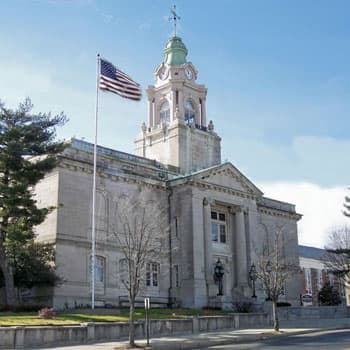
Cumberland County runs from the County Administration Building at 164 West Broad Street in Bridgeton. If your pothole, probate case, tax question or benefits problem keeps bouncing from office to office, the county’s government pages show who owns the issue: the seven-member Board of County Commissioners sets policy, while the county administrator and department heads carry it out.
Who actually runs county government
Not every county office answers to the same person. The Board of County Commissioners is the policy-making body, which means it sets direction, approves priorities and oversees county operations. The day-to-day work falls to the county administrator and department heads, so if you are frustrated by a service delay, a budget choice or a countywide policy problem, the commissioners are the people to pressure first.
The county’s website and directory map those lines of authority. The government page links residents to the main branches of county administration, and the commissioners page identifies the board as the county’s elected leadership. The directory pulls the system together in one place, with departments, phone numbers, addresses and elected offices in a single reference.
When the problem is a road, a building or other county property
For road complaints, the county’s Department of Public Works and its Road Division are the first stops. If the issue is a county road, damaged pavement or another maintenance problem, that is where the work belongs, not at a municipal hall or in the commissioners’ inbox. The same logic applies to county facilities: the Buildings & Grounds Division handles the physical upkeep of county property.
If one road keeps getting patched badly, the Road Division is where the operational question starts. If the problem is broader, such as a pattern of neglected county facilities or a long backlog, the commissioners become the right target because they control policy and oversight, not the crew doing the repair work.
Records, taxes and the county’s paper trail
When you need records, Cumberland County has a direct public records page for OPRA requests. That is the county’s formal route for asking for public documents, which is different from calling a random office and hoping someone forwards the message. The county also maintains a taxation page, a Board of Taxation page and a Tax Maps page, which are useful when the problem is not a street repair but a question about county tax information.
The Clerk’s Office sits alongside the Surrogate as one of the county’s constitutional offices, and it has its own contact page rather than being buried under the general county directory. Certain filings and office-specific questions belong with the clerk, not with the commissioner board. If you are trying to figure out where a document goes, the county directory lists the office names, addresses and phone numbers in one place.
Probate, wills and Surrogate matters
The Surrogate’s Office handles some of the most practical county business, especially when a family is dealing with death, inheritance or guardianship. Cumberland County’s surrogate pages cover probate, letters of administration, wills and estates, guardianship, service fees and forms, so this is the office to find when the issue is a filing tied to an estate rather than a township service or a court appearance in another county office. The county’s probate information sheet lists the Surrogate office phone number as 856-453-4800 and the fax number as 856-451-7356.
There is also a satellite Surrogate Court office in Vineland, at South Delsea Drive and West Sherman Avenue, which gives county residents outside Bridgeton another point of access for surrogate matters. For a minor guardianship worksheet, the county’s surrogate materials also show that the office accepts fax submissions.
Social services, aging and disability help
The Division of Social Services and the Office on Aging and Disability Services are the county’s main public-facing routes for residents who need support beyond a single filing or one-time record request. The county also keeps a Human Services Guide, and these services are meant to be navigated as a system rather than as isolated programs. If you need to know where to start for a benefits problem, a referral or a county support service, this is the branch of county government to open first.
The commissioners can be the right people to question if services feel understaffed, the process is too slow or residents are being bounced between offices without answers. The specific intake, forms and service details live with the department itself, on the county’s directory and service pages.
How to use the county directory without wasting time
The county directory, issued by the Board of County Commissioners, is the best single reference for Cumberland County. The 2024 and 2025 editions both serve the same purpose: they gather county departments, elected offices, addresses and phone numbers into one official snapshot. For residents, that means one file can point to the right office for records, taxation, public works, human services or surrogate matters without forcing a search through separate pages.
This article was produced by Prism’s automated news system from verified source data, official records, and press releases, then run through automated quality and moderation checks before publishing. The system is built and supervised by the people who set the standards it runs under. Read our full AI policy.
Did this article answer your question?