Lichen Walk Highlights Conservation Concerns, Ecological Signals in Pine Barrens
A lichen focused walk at Manumuskin Preserve on December 18 brought local scientists, conservation volunteers, and residents together to document fungal algae communities and discuss their implications for land management. The event underscored how slow growing lichens, including reindeer types labeled "fruticose", serve as air quality indicators and raise practical questions for county planning and conservation funding.
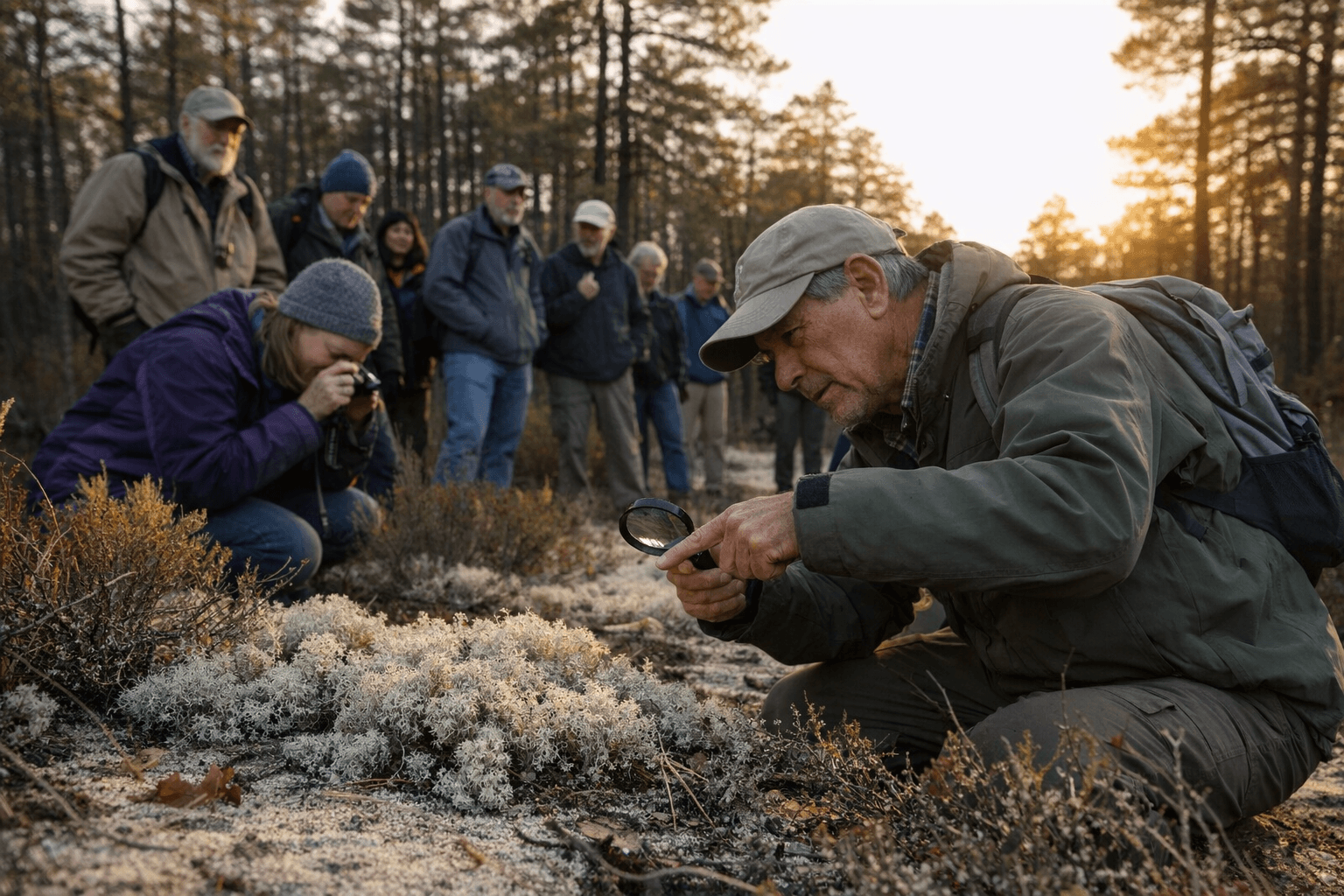
On December 18 a lichen focused walk at Manumuskin Preserve in Cumberland County drew participants led by New Jersey Department of Environmental Protection biologist Jason Hafstad and organized by regional conservation group CU Maurice River. The field session identified four locally observed Cladonia species commonly called reindeer lichens and reviewed basic lichen biology and identification methods for residents and volunteer monitors.
Participants learned to distinguish growth forms that aid identification, described in the field as crustose, foliose, and "fruticose". Presenters emphasized the slow growth rates of many lichens and their sensitivity to disturbance, noting that recovery from trampling, fire or nearby development can take years or decades. Field discussion also connected lichens to broader environmental monitoring, with species composition used as a practical indicator of air quality and as a functional component of coastal dune ecology in the Pine Barrens landscape.
The walk has local policy implications because lichens respond to stressors that are often the subject of county land use decisions. Slow growth and vulnerability to fire and development complicate mitigation strategies when conservation parcels face conversion or when fire management is considered. Municipal and county planning boards that allocate open space funding or evaluate development proposals should factor in long recovery timelines for biologically dependent groundcover and consider conservation easements and buffer requirements that reduce chronic disturbance.
Institutionally the event highlighted the role of the Department of Environmental Protection in field based monitoring and the value of partnerships with nonprofits to engage volunteers. Integrating lichen surveys into routine environmental assessments could strengthen air quality and habitat monitoring for local officials. For Cumberland County voters and civic leaders the lesson is practical. Land use policies, open space budgets, and fire management plans materially affect organisms that underpin ecosystem resilience in the Pine Barrens.
The walk also emphasized community engagement benefits. Seasonal field events build local capacity to recognize sensitive habitats and create a constituency for careful stewardship. As lichens remain quiet witnesses to environmental change they offer residents measurable evidence to inform conversations at planning board hearings and during local elections.
This article was produced by Prism’s automated news system from verified source data, official records, and press releases, then run through automated quality and moderation checks before publishing. The system is built and supervised by the people who set the standards it runs under. Read our full AI policy.
Did this article answer your question?
