Millville's Arts District Blends Glass, Culture, and Community Education
Millville's arts district charges $14 to get in, but free admission options exist every month; here's what a visit actually costs and what it delivers for Cumberland County residents.
The Real Cost of a Day in Millville's Arts District
Walking into WheatonArts on a regular Wednesday means paying $14 per adult, $13 for seniors 62 and older, $8 for students, and nothing for children five and under. That is the standard gate price at 1501 Glasstown Road, the 20-acre nonprofit campus that anchors Millville's identity as South Jersey's glass-and-culture hub. For a family of four with two school-age kids, a baseline visit runs roughly $44 before food or workshops. Whether that feels accessible depends heavily on which day you choose and which programs you know to ask about.
Several free-admission pathways exist and most visitors never use them. WheatonArts is a Blue Star Museum, meaning active-duty military personnel, National Guard and Reserve members, and their families enter free year-round. Bank of America cardholders get in free the first full weekend of every month through the Museums on Us program. The PNC Arts Alive-sponsored WheatonArts Family Days program offers additional no-cost admission windows throughout the season. Buying tickets online in advance saves $2 per ticket off the gate price, and members pay nothing at all; memberships can be purchased and activated on the same day. It is also free, with no ticket required, to browse the Museum Stores and walk the Nature Trail during regular open hours, as long as no ticketed event is scheduled.
The Riverfront Renaissance Center for the Arts, at 22 N. High Street in downtown Millville, operates on a different model entirely. The center hosts four gallery spaces whose shows rotate monthly, and its signature programming happens on Third Fridays, when the doors open from 6 to 9 p.m. at no charge. During those evenings, studios on the second floor open to the public, artists present their current exhibitions, and the center puts out a complimentary wine bar and butlered appetizers. High Street's restaurants and retail stay open late to absorb the foot traffic, giving the evening an economic ripple effect that extends well past the center's own walls.
What You Actually Get for the Admission Price
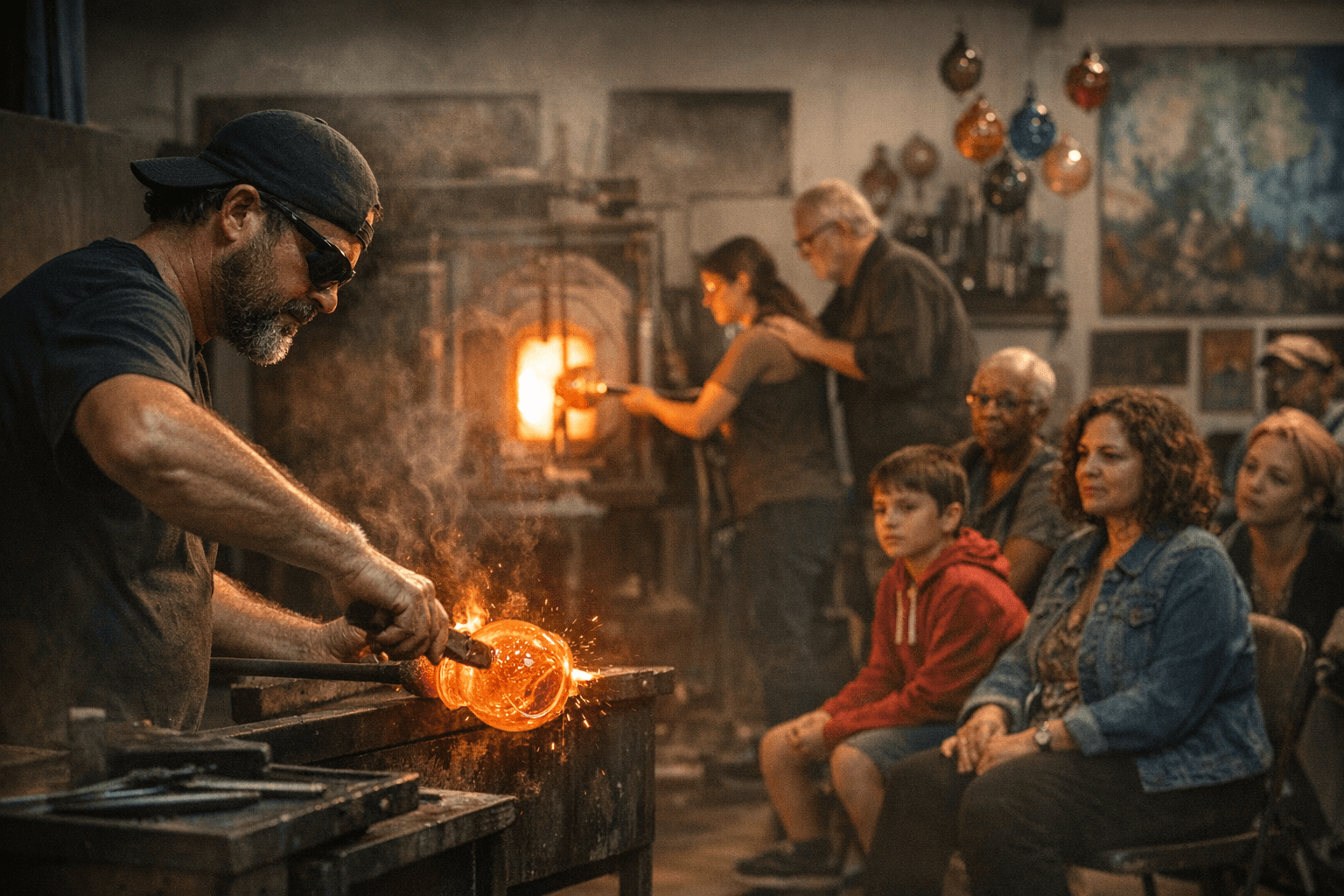
The WheatonArts campus is built around glass. The Museum of American Glass and the Down Jersey Folklife Center anchor the educational core, and the Artist Studios offer live glassblowing and pottery demonstrations throughout the day. These are not static displays; visitors watch molten glass shaped in real time, which is the kind of experience difficult to replicate digitally and the primary reason school groups from across Cumberland County book field trips here. Rotating exhibitions in the gallery spaces bring in regional and national artists alongside the permanent collection.
For hands-on participation, workshop pricing adds to the base admission cost. Glass-related classes carry age minimums and safety requirements, and they fill quickly; reservations are strongly recommended. The campus also offers classes in ceramics and fine craft, summer arts camps for children and teenagers, and continuing education for adults, making WheatonArts function as much like a community college of the arts as a traditional museum.
Worth noting: the GateHouse Café is permanently closed. Light refreshments are available in the General Store on campus, but anyone building a full-day itinerary should factor in a meal at one of the restaurants along High Street or the riverfront, where Third Fridays have demonstrated steady enough demand to keep businesses open late on a weeknight.
The Riverfront Renaissance Center: Community-First Model
The RRCA describes its mission in explicit equity terms, committing to access and inclusion for BIPOC, LGBTQIA+, and disabled visitors, and actively training staff and board members in diversity, equity, access, and inclusion practices. That language is less common in arts-district marketing than it should be, and it reflects an institutional posture oriented more toward Cumberland County residents than toward visiting tourists.
The center's class pricing makes that posture concrete. Ten-week art courses for children run $60 including all materials, according to visitor accounts, a price point that competes with little-league registration fees and positions arts education as genuinely attainable for working families in the county. The four gallery spaces cycle through new shows every month, with some exhibitions produced through partnerships with national institutions presenting traveling shows. Educators looking for curriculum-aligned programming in visual arts and history have two distinct options within a few miles of each other, which is unusual for a city of Millville's size.
Annual Events and What They Cost
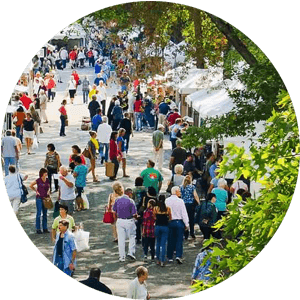
The Festival of Fine Craft, held each fall at WheatonArts, marked its 25th anniversary in October 2024. The two-day event features more than 125 juried contemporary and traditional artists, live music, a Beer and Wine Garden, family art activities, and the organization's signature Glass Pumpkin Fundraiser. Festival admission is $12 for adults, $11 for seniors, $7 for students, free for members and children five and under. Buying online before the deadline saves $2 per ticket. The festival draws visitors from across South Jersey, and the overflow supports neighboring restaurants, retail, and lodging in ways that make it one of the more consequential economic events on Millville's calendar.
WheatonArts also hosts Fantasy Faire in partnership with Mystic Realms, Ltd., a costumed performance event included in standard admission, along with artist talks, opening reception nights, and seasonal family programming throughout the year. Checking the events calendar before visiting is not optional advice; hours and programming change on event days, and arriving without a reservation for a popular workshop means watching from the sideline.
Parking, Access, and Getting There
Parking is available at the WheatonArts campus off Glasstown Road and near the High Street riverfront district where the RRCA is located. During major festival weekends, additional parking or shuttle arrangements are typically made, but details change by event. Neither venue has published comprehensive transit options, and no public bus route provides direct service to the WheatonArts campus from most parts of Cumberland County, a gap that residents and advocacy groups have flagged as a barrier to consistent access for people without cars.
Accessibility accommodations are available at both venues; contacting them ahead of a visit to confirm elevator access, accessible parking, and program accommodations is advisable rather than assumed. WheatonArts does not permit pets on campus, with the exception of ADA-defined service dogs.
The Economic Argument
Millville's bet on arts-driven revitalization is built on the premise that cultural institutions generate foot traffic that spills into restaurants, hotels, and retail. The Third Friday model at the Riverfront Renaissance Center is a direct mechanism for that: one evening per month when High Street businesses collectively extend their hours and benefit from gallery attendance. The Festival of Fine Craft serves a similar function at larger scale, pulling visitors who eat, shop, and sometimes stay overnight in the area.
The funding structure behind both organizations includes a mix of nonprofit revenue, membership income, government cultural grants, and corporate sponsors such as PNC. That diversity of funding is a stability asset, but it also means programming decisions are partly shaped by what sponsors and grant-makers want to see. Residents who want a voice in what the district prioritizes have concrete options: WheatonArts and the RRCA both offer volunteer and membership structures, and participating at that level is the most direct way to influence what kinds of programs, hours, and access improvements get funded next.
This article was produced by Prism’s automated news system from verified source data, official records, and press releases, then run through automated quality and moderation checks before publishing. The system is built and supervised by the people who set the standards it runs under. Read our full AI policy.
Did this article answer your question?