Pinelands dispute stalls Sweet Amalia, exposes need for more state resources
Sweet Amalia’s stalled opening shows how Pinelands permitting can ripple beyond one restaurant, delaying jobs, investment, and local spending in Cumberland County.
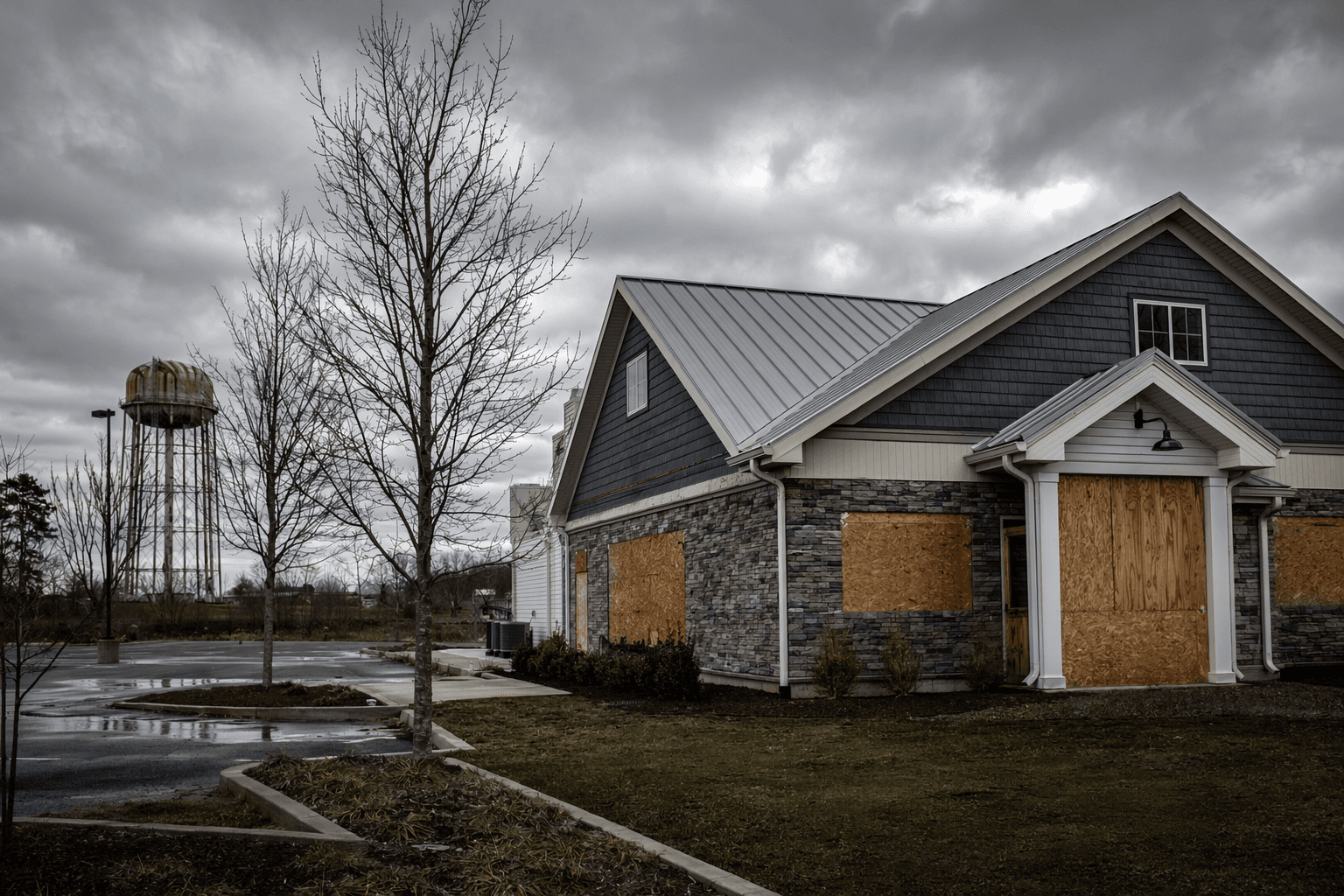
Sweet Amalia’s shutdown is bigger than one restaurant
Sweet Amalia Market & Kitchen is not opening this season, and that silence in Franklin Township has become a warning sign for Cumberland County. A restaurant that opened in April 2021 as a revitalized roadside stand, and later landed on the New York Times’ 2024 list of favorite restaurants in the United States, is now caught in a Pinelands approval process that has already stretched for years.
The immediate issue is simple to see on Route 40 in Newfield: the outdoor picnic tables are gone, takeout may remain the only option, and a business that could be drawing customers, cooks, suppliers, and seasonal income is waiting on state action. The larger issue is harder to see but matters more for the local economy. When a permitting system slows down, the effects do not stop at one owner’s property line. They spread to workers, vendors, farm partners, and nearby businesses that depend on traffic and spending.
Why the Pinelands rules exist in the first place
The Pinelands is not an ordinary zoning map. It covers about 1.1 million acres across parts of seven counties, and the Pinelands Commission says the region is home to nearly 500,000 people and 135 rare plant and animal species. The land sits above the Kirkwood-Cohansey aquifer, one of the most sensitive groundwater systems in the East, which is why septic discharge and nitrogen pollution are treated as serious threats, not minor technicalities.
The Pinelands Comprehensive Management Plan was established in 1981 to protect that environment. The plan divides the region into 10 management areas, and only Regional Growth Areas and Pinelands Towns generally support the kind of higher-intensity development tied to major commercial projects. That framework is meant to keep the region’s water, habitat, and land use from being eroded one project at a time.
That is also why the dispute around Sweet Amalia is more than a restaurant pause. The rules are strict because the environmental stakes are high. But strict rules only work if the agencies enforcing them can process applications quickly enough to keep good-faith projects from freezing in place.
How a local expansion became a state-level permitting case
Sweet Amalia’s retroactive review began in 2023, after the business expanded in 2021 without realizing it needed Pinelands Commission approval. According to the company’s own materials, the restaurant at 994 Route 40 has already had to remove its outdoor picnic tables while approvals are pending, and takeout may be the only near-term service option. The May 8, 2026 Pinelands Commission meeting packet lists Sweet Amalia in Franklin Township and says the expanded outdoor seating was constructed without application, which is why the matter is being handled as an enforcement and permitting case.
Since then, the owners have spent two years trying to bring the site into compliance. The steps have included pursuing additional land, exploring advanced septic options, scaling back plans, and proposing ways to transfer grandfathered wastewater flows. At an April 10 commission meeting, the owners appealed for a collaborative path forward. That detail matters because it shows this is not a case of a business ignoring the system and walking away. It is a case of a business trying to untangle a regulatory problem while the season, the staff schedule, and the customer base keep moving.

For Cumberland County, that delay carries an economic cost. A restaurant in a visible roadside location can generate spillover demand for local producers, hospitality workers, service contractors, and nearby shops. When an opening is stalled, those gains do not arrive on time, and in a thin-margin environment, timing can determine whether investment pays off or gets shelved.
What the controversy says about state capacity
Heidi Yeh of the Pinelands Alliance argues that the answer is not to weaken the rules, but to better support the system that enforces them. That argument lands because the Pinelands Commission is being asked to do two things at once: preserve environmental protections that were written to safeguard a fragile region, and process increasingly complicated applications in real time.
The Pinelands Commission’s own public materials say development applications are posted for public comment on its status reports page, a reminder that the process is designed to be transparent as well as careful. But transparency does not solve a staffing or workload problem. If applications pile up, if technical reviews take too long, or if applicants and regulators cannot move quickly through compliance questions, the result is not just administrative frustration. It is delayed construction, delayed hiring, and delayed local spending.
That is the policy tension at the heart of the Sweet Amalia dispute. The Pinelands Comprehensive Management Plan is not the problem. The strain is the gap between the pace of state process and the pace of local business reality. A business can be ready to serve customers while waiting on septic approvals, land-use review, or wastewater decisions that take months or years to resolve.
Why Cumberland County should care beyond one storefront
Sweet Amalia’s national recognition makes the case more visible, but it is the everyday economic impact that should worry Cumberland County most. If a highly regarded restaurant in Franklin Township can end up sidelined by a lengthy retroactive review, smaller businesses without a marquee name may have even less leverage, less cash cushion, and fewer options while they wait.
That is where state resources become a local economic issue. More staff, more technical capacity, and faster review pathways would not mean weaker environmental standards. They would mean the standards can be enforced without unnecessarily choking off legitimate investment in South Jersey. For a county that depends on careful balance between preservation and development, the lesson is blunt: regulation that cannot keep up with reality can become its own form of economic harm.
Sweet Amalia’s case will not rewrite the Pinelands rules, but it does expose the pressure points. The region still needs strong environmental protection. It also needs a state system that can move fast enough to prevent avoidable damage to jobs, customer traffic, and the credibility of doing business in the Pinelands.
This article was produced by Prism’s automated news system from verified source data, official records, and press releases, then run through automated quality and moderation checks before publishing. The system is built and supervised by the people who set the standards it runs under. Read our full AI policy.
Did this article answer your question?

