Vineland Council Postpones $6.2 Million Loan for Data Center Project
Vineland City Council on January 4 tabled a vote on a proposed $6.2 million municipal loan to DataOne Sustainable Datacenter, citing heavy public turnout and unresolved technical and transparency concerns. The delay matters to residents because the multi‑phase, roughly 2.4 million square foot development could place significant new demands on the municipal electric utility and water system and raise questions about local environmental and fiscal safeguards.
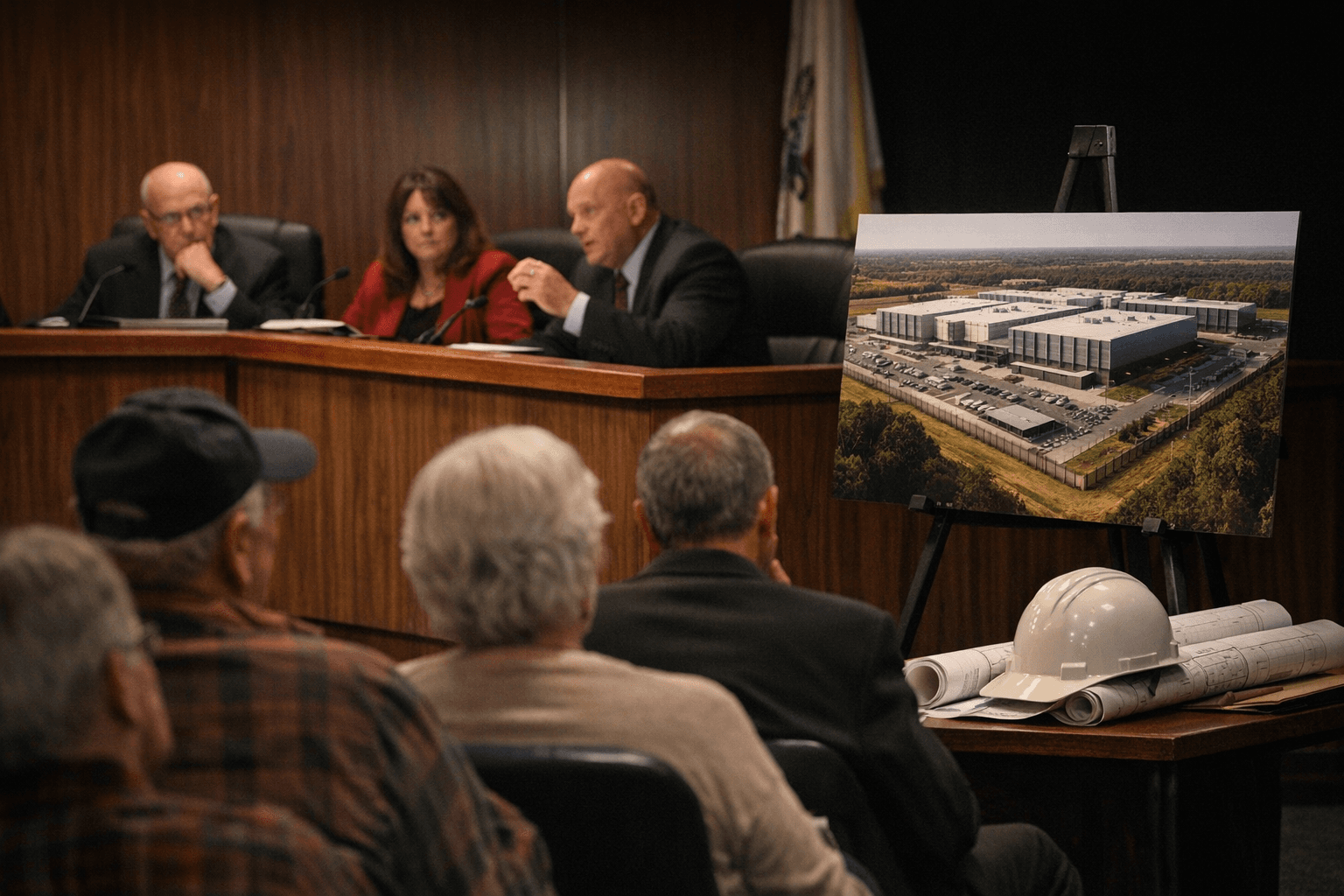
Vineland elected officials paused action on a financing measure after more than 100 residents attended a council meeting and many delivered public comment opposing a loan to support the DataOne Sustainable Datacenter project. The proposal, developed in partnership with Netherlands-based Nebius Group, envisions a multi‑phase campus that when fully built would total about 2.4 million square feet and house multiple large server buildings.
Opponents at the meeting pressed the council on the data center’s projected electricity and water needs relative to the Vineland Municipal Electric Utility capacity, potential air emissions from proposed on‑site gas generation, and the level of public transparency surrounding the deal. Those technical and community concerns prompted the council to leave the $6.2 million loan resolution for further consideration rather than approve or reject it outright.
Municipal loans are commonly used to attract investment and create economic development opportunities. Proponents of data center projects often cite construction activity and potential increased tax ratables. But the scale and resource intensity of large server campuses create institutional issues for a city with a municipally owned utility. If power or water demand exceeds current capabilities, the city would need to decide who pays for upgrades, whether costs are passed to ratepayers, and how to maintain reliability for existing customers.
Air quality and emissions standards are another vector of local impact. Public concern over on‑site gas generation highlights the regulatory and environmental review steps that typically accompany infrastructure plans of this size. Those issues intersect with municipal authority, state permitting processes, and potential obligations the city might accept as part of a loan or host agreement.
The council’s decision to postpone demonstrates the political effect of concentrated civic engagement. More than 100 people attending a single meeting and delivering comments signaled strong local interest and shifted the council toward additional scrutiny. For residents, the outcome underscores that municipal financing and development agreements affecting utilities and the environment are subject to public input and technical review.
Next steps are likely to include further study and negotiation. The council left the item open for reconsideration, which suggests officials will seek additional information or revised terms before moving forward. Residents concerned about utility capacity, water allocation, air emissions, or fiscal exposure should monitor upcoming council agendas and the documents the city requests from developers and its own utility staff.
This article was produced by Prism’s automated news system from verified source data, official records, and press releases, then run through automated quality and moderation checks before publishing. The system is built and supervised by the people who set the standards it runs under. Read our full AI policy.
Did this article answer your question?