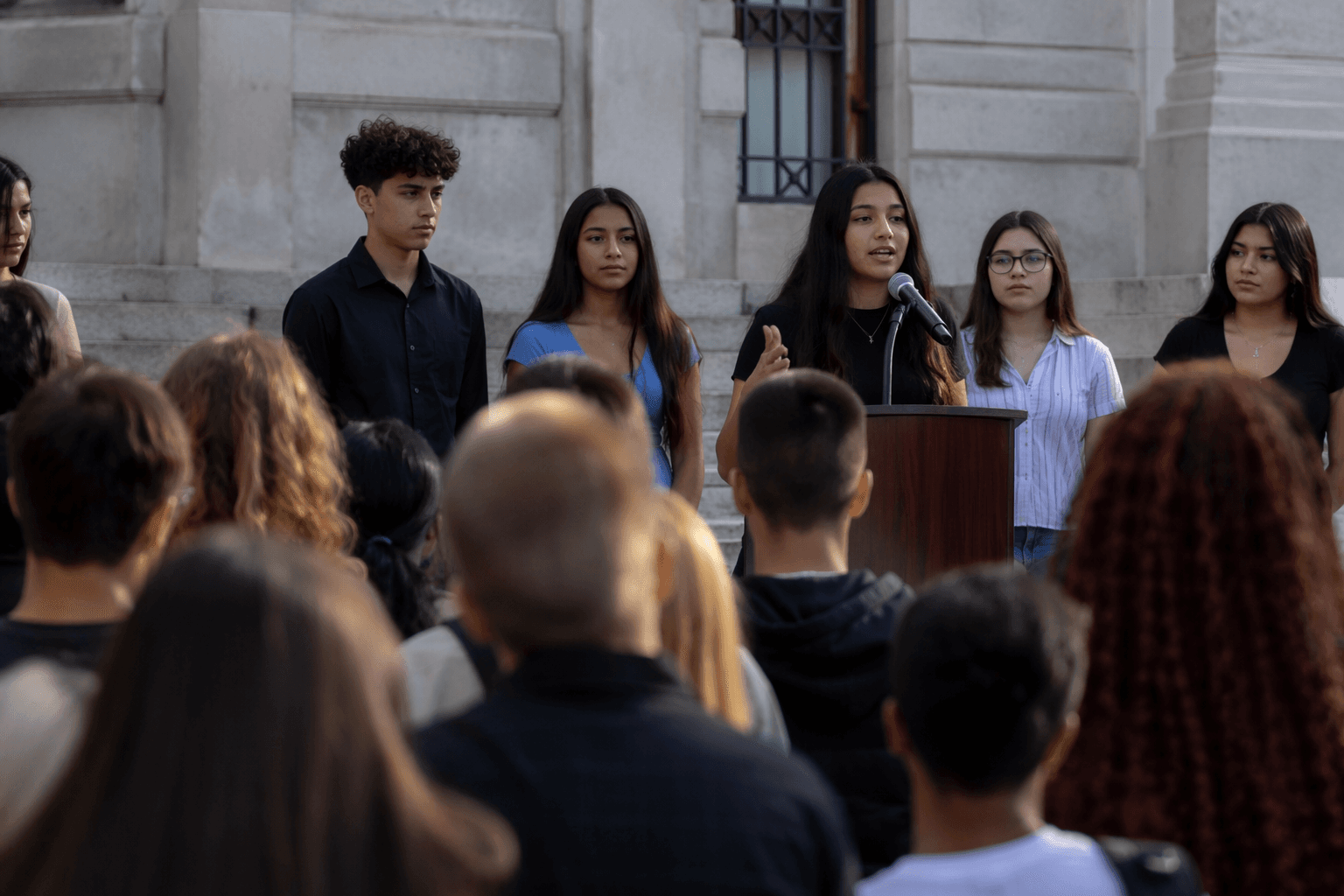
Vineland students learn civic engagement through school safety advocacy
Vineland students are learning democracy by tackling school safety, while Cumberland County residents watch for proof that advocacy changes policy.
Vineland’s student civic work matters most when it moves beyond praise and leaves something residents can point to: a safer walk to school, a better-maintained park, a more responsive district, or even a sign on Landis Avenue that says a student project changed the streetscape. That is the real test in Cumberland County, where school safety has long been more than a classroom topic and where young people have already shown they can contribute to public life in visible ways.
Why Vineland’s student advocacy feels local, not abstract
The current debate around civic education is grounded in concrete problems, not civics textbook language. NJ.com’s June 7 opinion piece uses two examples to make that point clear: park maintenance in East Orange and school safety in Vineland. The message is straightforward, and it lands because both examples deal with issues people can see, use, and judge for themselves.
In Vineland, school safety is not an abstract debate about institutions. It is about bus stops, parent notices, public service announcements, and the daily confidence of students and families moving through the district. That makes student advocacy especially relevant in Cumberland County, where school safety has repeatedly surfaced in public conversation and where residents have seen firsthand how quickly concern can turn into a community-wide demand for action.
What residents have already seen in Vineland
Vineland has a history of student involvement that goes beyond symbolic gestures. In 2012, NJ.com reported on Bridgeton and Vineland High School students facing off in mock trial, an example of young people building argument, evidence, and public speaking skills in a setting that mirrors real civic participation. A year later, Vineland community members met in November 2013 to discuss safety after recent tragedies, and school officials planned safety notices for parents and students about bus stops along with public service announcements. Those details matter because they show that civic concern in Vineland has long been tied to practical responses, not just expressions of worry.
There is also a more visible and more uplifting example from 2014: Vineland High School students helped design a downtown “Keep Vineland Beautiful” sign on Landis Avenue. As city utility workers installed it, the students who helped create it looked on proudly. That moment did not solve every neighborhood problem, but it did leave behind a public marker of student involvement that residents could see every day.
The larger statewide push behind the lesson
Vineland’s story is also part of a wider New Jersey effort to take civic learning seriously. NJ.com described CivicsNJ in March 2026 as a statewide coalition dedicated to advancing civic learning and engagement for young New Jerseyans. That broader movement gives context to why these local examples are getting attention now: schools are not only teaching students how government works, but also how to identify a problem, gather facts, negotiate with adults, and push for change.
That approach matters in a state where school safety, district accountability, and youth participation are already active public concerns. In that setting, a student who researches a safety issue or a park maintenance complaint is not just completing an assignment. The student is practicing the same habits residents expect from effective civic leaders: listening, documenting, persuading, and following through.
The real measure is whether adults change policy
The strongest question for Vineland is not whether adults praise student leadership. It is whether that praise turns into results residents can measure. That distinction is important, especially in Cumberland County, where public confidence depends on whether school and city leaders respond to student concerns with more than applause.
NJ.com’s recent reporting in 2025 and 2026 on serious school-safety-related incidents in New Jersey underscores why this work cannot be treated as ceremonial. When school safety is in the news because of real incidents, student advocacy becomes more than a lesson in democracy. It becomes part of the public conversation about whether schools are prepared, transparent, and accountable enough to keep families informed and students protected.
Vineland’s strongest tradition of student civic work has always been practical. The mock trial students of 2012 were learning how to argue a case. The students behind the “Keep Vineland Beautiful” sign were helping shape how their downtown looked and felt. The community meeting in 2013 showed that safety concerns could bring families, officials, and schools into the same room. Taken together, those examples suggest that student engagement has real potential in Cumberland County when it is connected to decisions adults must actually make.
What to watch in Vineland and Cumberland County now
Residents can judge the value of student civic engagement by looking for concrete signs that advocacy is being taken seriously. Those signs include:
- School safety notices that are clear, timely, and shared with families before problems grow.
- Public service announcements that do more than reassure and instead explain what is changing.
- District or municipal responses that show student research has influenced policy, procedures, or maintenance.
- Visible improvements in the places students raise, whether that is a bus stop, a school entrance, a park, or a downtown block.
- Continued opportunities for students at Vineland High School and elsewhere in Cumberland County to practice public-minded work through mock trial, civic projects, and community problem-solving.
The point is not to romanticize youth activism. It is to recognize that when students in Vineland take on school safety or neighborhood upkeep, they are doing the kind of work democracies need most: identifying a shared problem and pressing adults to answer it. In a county that has lived with real worries about safety and public upkeep, the worth of that effort will be measured by what changes on the ground.
This article was produced by Prism’s automated news system from verified source data, official records, and press releases, then run through automated quality and moderation checks before publishing. The system is built and supervised by the people who set the standards it runs under. Read our full AI policy.
Did this article answer your question?