Wild About Cumberland, fourth graders explore local habitats and county pride
Fourth graders are learning Cumberland County by walking its habitats, and the lesson is building local pride as much as science knowledge.
A field lesson that starts with place
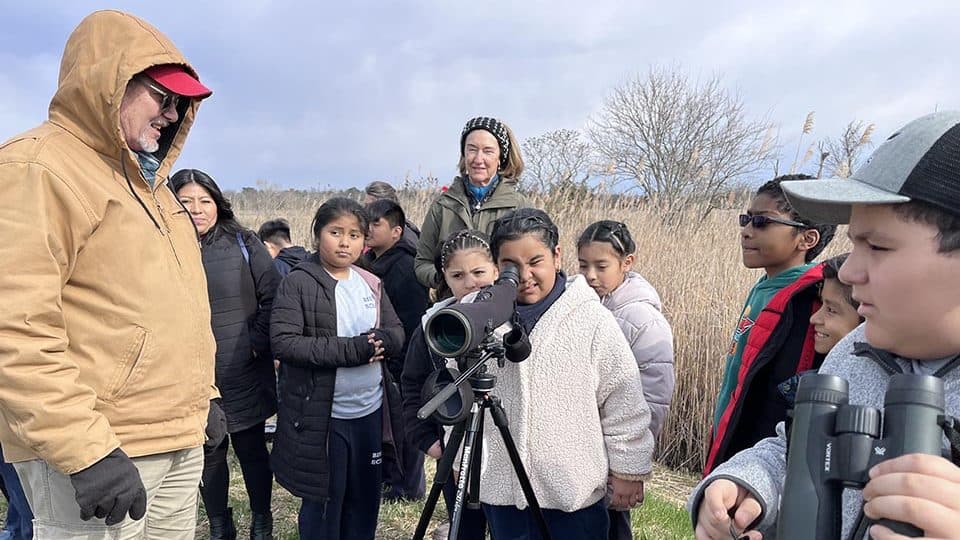
Fourth graders in Cumberland County are being taken out of the classroom and into the landscape itself, where woods, marshes, fields, and roads become part of the lesson. On the New Jersey Delaware Bayshore, about 500 children spent a day in mid-March moving through habitats that many of them had never seen connected as one living system, and they left with a clearer sense of where they live and why it matters.
The point of Wild About Cumberland is not just to teach ecology. It is to help students understand that they are part of a county, a watershed, and a shared coastal environment that stretches well beyond the boundaries of a single town.
Walking from farm field to tidal marsh
The day is designed to make the county visible under students’ feet. One child may begin in a plowed farm field, then move to a former farm that is reverting to forest, then cross a raised road in a hardwood swamp before reaching a dike that looks out over thousands of acres of tidal marsh. That sequence is the program’s strength: it shows land use, habitat change, and coastal ecology as a connected story rather than separate topics.
Students are introduced to farm fields, grasslands, successional forests, upland forests, hardwood swamps, and tidal marshes. They also learn to tell natural features from manmade paths and ditches, a practical skill that turns observation into confidence. By the end of the outing, the lesson is not abstract geography but a lived sense of the Maurice River watershed, the Delaware Bay edge, and the restoration sites that sit much closer to home than many children realize.
A county identity lesson as much as a science lesson
The program rests on a simple insight: many children know their town, but not necessarily the county or watershed they are part of. Wild About Cumberland tries to change that by orienting students from the broadest scale, planet Earth, down to the specific roads, wetlands, and field sites they can later recognize in their own neighborhoods.
That is why the outing carries an identity message alongside the science. Students are not only learning what a tidal marsh does or why a forest changes over time. They are being invited to see Cumberland County as a place with a recognizable natural character, one worth knowing, naming, and protecting.
How the program grew into a county tradition
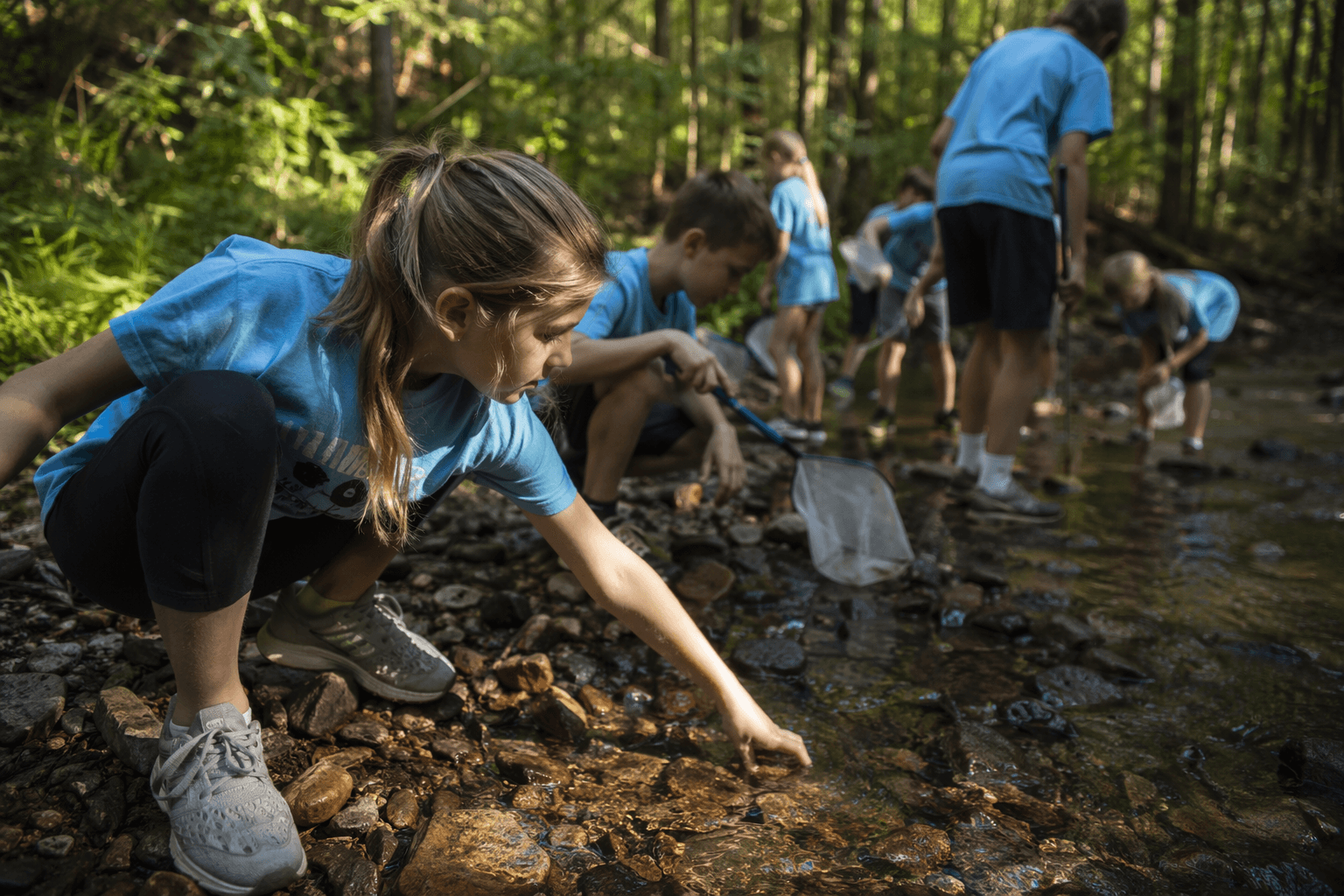
Wild About Cumberland has been running since 2006, and CU Maurice River says roughly 8,000 students have taken part. The first participants are now 28 years old, which gives the program a rare generational marker: some adults in Cumberland County can now remember the same kind of field lesson from their own childhood.
The program has also changed names over time. It began as Raptor Discovery Days, became Eagle Fest Education Days in 2011 and 2012, and has been called Wild About Cumberland since 2013. That evolution mirrors the program’s larger arc, from a focused wildlife outing to a broader countywide lesson in habitat, stewardship, and pride.
The pandemic interrupted that momentum, and the program was paused for three years before returning in spring 2023. When it came back, it did so with scale and purpose intact, showing that the underlying demand for hands-on environmental education had not disappeared.
The volunteer backbone behind the fieldwork
The program is rooted in volunteerism, and that matters. Its leaders are primarily retired teachers, wildlife professionals, and biologists who guide children through a rugged stretch of Commercial Township. Some of those volunteers once took part in similar field trips when they were students, which gives the program an intergenerational quality that schools alone often cannot replicate.
That continuity is part of why the program has endured. It is not built as a one-time event or a seasonal novelty. It is sustained by people who know the bayshore landscape, know how to explain it to children, and see environmental education as a civic duty as much as a classroom extension.
Partnerships that make the program possible
Wild About Cumberland is a collaboration, not a single-organization project. CU Maurice River works with the Bayshore Center at Bivalve, Woodford Cedar Run Wildlife Refuge, and PSEG, creating a regional network around watershed and wildlife education. That partnership structure matters because Cumberland County’s habitats do not fit neatly inside one institution, and neither does the work of teaching children to understand them.
The program is also deliberately access-oriented. CU Maurice River says it is offered free of charge to Cumberland County students and schools, which means the experience is not limited to families or districts that can absorb the cost of field transportation, staffing, or special programming. In a county where access often shapes who gets exposed to place-based learning, that free model is part of the public value.
From a few schools to a broader reach
The program’s return has brought strong participation. In 2023, CU Maurice River and the Bayshore Center at Bivalve said the outing included 11 schools and almost 600 fourth graders over three days. By 2025, local reporting said 600 students from 14 local elementary schools took part over three days. Those numbers show more than attendance. They show a countywide appetite for a program that blends outdoor learning with local identity.
That scale also reinforces the civic dimension of the work. When children from different schools move through the same wetlands, farm edges, and forest transitions, they are encountering a shared geography. That shared experience can shape how they talk about land use, water quality, wildlife habitat, and development long after the field day ends.
Why the lesson reaches beyond fourth grade
Wild About Cumberland is ultimately about whether county schools and environmental partners can help raise residents who recognize their own responsibility to local land and water. The answer, at least in this program’s history, appears to be yes. A child who learns to spot a dike, notice a marsh, and understand how a former farm returns to forest is learning more than a vocabulary list. That child is learning how Cumberland County works.
In a place defined by bayshore, wetlands, and watershed connections, that kind of education is more than enrichment. It is an investment in the next generation of neighbors, volunteers, and decision-makers who will either inherit the county’s landscape with understanding or pass through it without noticing what is at stake.
This article was produced by Prism’s automated news system from verified source data, official records, and press releases, then run through automated quality and moderation checks before publishing. The system is built and supervised by the people who set the standards it runs under. Read our full AI policy.
Did this article answer your question?