Scotts Hill water report says drinking water meets EPA standards
Scotts Hill says its drinking water meets EPA standards, with more than 80 contaminants tested and 10 found at safe levels. The report also shows where to ask questions, including the first-Monday water board meeting.
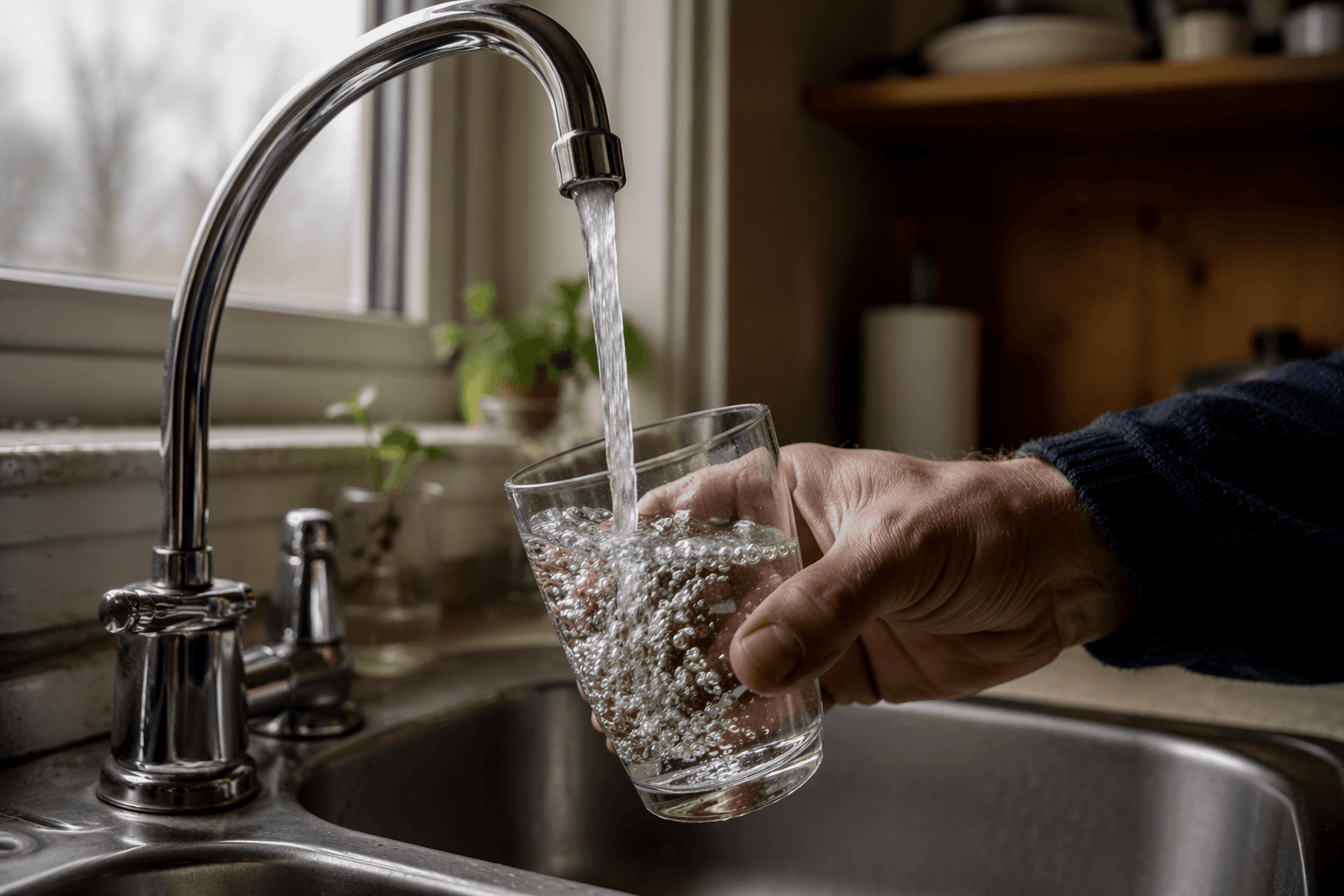
Scotts Hill families can take one clear message from the town’s 2025 water report: the drinking water meets U.S. Environmental Protection Agency health standards. The report also gives residents something more useful than a pass-or-fail line, because it shows what was tested, where the water comes from, and how to raise questions about pipes, source protection, and future upgrades.
What the report says about safety
The town says it conducted tests for more than 80 contaminants and detected 10 of them at safe levels. That matters because the presence of a substance in drinking water does not automatically mean the water is unsafe. The report explains that contaminants can appear in a public system without creating a health risk when they stay below the levels that trigger concern.
For households trying to decide whether to keep using tap water, the bottom line is straightforward: Scotts Hill says the system meets EPA health standards. The report is designed to show how that conclusion was reached, not just to announce it.
Where Scotts Hill’s water comes from
Scotts Hill says its supply is rooted in a deep underground aquifer and also draws from Lexington surface water. That combination gives the town more than one source, but it also makes source protection important. Tennessee officials have rated Scotts Hill’s water sources as reasonably susceptible to potential contamination, which is why the report pairs its safety finding with information about monitoring and protection.
The report says a wellhead protection plan is available for public review by contacting the town. That is a practical detail for residents who want to know what is being done to guard the aquifer and the surrounding source area. In a town system that serves both routine daily use and emergency needs, source-water protection is not abstract, it is part of the water bill’s real-world meaning.
Why the report matters for older homes and pipe concerns
The town’s report is especially useful because it does not treat water quality as a one-line compliance filing. It connects the test results to lead-pipe replacement, source-water vulnerability, and the responsibility of keeping the system reliable for neighborhoods across Scotts Hill and Bath Springs.
That focus matters in older homes and in places with historic plumbing. Tennessee’s Lead and Copper Rule is meant to reduce lead and copper leaching from plumbing through sampling, corrosion control, public education, and, when needed, replacement of lead service lines. The state also says homes built after July 1988 should not have lead materials in service lines under Tennessee’s lead ban.
For residents with infants, pregnant family members, or homes with older pipes, that context is important. A report can say the public water supply meets standards overall and still flag the need to pay attention to plumbing inside the home, especially where older service lines or fixture materials may be part of the system between the street and the tap.
How to use the report as a resident
EPA says Consumer Confidence Reports are the main public tool for learning about local drinking-water quality. Scotts Hill’s report fits that purpose exactly: it tells you what was tested, where the water comes from, and how to reach the people running the system.
The report gives residents a direct place to ask questions. The Scotts Hill Water Board meets on the first Monday at 6:00 p.m. at Scotts Hill City Hall, 85 Hwy 114 S. The town also says residents can contact Katrina Doster at 731-549-3175, and Decatur County’s utilities listing points water and sewer customers to Scotts Hill City Hall for service questions.
That makes the report more than a technical document. It is the public reference for reporting a problem, asking about treatment, or learning whether a future infrastructure project is under discussion.
Who runs the system locally
Scotts Hill sits on the county line and includes land in both Henderson and Decatur counties, which helps explain why utility questions can cross local boundaries. The city says it has experienced tremendous growth in recent years, and that growth raises the stakes for water planning, maintenance, and future capacity.
For residents looking to follow up with town leadership, MTAS lists Woody Capley as mayor of Scotts Hill. Decatur County’s listing names the aldermen as Jeremy Creason, Jerry Tucker, Mary Connell, Bonnie Butler, Monty Ray, Steven Dickson, and Tiffany Lyle. Those are the local officials most likely to hear concerns about treatment upgrades, lead-line replacement, and any future compliance issues that might affect homes, schools, or businesses.
Why small systems need close attention
Scotts Hill’s public water system dates back to 1957, according to a compiled town-history source. That gives today’s report some historical weight, because a system with decades of service carries decades of pipe, maintenance, and planning decisions beneath the surface. One third-party source estimates the system serves about 4,446 people, while another puts the number at about 4,579, a reminder that even small communities can have slightly different population counts depending on the source and method.
In a small system like Scotts Hill’s, a water report does more than satisfy a regulatory requirement. It gives residents a plain-language snapshot of how the town is managing its most basic public service, from source water to testing to board oversight. For families in Scotts Hill, Bath Springs, and the surrounding county, the most important takeaway is not just that the water meets standards, but that the town is showing how it knows.
This article was produced by Prism’s automated news system from verified source data, official records, and press releases, then run through automated quality and moderation checks before publishing. The system is built and supervised by the people who set the standards it runs under. Read our full AI policy.
Did this article answer your question?