Developer proposes 12 homes, commercial space for downtown Dolores site
KKV Development wants 12 homes and commercial space at Riverside and South Third, but the plan leaves out sidewalk work. The proposal revives Dolores’s housing gap for teachers and other local workers.
A downtown Dolores lot at Riverside Avenue and South Third Street could turn into 12 rental and for-sale homes with commercial space, a proposal that puts housing need up against the kind of downtown changes many residents already debate: more homes, but also parking pressure, traffic and neighborhood character.
The plan from KKV Development was discussed recently by local officials and arrives after years of town-level planning around affordability. Dolores won a $20,000 Colorado Department of Local Affairs grant for an affordable-housing study and matched it with $10,000 of town money. The town then formed a 10-person Dolores Housing Task Force to move the issue forward, with Mayor Leigh Reeves, Trustee Sheila Wheeler, Planning Board members Dan Heeney and Melissa Waters, Dolores School Superintendent Reece Blincoe, Dolores State Bank Vice President Larry Engle, Region 9 Economic Development Project Manager Shak Powers, Lainey Beyhan, Jen Stark and Kirk Swope.

That earlier effort was meant to help Dolores decide what kind of housing made sense, including whether future affordable homes should be rentals or ownership units. Town officials also discussed models built around donated land, factory-built homes, low-cost loans and deed restrictions, all aimed at stretching limited local dollars in a market that has pushed working households to the edge.
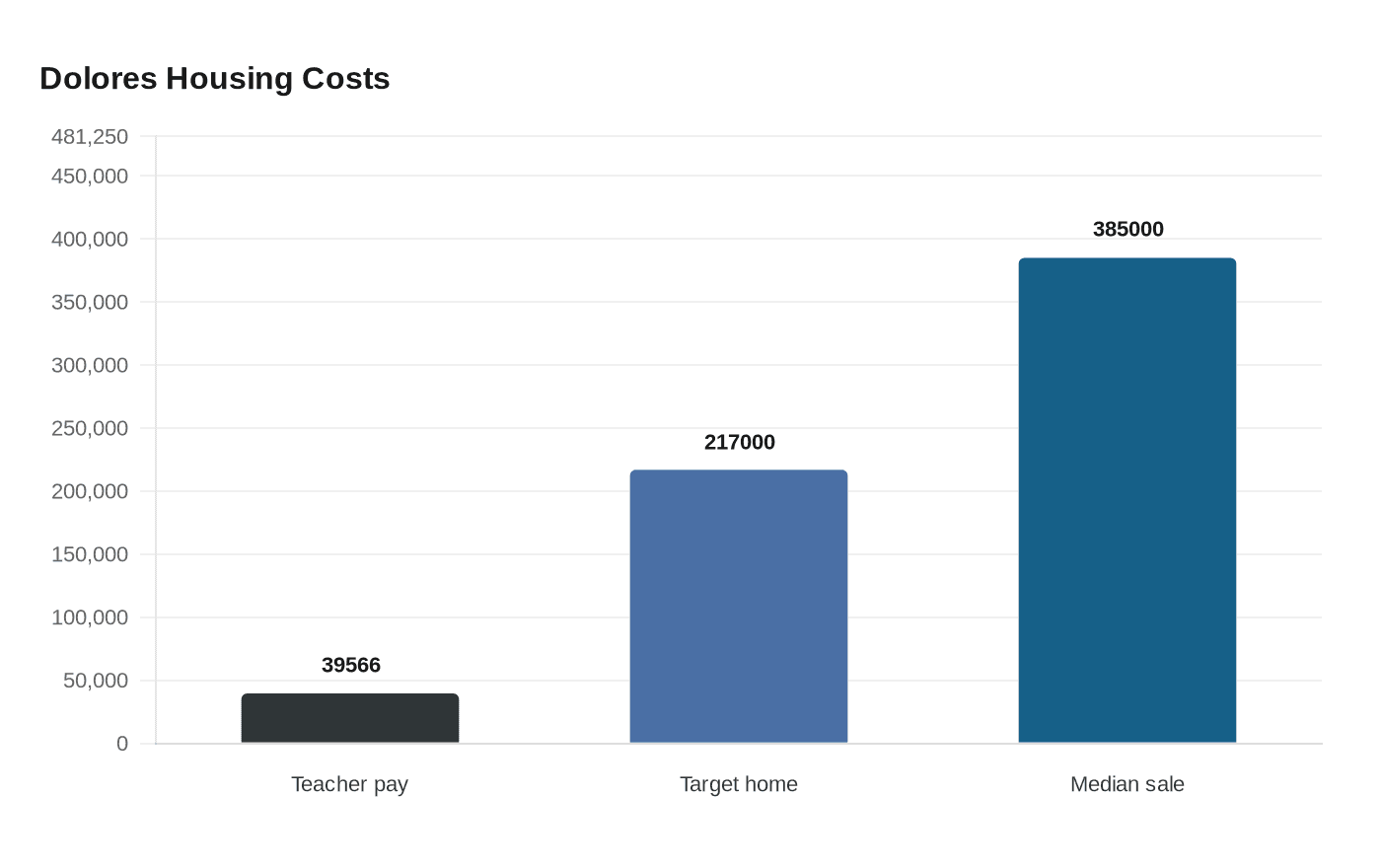
The affordability gap has been visible for years. In 2021, a Durango Herald report cited Telluride Foundation President Paul Major saying a Dolores teacher making an average salary of $39,566 would need a home priced around $217,000 to stay within reach. The same report said the median home sales price in Dolores that year was $385,000, nearly double that target and a sharp illustration of why teachers, sheriff deputies and other salaried workers have struggled to stay in small Southwest Colorado communities.
That backdrop makes the downtown proposal more than a building plan. If the KKV project moves ahead, officials will still have to answer the questions that matter most to local workers: whether the homes are deed-restricted, what income levels they will serve and whether the commercial space is meant to help subsidize the housing. The lack of sidewalk improvements also stands out in a town that has invested in other downtown amenities, including a restroom project backed by a Colorado Department of Transportation grant and town match.
For Dolores, the issue is no longer whether housing is needed. It is whether a downtown site can produce homes local workers can realistically afford without changing the core of town in ways neighbors are not ready to accept.
This article was produced by Prism’s automated news system from verified source data, official records, and press releases, then run through automated quality and moderation checks before publishing. The system is built and supervised by the people who set the standards it runs under. Read our full AI policy.
Did this article answer your question?