Dolores County ruins reveal centuries of prehistoric settlement patterns
Two Dolores County ruins trace a long shift from mesa-top living to canyon-head settlement, showing a landscape shaped by centuries of Ancestral Pueblo continuity.
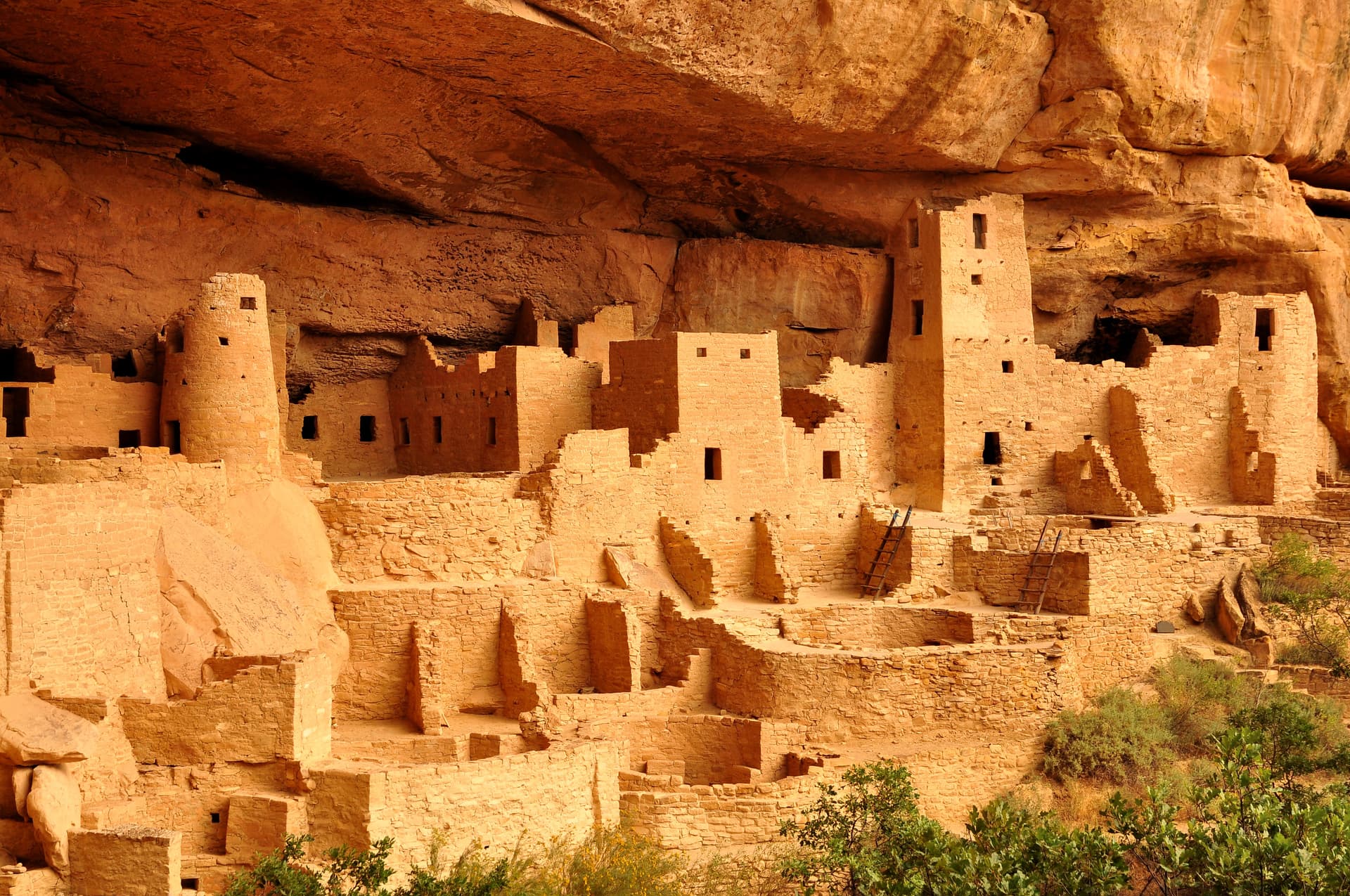
Dolores County’s western landscape is not empty space between towns. At Brewer Archaeological District near Dove Creek and Ansel Hall Ruin near Cahone, two prehistoric village sites preserve a record of how people planned communities, used the land, and adapted over centuries in the same county.
Brewer Archaeological District: a village sequence in the Dove Creek vicinity
Brewer Archaeological District is not a single ruin but two large, sequentially occupied habitation sites. History Colorado identifies Brewer Mesa Pueblo as a good example of an 11th-century mesa-top village and Brewer Canyon Pueblo as an excellent example of a large 13th-century canyon-head village, which makes the district especially useful for reading settlement change over time. The district was listed in the Colorado State Register on August 11, 1999, under site number 5DL.578.
That sequence matters because it turns the district into a story about movement and adaptation rather than a frozen remnant of the past. A mesa-top village and a canyon-head village do not reveal the same daily routines, water strategies, or defensive choices, and Brewer preserves both in one named place. History Colorado says the district is likely to yield important information on community planning, social history, and ethnic heritage, which is exactly why it stands out in Dolores County’s archaeological record.
Ansel Hall Ruin: a Pueblo II community near Cahone
Ansel Hall Ruin, in the Cahone vicinity, tells a different chapter of the same regional story. History Colorado describes it as a loose cluster of individual habitation units surrounding several community structures, occupied between AD 1050 and 1150, and notes that it is one of the few pure large Pueblo II sites in southwestern Colorado. The site was listed on the National Register of Historic Places on November 15, 1997, under site number 5DL.27.
The National Park Service records the site as NRHP 97001418 and identifies it as an address-restricted archaeological site in Dolores County. That protected status reflects the fact that this is not just a local landmark but part of the official federal inventory of places worthy of preservation, created under the National Historic Preservation Act of 1966. Ansel Hall also fits into the Great Pueblo Period of the McElmo Drainage Unit, AD 1075 to 1300, a framework whose National Register listing notes that the period ends with the abandonment of these settlements.
What the two sites show together
Seen together, Brewer Archaeological District and Ansel Hall Ruin map a longer arc of prehistoric settlement in the county’s western country. Ansel Hall captures a community at the Pueblo II stage, with habitation units and shared structures in place by the mid-11th century. Brewer then shows later occupation patterns, first on a mesa top and later in a canyon head, by the 13th century.
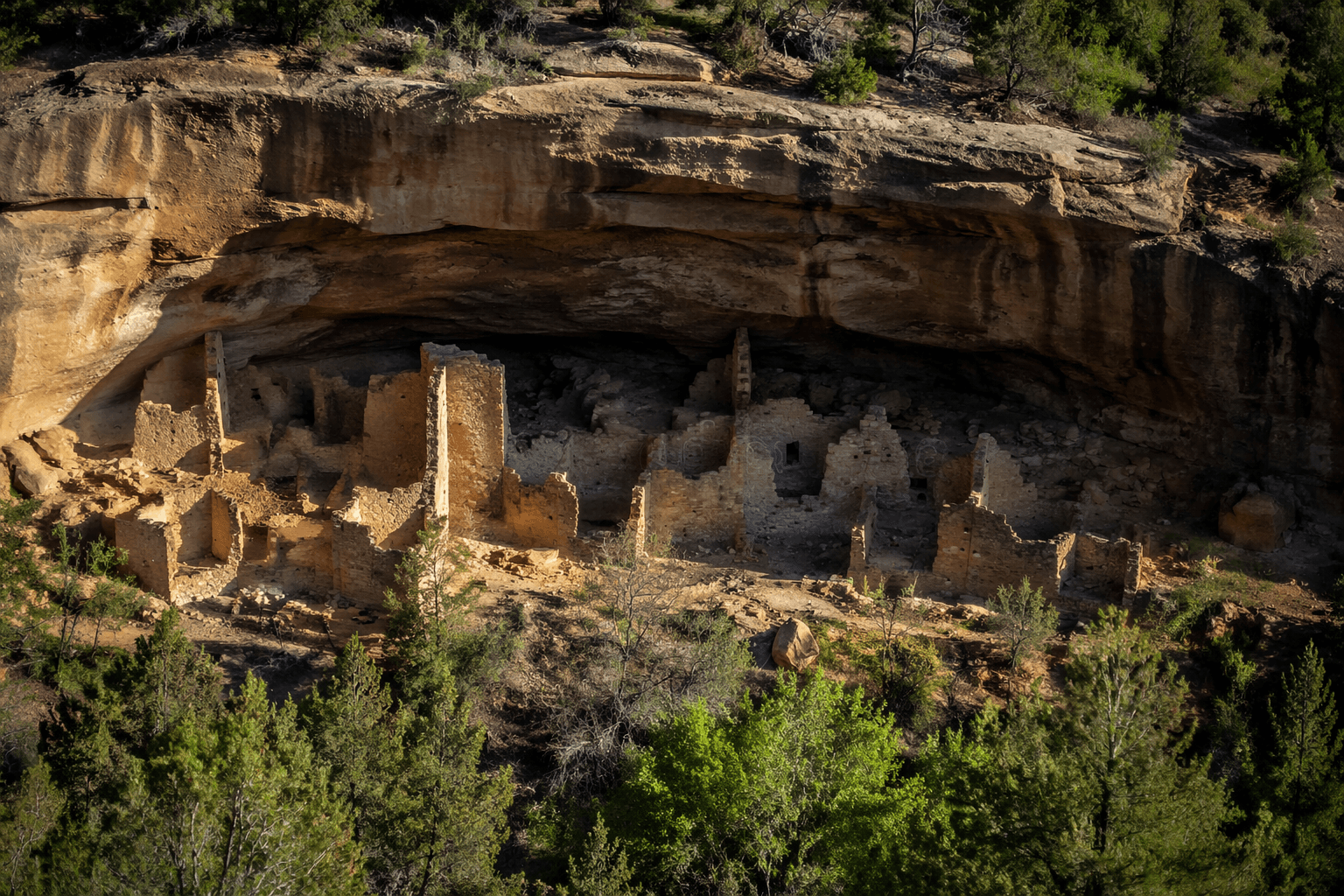
That contrast is what gives Dolores County its deeper historical texture. The county is often discussed through mining, ranching, and the open-country scenery that dominates modern travel, but these sites show a lived-in landscape with carefully chosen locations, repeated occupation, and changing community form. Together they point to continuity in place and change in how people organized daily life, used defensible or resource-rich terrain, and built settlements that reflected shifting conditions across generations.
The county’s interpretation hub in Dolores
Dolores County’s archaeological significance does not stop at the site boundaries. The Bureau of Land Management describes the Canyons of the Ancients Visitor Center and Museum in Dolores as the premier archaeological museum in southwest Colorado and says it serves as headquarters for Canyons of the Ancients National Monument. The museum is about 17 miles from Mesa Verde National Park and curates almost 4 million artifacts from the surrounding area.
That broader setting matters for local identity and for visitors trying to understand what the ruins mean. The monument itself reflects more than 12,000 years of human connections to the land, which places Brewer and Ansel Hall inside a much longer chronology than the headline dates of their occupation periods. Southwest Colorado Canyons Alliance adds that the museum’s research collection includes more than 3.5 million artifacts and records, and it notes two 12th-century archaeological sites on site, underscoring how much interpretive work is concentrated in and around Dolores.
Why preservation matters now
The preservation side of this story is just as important as the historical one. The Dolores Archaeological Program inventoried more than 16,000 acres in southwest Colorado and collected more than 1.5 million artifacts for curation at the Anasazi Heritage Center. Those numbers show the scale of the region’s archaeological record and the amount of work required to document it before sites are damaged, lost, or misunderstood.
For Dolores County, that makes Brewer and Ansel Hall more than protected ruins. They are anchors for heritage tourism, education, and stewardship in a county where land use still shapes daily life. Because both sites are named, registered, and tied to official preservation systems, they give residents and visitors a concrete way to understand that this is not only open land, but a place where human history has been layered into the landscape for nearly a millennium and a half.
This article was produced by Prism’s automated news system from verified source data, official records, and press releases, then run through automated quality and moderation checks before publishing. The system is built and supervised by the people who set the standards it runs under. Read our full AI policy.
Did this article answer your question?


