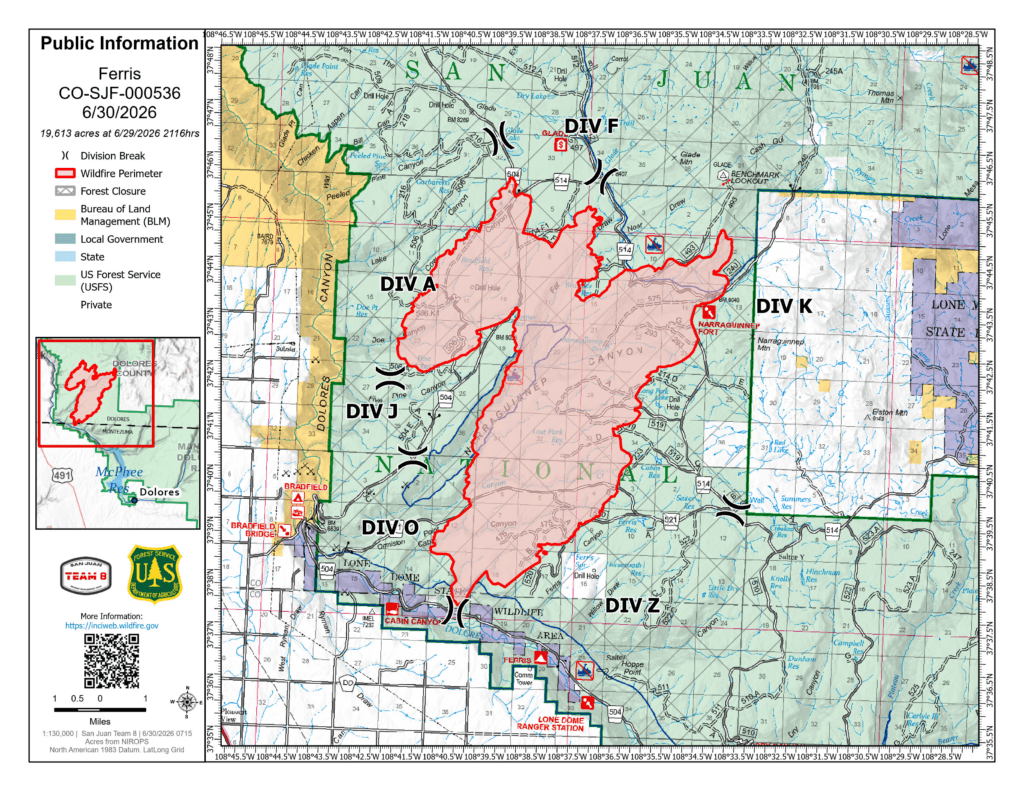
Dove Creek serves as Dolores County seat, county explains its small-town role
Dove Creek is the place to start for county business in Dolores County, from the courthouse and town board to online payments and posted notices.
Dove Creek is where Dolores County residents go when a county errand cannot wait. In a county that stretches across 1,064 square miles, from 5,900 feet in Disappointment Valley to 14,046 feet on Mount Wilson, the county seat concentrates public business in one small place that serves ranchers, town residents, and people coming in from the Rico and Dunton area.
How Dove Creek became the county’s center
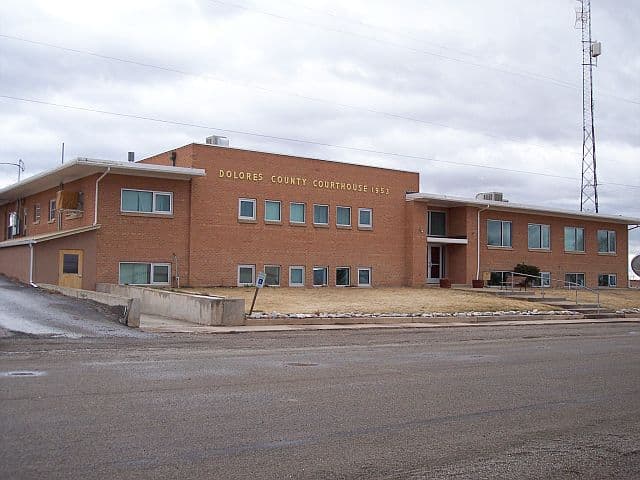
Dove Creek has carried its county-seat role for generations, but it did not begin that way. The town was incorporated on July 10, 1939, and the county seat moved here from Rico in 1947. The current Dolores County Courthouse in Dove Creek was built in 1957, replacing a temporary courthouse and giving the county a permanent home for local government.
The town’s older history reaches even farther back. The Old Spanish Trail passed through the Dove Creek area from 1829 into the 1850s, and the Dove Creek post office opened on January 16, 1915. That long timeline helps explain why the town, even with a small population, became the practical hub for a large rural county.
The county’s own figures show how thinly people are spread across that landscape. About 700 people live inside Dove Creek, another 880 live outside town limits, and about 300 live in the Rico and Dunton area. The 2020 census counted 635 residents in Dove Creek itself, which is why the town can be the county’s most populous municipality and still feel compact enough for residents to know where government happens.
Where county government is easiest to find
For county business, the courthouse in Dove Creek is the first stop. That is where the county’s core functions are centered, and it is the place residents head for the sort of business that only the county seat can handle. In a place this small, the courthouse is not a symbol of government at a distance. It is the working front door for daily civic life.
The town government mirrors that scale. The Town Board of Trustees is made up of a mayor and six trustees, and all seven members are elected and live within town limits. Regular board meetings are held on the fourth Thursday of each month at 6:30 p.m., while workshop meetings are held on the second Thursday at 6:30 p.m. Special meetings are called when needed, and the town also offers virtual access to board meetings for residents who cannot make the trip in person.
That schedule matters because it gives residents a clear path into local decision-making. Whether the issue is a road concern, utility service, or another town matter, the meeting calendar tells people exactly when they can watch the process and when they can show up.
The town website now acts like a civic front door
Dove Creek’s website is built to handle the kinds of tasks people used to settle by phone call or office visit. It offers links for utility bills, municipal court tickets, water-dock payments, water and sewer rates and quality reports, business licensing, employment, and parks and recreation. For a small county seat, that online setup does a lot of the everyday work of government.
The town also finished a major codification project that makes local rules easier to use. Dove Creek received a Colorado Department of Local Affairs grant in December 2019 for the project, and the codification was completed in November 2021. That matters because residents, property owners, and businesses no longer have to chase down scattered ordinances to understand what the town requires.
The result is a more legible local government. Ordinances are organized, board access is clearer, and routine payments can move through the town’s online system instead of requiring a separate trip for every transaction.
What residents pay, and where they pay it
The 2026 fee schedule shows how often county-seat government touches ordinary life. Dove Creek lists a $35 annual business license, a $65 monthly residential water base rate inside town limits, a $98 monthly residential water base rate outside town limits, a $67.50 monthly sewer rate inside town, and a $101.25 monthly sewer rate outside town limits.
Those numbers are small enough to fit on a fee sheet, but they are part of the structure that keeps the town running. They also show the difference between living inside town limits and outside them, which is a recurring issue in a county where many residents live beyond the core of Dove Creek but still depend on the seat for services.
The town’s online payment system runs through the Colorado Statewide Internet Portal Authority and a third-party payment vendor. Municipal court tickets can also be paid online. For residents balancing work, weather, livestock, or a long drive into town, that setup reduces the number of in-person steps needed to stay current on local obligations.
Why the notices matter in a small county seat
Small-town government in Dolores County is not theoretical. In July 2026, Dove Creek posted a water-system transition notice with a planned start date of July 13, 2026. In May 2026, the town was also accepting applications for an appointment to the town board. Those two notices show how quickly utility changes and board vacancies can become countywide business in a place where government is concentrated in a few offices and a few elected seats.
That is the practical reality of Dove Creek’s role. The town is small, but it carries the county seat, the courthouse, the board room, the payment system, and the notice board for a wide rural county. For anyone heading in from the mesas, valleys, or mountains of Dolores County, Dove Creek is the place where public business becomes visible and where it is handled first.
This article was produced by Prism’s automated news system from verified source data, official records, and press releases, then run through automated quality and moderation checks before publishing. The system is built and supervised by the people who set the standards it runs under. Read our full AI policy.
Did this article answer your question?