Durango Drone Program Locates Missing Autistic Boy Near Animas River
A Durango drone found a missing 12-year-old autistic boy within steps of the Animas River in minutes, raising urgent questions about whether Dolores County could replicate the outcome.
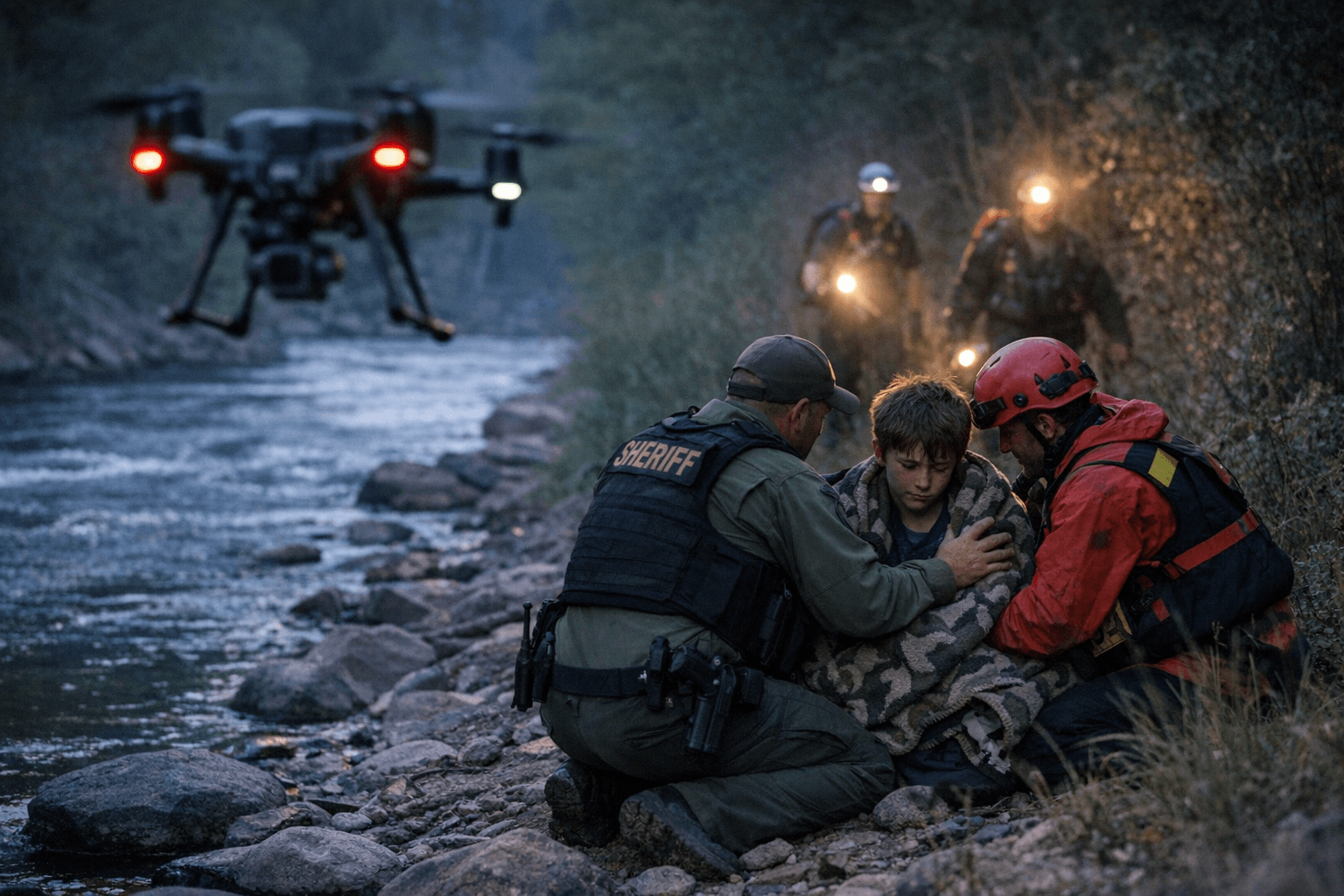
A 12-year-old autistic boy was within steps of the Animas River when a Durango Police drone found him, a rescue that took minutes instead of the hour that might have separated survival from tragedy.
The boy had disappeared from the Durango Mall. When officers received the call, Durango's Drone as First Responder program launched a drone from Fire Station 2 downtown within 10 seconds of dispatch. That aircraft reached the area in under a minute, streaming live video to officers, firefighters, and 911 dispatchers while the first patrol car was still in transit. Durango Police typically average six to eight minutes to reach a call by ground; the drone had eyes on the river corridor well before anyone arrived on foot. The boy was spotted playing dangerously close to the water and was safely reunited with his mother.
The outcome could easily have gone the other way. Children with autism are 160 times more likely to drown than their neurotypical peers, according to a 2017 study from Columbia University's Mailman School of Public Health. Roughly half of all autistic children will wander at some point, and the National Autism Association reported that in 2024, drowning accounted for 91 percent of wandering fatalities nationwide. Water pulls autistic children with a consistency researchers describe as near-universal. In southwestern Colorado, the Animas, Dolores, and San Juan rivers run through the same valleys where families shop, hike, and live.
Durango's DFR program was developed in partnership with Police Chief Brice Current and the Durango Fire Protection District. Current has described the drone as functioning much like a patrol officer, responding only to calls for service and returning to base when the mission ends, not conducting random surveillance. That framework provides what search-and-rescue coordinators call the golden-hour advantage: aerial eyes on the search corridor before ground teams can deploy, with thermal and real-time imaging that doesn't depend on whether the child is moving, calling out, or visible from a trail.
That raises a direct question for families in Dolores County: if a child went missing near the Dolores River or McPhee Reservoir, what would the first ten minutes look like? The Dolores County Sheriff's Office handles search and rescue across a largely rural county where response times stretch well beyond Durango's averages. Whether the office has drone capability, certified operators, and FAA authorization for the kind of autonomous beyond-visual-line-of-sight flights that made Wednesday's Durango recovery possible are questions worth pressing on county commissioners before an incident forces the conversation. Entry-level DFR programs have launched in smaller departments, and privacy protections, including strict prohibitions on routine neighborhood surveillance, can be written into program policy from the start.
At the family level, action doesn't require waiting on government. GPS tracking wearables designed specifically for children who wander provide real-time location to a caregiver's phone. Colorado law enforcement agencies participate in Project Lifesaver, which issues radio-frequency tracking bracelets to high-risk individuals at no cost to families. A written elopement response plan shared with school staff and caregivers, including a designated first-call contact and a note that the child is drawn to water, can cut the critical minutes lost to confusion in the first moments of a search.
The boy from the Durango Mall is home safe. Whether a child in Dolores County gets the same chance may depend on decisions the county hasn't made yet.
This article was produced by Prism’s automated news system from verified source data, official records, and press releases, then run through automated quality and moderation checks before publishing. The system is built and supervised by the people who set the standards it runs under. Read our full AI policy.
Did this article answer your question?