Rico soil cleanup program guides digging, building under lead rules
Before you dig in Rico, check the lead-soil rules: the VCUP can cover cleanup, disposal, and road work while helping you avoid surprise costs.
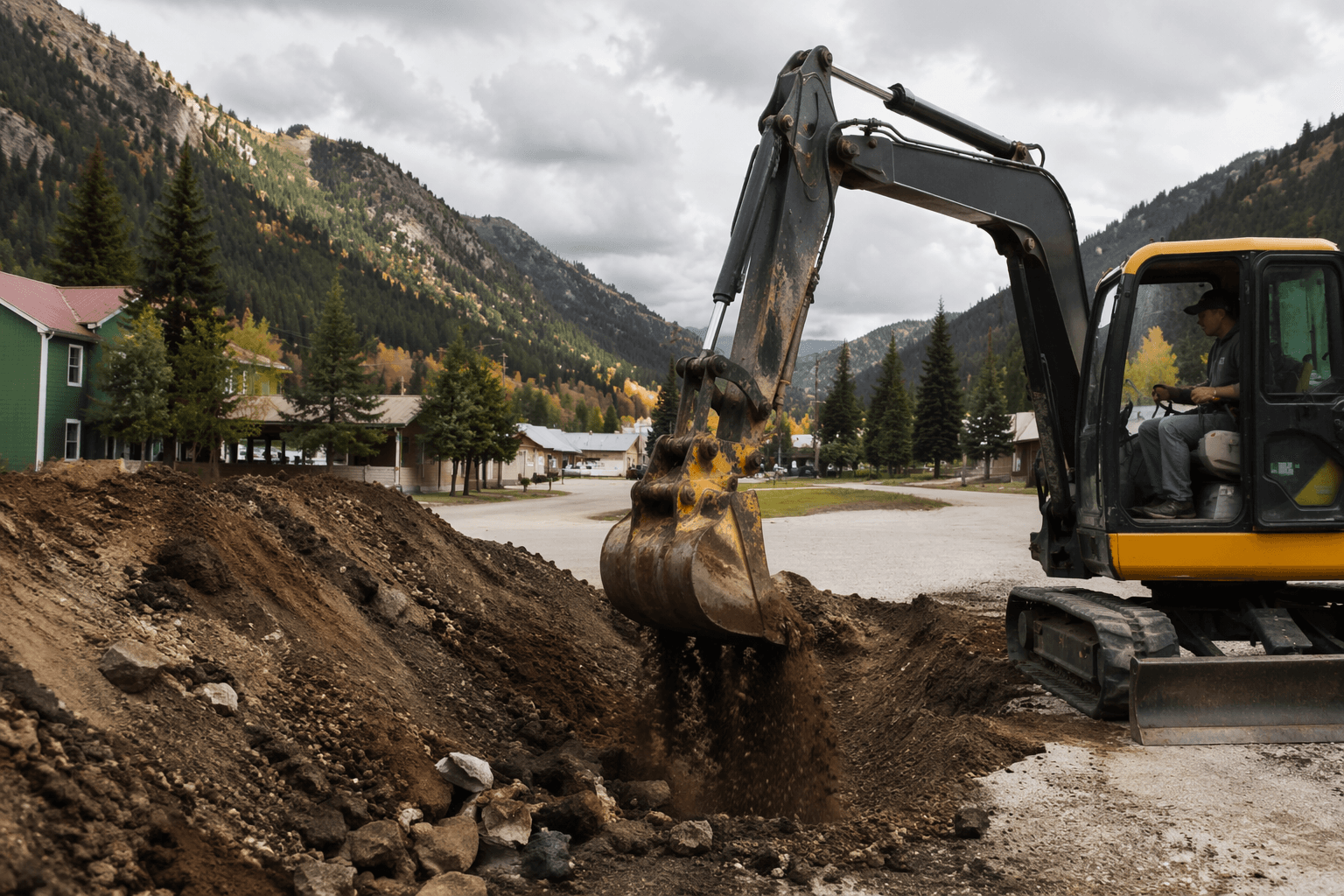
Before you start digging, landscaping, remodeling, or building in Rico, you need to know whether your parcel falls under the town’s lead-soil rules. The town’s voluntary cleanup program is built for exactly that moment: it tells owners when soil testing, a scope-of-work review, or other cleanup steps are required before ground is disturbed, and it helps cover the costs of doing the work correctly.
What to do before you break ground
Rico’s Soil Management Regulations are not an afterthought. They are part of the town’s lead-soil voluntary cleanup program, and they govern excavation and development activities in areas where soils may contain elevated lead levels above CDPHE-approved risk-based action levels. If you are planning construction or even a smaller yard project, the safest first step is to check with the town before moving dirt.
In practical terms, the process is meant to prevent a property owner from starting a project and then discovering that the soil has to be sampled, managed, or disposed of under cleanup rules. The town says future yard cleanup work is supposed to be coordinated through an inspection or scope-of-work process before construction begins, which means the earliest conversations matter most. That is especially true in a former mining town like Rico, where contaminated soil can sit close to the surface in places people assume are already safe.
How the voluntary cleanup program works
The Rico Townsite Soils Voluntary Cleanup and Redevelopment Program is a collaborative effort overseen by the Colorado Department of Public Health and Environment and funded by the Atlantic Richfield Company. Under the program, Atlantic Richfield is expected to conduct soil sampling and analysis, remediate developed lots with elevated lead levels, provide funding and technical support for property owners, and give access to a repository for lead-contaminated soil that must be removed or managed under the program’s rules.
That structure matters because it turns a potentially expensive private problem into a coordinated public-health response. The program also says it will cover incremental costs tied to compliance for property owners, which can make the difference between a project moving forward or stalling out because of cleanup expenses. In addition to private parcels, the town says the program will pay to remediate town roads with elevated lead levels, recognizing that contamination does not stop at fence lines.
Colorado created the Voluntary Cleanup and Redevelopment Program in 1994, and CDPHE says it has overseen more than 1,500 VCUP projects statewide since then. Rico’s effort fits that statewide framework, but it is tailored to local conditions, local land-use rules, and the town’s need to redevelop without locking individual parcels into deed restrictions inside excavation areas.
Why this matters for homeowners and contractors
For property owners, the biggest benefit is predictability. A clear cleanup path can reduce the chance of costly surprises when a backhoe hits contaminated soil, and it can help owners plan budgets around a known process instead of emergency remediation. For contractors, the rules create a clearer roadmap for when to stop, sample, and coordinate before continuing work.
The town’s public materials make the stakes plain: the program is not just about cleaning up old contamination, it is also about making sure future work happens safely and in compliance with environmental safeguards. That is a public-health issue, but it is also a fairness issue. In a small mountain town with historic mining impacts, the families most affected are often the ones trying to repair houses, improve yards, or redevelop modest parcels without the financial cushion to absorb unplanned cleanup bills.
Disturbing contaminated soil without following the town’s rules can spread the problem rather than solve it. It can also force work to be redone under a formal cleanup plan, adding disposal and compliance costs that the VCUP is designed to offset. Using the program up front is the way to avoid turning a routine project into a much larger health and financial burden.
The local agreement behind the cleanup
The state publicly announced the Rico agreement on October 30, 2024, calling it a landmark step to address lead contamination under the VCUP. In October 2024, the town and the state also finalized an intergovernmental agreement that gives both Rico and CDPHE power to enforce the land-use ordinance. That dual enforcement structure is important for residents because it means the rules are not just advisory, and they are not handled by one office alone.
Coverage of the deal said the arrangement avoided the need for an EPA-forced town cleanup, while still ensuring the work is paid for by Atlantic Richfield. Town materials also say the ordinance avoids deed restrictions on individual properties inside excavation areas, which gives the cleanup a different feel from a heavy-handed federal enforcement case. Rico is trying to protect public health while preserving local control, and this agreement is one of the main tools it has to do that.
How the community has been involved
The cleanup effort has not happened in isolation. Former mayor Nicole Pieterse has been involved in local lead-action efforts since 2017, and she described the project as complex. Community members later met with Atlantic Richfield representatives at the Enterprise Bar and Grill in Rico on November 21, 2024, to ask questions about the cleanup process.
That kind of public conversation matters in Dolores County because lead cleanup is not just a technical exercise. It shapes who can build, where money goes, how roads are repaired, and whether a small town can manage its mining legacy without pushing costs onto individual owners. Rico’s program is now one of the clearest examples of how local governance, health protection, and redevelopment policy meet at the same shovel point.
This article was produced by Prism’s automated news system from verified source data, official records, and press releases, then run through automated quality and moderation checks before publishing. The system is built and supervised by the people who set the standards it runs under. Read our full AI policy.
Know something we missed? Have a correction or additional information?
Submit a Tip