Spring Snowstorm Delivers Much-Needed Moisture to Drought-Stricken Southwest Colorado
A spring storm dropped up to 2 feet on the San Juans this week as Dolores County endures Colorado's worst snowpack year ever recorded, at just 22% of the historic median.

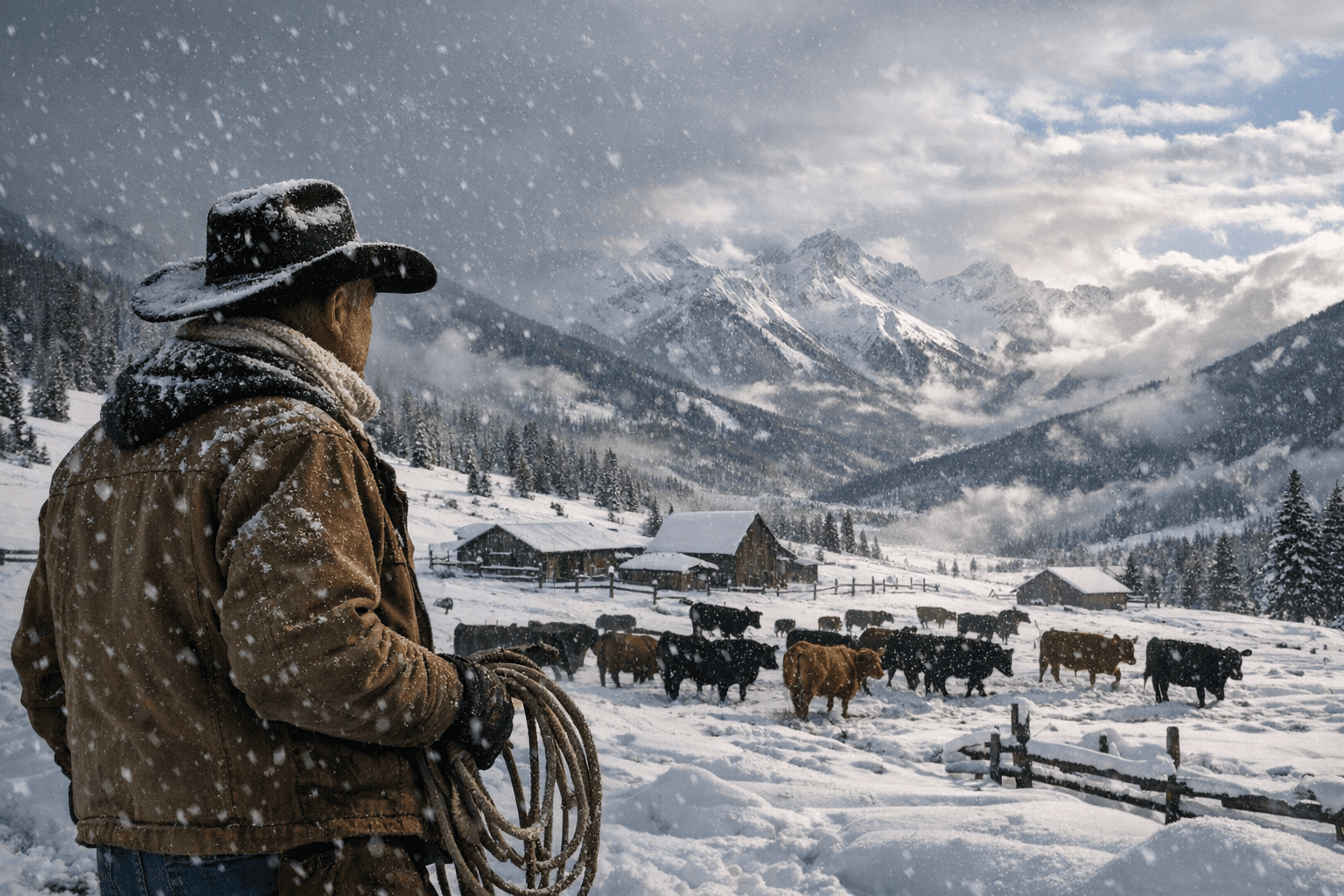
Wolf Creek Pass woke up Wednesday to 19 inches of fresh snow, and the surrounding mountains hadn't seen anything like it in months. The spring storm that rolled through Southwest Colorado on Tuesday and Wednesday deposited 17 inches in Silverton and 11 inches in Telluride, while lower elevations around Durango received nearly 2 inches of rain. For Dolores County, where the Dolores River's headwaters trace back into those same San Juan peaks, the storm offered a rare and badly needed shot of moisture after one of the most alarming winters in the region's recorded history.
Colorado entered April carrying just 22 percent of its historic median snow water equivalent, according to state climatologist Russ Schumacher's annual April 1 water outlook. That figure, drawn from 115 SNOTEL monitoring stations across the state, is the lowest ever recorded. For context, the previous record-low year was 2012, when 9.1 inches of water equivalent remained in the snowpack on April 1. This year, the number is 3.1 inches, less than 40 percent of even that grim benchmark.
The San Miguel-Dolores-Animas-San Juan combined river basin entered the year already running at 49 percent of median snowpack, leaving the Dolores River and the communities that depend on it in a severe deficit heading into the spring runoff season. Dove Creek, which relies on Dolores River water for its supply, has seen this story before: during the 2021 drought, the Dolores Water Conservancy District was forced to enact penalties for water overuse and drain most of its reserves to keep costs manageable for farmers already under financial strain.
Governor Jared Polis activated Phase 2 of Colorado's Drought Response Plan on March 16, signaling how seriously state officials are treating the current crisis. A spring storm of this scale, while genuinely welcome, does not close a gap this wide. The 3.1 inches of statewide water equivalent remaining is a deficit so severe that even several more storms of similar size would leave the region short of what's needed to support normal irrigation, river flows, and reservoir levels through summer.
What the storm does offer is a pause, however brief, in what has been a relentless dry season. Snowpack normally peaks around April 1, after which it begins to melt. This year, much of the snowpack had already vanished before that date. The April storm arriving precisely at that inflection point means some of the moisture will slow the rate of loss rather than replacing what's gone. For the Dolores River basin, every inch counts.
Sources:
Know something we missed? Have a correction or additional information?
Submit a Tip