Castle Pines council transfers 2026 housing bond allocation to Douglas County partnership
Castle Pines handed its 2026 housing bond capacity to the Douglas County Housing Partnership, a move that could steer future affordable projects across the county.
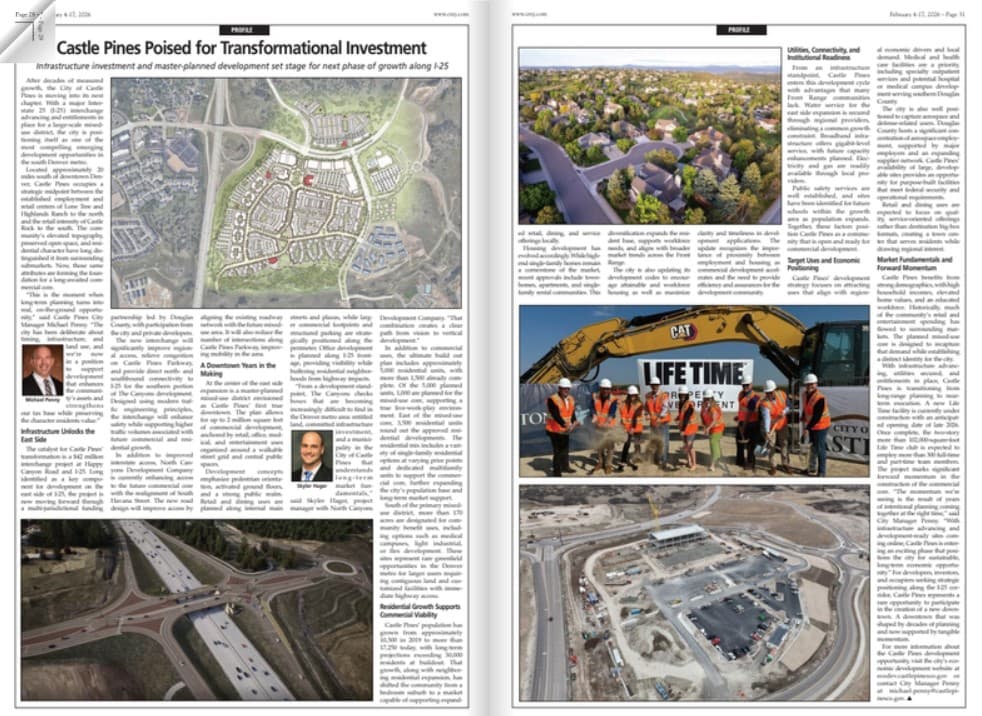
Castle Pines handed its 2026 private activity bond allocation to the Douglas County Housing Partnership, a financing decision that can affect where future affordable housing gets built and who gets to compete for that capital in Douglas County.
City Council approved the transfer in Resolution 26-29 at its May 12 meeting, moving the city’s entire 2026 volume cap allocation to the multijurisdictional housing authority. In Colorado, private activity bonds are tax-exempt and can fund privately developed projects, including new construction or acquisition and rehabilitation of housing for low- to moderate-income people. The state’s 2026 private activity bond cap was listed at $811,695,735, and Douglas County’s direct allocation was $14,247,633, placing Castle Pines’ vote inside a much larger countywide effort to capture and direct scarce housing finance.
The Douglas County Housing Partnership was formed in 2003 as a cooperative effort among businesses and local and county governments to address the shortage of affordable housing for people who work in the area. Douglas County says it works with the partnership and other jurisdictions to increase the number of affordable housing units in the county. Castle Pines’ decision effectively gives the county partnership more room to pursue that work without the city holding back a separate slice of the bond cap.
Just as significant for the city’s long-range footprint, council also ratified an update to Castle Pines’ Three-Mile Plan. The comprehensive plan describes itself as a living document that looks about 20 years ahead, and the Three-Mile Plan fulfills a state requirement by addressing infrastructure, land use, zoning and municipal services in the area within three miles of city limits. The updated plan had already been approved by the Planning Commission on April 23 before reaching council. That review matters because the city’s annexation impact report for the Crowsnest project describes about 794.51 acres southwest of Crowfoot Valley Road and S Chambers Road, a tract tied to future housing and commercial development.
Council also approved Resolution 26-33, amending Castle Pines’ professional services agreement with Jacobs Engineering Group Inc. for on-call land development review and general engineering services. In practical terms, that keeps the city’s development review machinery moving as proposals come forward in a fast-growing corridor.
Alongside those land-use moves, council approved budget amendments for both 2025 and 2026, signaling that Castle Pines is still adjusting its finances in year. The adopted 2026 budget had been presented on Sept. 30, 2025 and adopted on Dec. 9, 2025, so the May action updated that plan rather than replacing it.
The meeting also connected growth planning to fire policy. Council’s study session included a presentation on private activity bonds and an overview of the Colorado Wildfire Resiliency Code, which took effect July 1, 2025 and applies to buildings and premises in wildland-urban interface areas, subject to exemptions. For Castle Pines, the message from the May 12 meeting was clear: housing finance, annexation planning, engineering review and wildfire rules are now moving together.
This article was produced by Prism’s automated news system from verified source data, official records, and press releases, then run through automated quality and moderation checks before publishing. The system is built and supervised by the people who set the standards it runs under. Read our full AI policy.
Did this article answer your question?