Castle Rock Hits Lowest Per-Capita Water Use in Nearly Two Decades
Castle Rock hit just 111 gallons per person per day in 2025, its lowest water consumption in nearly 20 years, even as temperatures climbed.
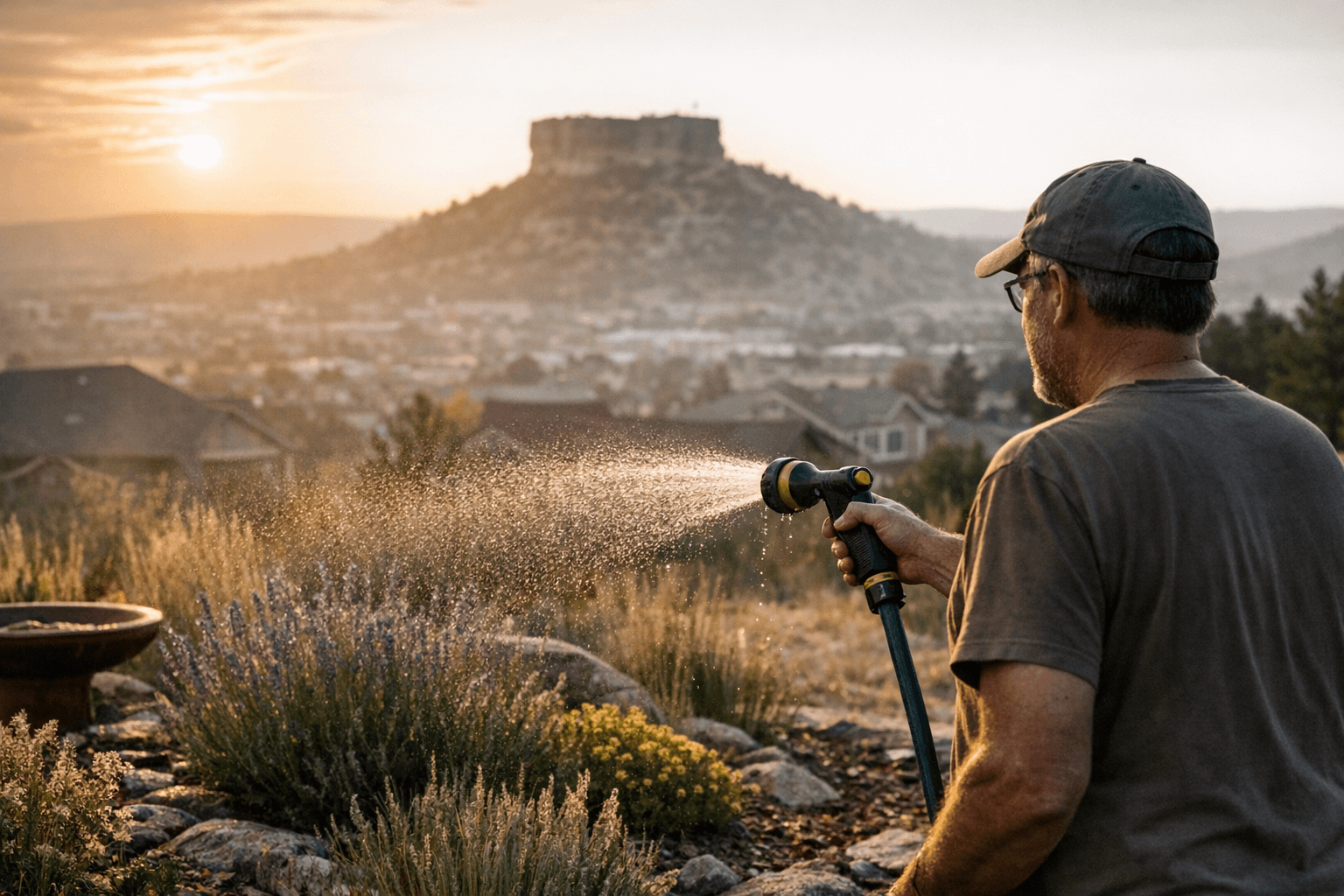
Even as Castle Rock's summers have grown hotter, residents have been using less water, not more. Per-capita consumption fell to 111 gallons per capita per day in 2025, the lowest five-year rolling average the town has recorded in nearly two decades, and utility officials say the drivers behind that number work quietly in the background: tighter toilet standards and converted front lawns.
For homeowners, 111 gallons per person per day is the benchmark their household is measured against. Communities that hold their per-capita line tend to retain more flexibility when drought declarations trigger mandatory restrictions; those that spike face the aggressive cuts first. Castle Rock's trajectory positions it well heading into a dry 2026 irrigation season, when Castle Rock Water, Highlands Ranch Water and Parker Water & Sanitation have already issued joint conservation calls across Douglas County.
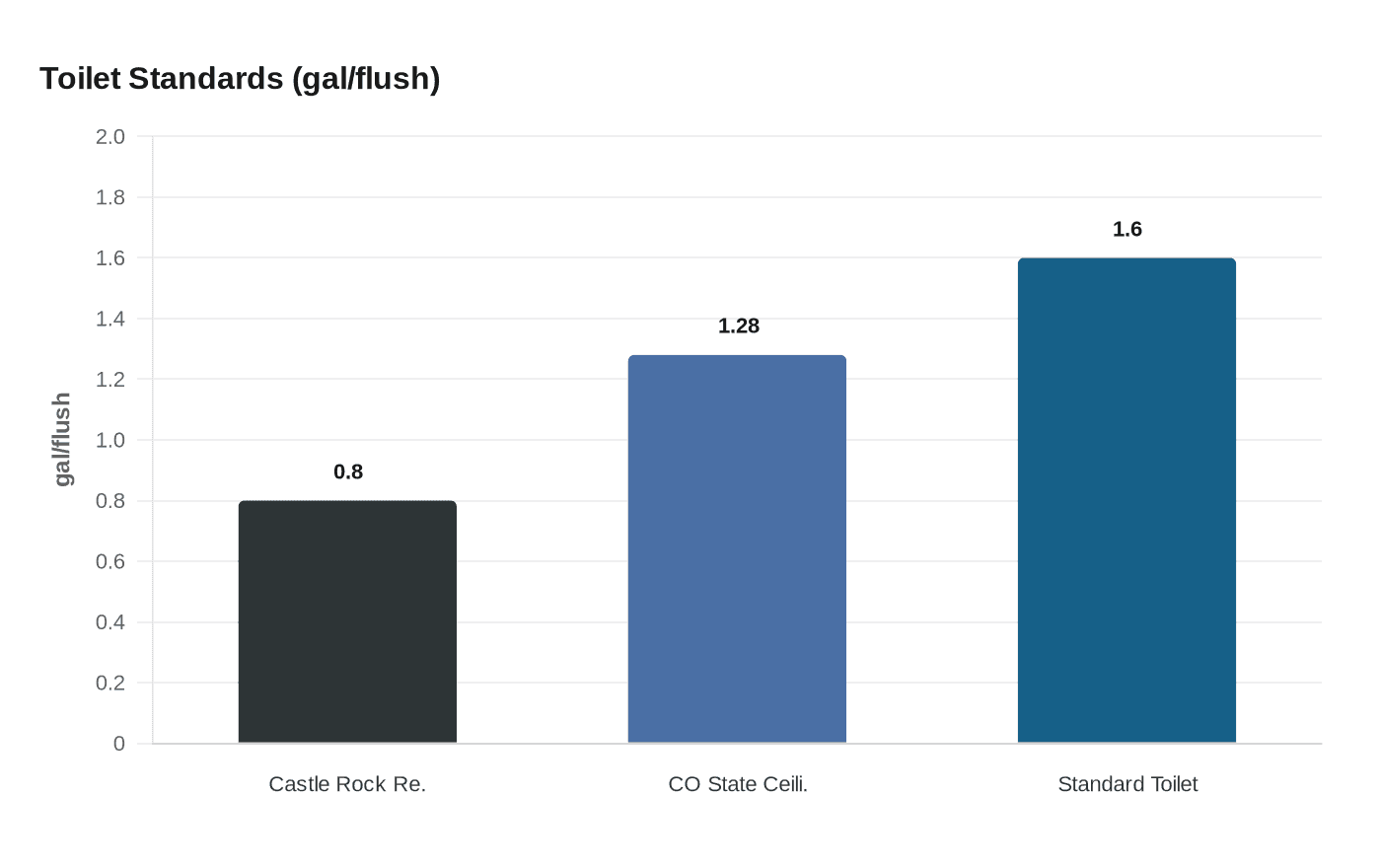
The indoor gains are structural. Castle Rock Water now requires all new residential construction to install ultra-high-efficiency toilets rated at 0.8 gallons per flush, a standard measurably stricter than Colorado's statewide ceiling of 1.28 gallons per flush. In a community adding subdivisions steadily along the I-25 corridor, that mandate locks in savings before a homeowner ever turns on a faucet. A household replacing a standard 1.6-gallon toilet with a code-compliant 0.8-gallon model cuts toilet water use in half without any change in behavior.
Outdoors, the town's ColoradoScape rebate program has converted more than 1.5 million square feet of turf grass to regionally adapted, low-water landscaping since the program's inception, roughly equivalent to 26 football fields of bluegrass replaced with native grasses, ground cover and rock gardens. Castle Rock pairs the turf-removal incentive with rebates for smart-controller irrigation systems that adjust automatically to weather and soil conditions, targeting the overwatering that accounts for a disproportionate share of residential outdoor use. Conservation advocates and Castle Rock Water staff have pointed to these code changes as the most reliable mechanism for durable reductions: residents who convert a lawn through ColoradoScape or install a compliant toilet don't need to recalibrate their habits each summer.
The regional picture makes Castle Rock's benchmark more significant. Hydrologic conditions across Douglas County remain dry heading into spring, with warmer winters and earlier snowmelt tightening supply margins across the Front Range. Castle Rock Water's long-term planning includes an explicit push to shift away from finite groundwater basins toward renewable sources, a multi-decade transition that depends on demand reduction keeping pace with the development still reshaping southern Douglas County.
At 111 gallons per person, the town has established a floor. Holding it through the hottest months of 2026 will be the next test.
This article was produced by Prism’s automated news system from verified source data, official records, and press releases, then run through automated quality and moderation checks before publishing. The system is built and supervised by the people who set the standards it runs under. Read our full AI policy.
Did this article answer your question?