Douglas County explains how historic places are protected and recognized
Douglas County treats historic preservation as a formal county process, with landmarking, board review, and archives that can shape what happens to older places.

The Planning Department maintains separate pages for Historic Preservation, Historic Properties, Landmarking, Historic Preservation Board, and Historic Preservation Documents Archives, which gives residents a clear path to see how older places are identified, reviewed, and recorded.
How Douglas County recognizes historic places
The county’s preservation setup starts with the Historic Preservation page and moves through the Landmarking page and the Historic Properties inventory. Douglas County is not treating every old building the same way. Some places are documented as historic properties, some move into a formal landmarking process, and some are kept in the county’s archival records even when they are not widely known landmarks.
In a fast-growing county, pressure often lands first on the places that do not yet look famous. A ranch structure, a homestead, an early civic building, or another property that helps tell Douglas County’s story can be recognized before it is altered beyond repair or lost to neglect. The county’s framework gives those places a place in the public record, the first step in any preservation decision.
What landmarking changes in practice
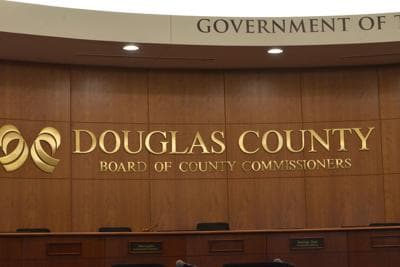
Landmarking is the point where historic recognition becomes a formal county action. In Douglas County, that process sits inside the Planning Department and is connected to the Historic Preservation Board, which means preservation is handled through an accountable public structure rather than an informal recommendation. For property owners, that usually means the building is no longer only a private asset. It is also a place the county has chosen to recognize, document, and review through a public process.
That shift changes who has a voice. Owners still matter, but so do county planners, board members, and, through public meetings and records, neighbors who want to understand what a designation means for a building or site. In a county where Castle Rock, Parker, Sedalia, and surrounding communities continue to grow and redevelop, the practical issue is not just whether a structure is old. It is whether the county will keep enough oversight in place to make sure a historically significant property is not erased without public notice.
The board that helps steer the process
Douglas County’s Historic Preservation Board gives the system a public face. The county’s meeting and appointment records identify named board members and their terms, including Michael R. Drennan, whose current appointment runs from Jan. 2, 2026, to Jan. 2, 2029; Chris E. Schutzenberger, whose second term runs from Jan. 2, 2024, to Jan. 1, 2027; and Mary E. O’pry, whose second term runs from Jan. 2, 2025, to Jan. 2, 2028.
The board is a standing part of county government with appointed members serving fixed terms, which means preservation decisions are tied to named people and current public records. A Douglas County video newsletter posted Oct. 16, 2023, invites viewers to learn about the artifacts and treasures housed in the Douglas County historic repository and meet Historic Preservation Board members who work to protect local history.
Why the archives matter as much as the landmark list
The Historic Preservation Documents Archives page gives people researching an old structure, neighborhood, or family property a place to find records, and the county has organized a place for preservation documents that supports that work. That makes the system useful not only to historians, but also to homeowners, neighbors, and anyone trying to understand how a place was evaluated.
Douglas County also links this work to the historic repository. Preservation here is not only about designation. It is also about preserving artifacts, records, and research materials that help explain why a place matters. That paper trail preserves the evidence needed for future decisions.
What residents can check before a property changes
Douglas County’s own tools give residents a practical way to see how a place is recognized. Start with the Historic Preservation page, look at the Historic Properties inventory, review the Landmarking page, and check the Historic Preservation Board records if a property is moving through a formal process. Those pages show whether a place is simply part of the county’s historic record or has entered a more formal recognition track.
The county’s LandmarkWeb property-records system is another useful stop, but it comes with a clear warning from the Douglas County Clerk and Recorder: the information is deemed reliable but not guaranteed and should not be used as a substitute for title insurance. The disclaimer draws a line between public records and legal certainty. A historic listing or landmark record may help identify a property’s history, but it does not replace the due diligence needed before buying, selling, or renovating.
Douglas County in the broader Colorado context
Douglas County’s system fits into a larger statewide preservation landscape. History Colorado’s HPO Directory lists 1,568 Colorado local governments with preservation ordinances or zoning in its March 15, 2024 revision. That means Douglas County is part of a much wider network of communities that have chosen to regulate or recognize historic places through local rules.
Colorado also uses more than one layer of designation, including National Register, State Register, and local landmark processes. Local landmarking is not just ceremonial. It is one of the ways Colorado communities decide how much protection a place gets and how much discretion stays with owners, neighbors, and county government. Douglas County’s approach belongs inside that broader system, even as the county keeps control over its own process.
A county with a long public history
On History Colorado’s Douglas County page, the Douglas County Courthouse is listed as completed in 1890 and burned in 1978 as a result of arson.
Douglas County also has a wider public history footprint beyond county-designated landmarks. The Historical Marker Database lists 22 historical markers in Douglas County, and Historic Douglas County, Inc. and Douglas County Libraries both help surface the county’s past through markers, road-trip ideas, and local history materials.
This article was produced by Prism’s automated news system from verified source data, official records, and press releases, then run through automated quality and moderation checks before publishing. The system is built and supervised by the people who set the standards it runs under. Read our full AI policy.
Did this article answer your question?