Douglas County lead survey tops 300 responses, ordinance changes considered
More than 300 residents weighed in on lead rules that could affect older homes, inspections and cleanup expectations across Douglas County.
More than 300 Douglas County residents have responded to a survey that could help shape changes to Omaha’s lead poisoning prevention ordinance, a policy shift with direct implications for landlords, parents and owners of older homes.
The Douglas County Health Department said the survey is focused on possible changes to Sec. 18-3(r), the current Omaha lead ordinance. Officials said participation is voluntary, no identifying information will be published and the results will be reported in summary form. The department plans to share next steps through fightlead.org.

The policy review lands in a county still living with the legacy of the Omaha Lead Superfund Site, where historic lead smelting and refining in old downtown Omaha contaminated soil across roughly 27 square miles. The U.S. Environmental Protection Agency says the site covers more than 40,000 properties, including homes, schools and child care centers. So far, 13,651 properties have been cleaned up, but at least 465 still exceed 400 parts per million lead in soil.
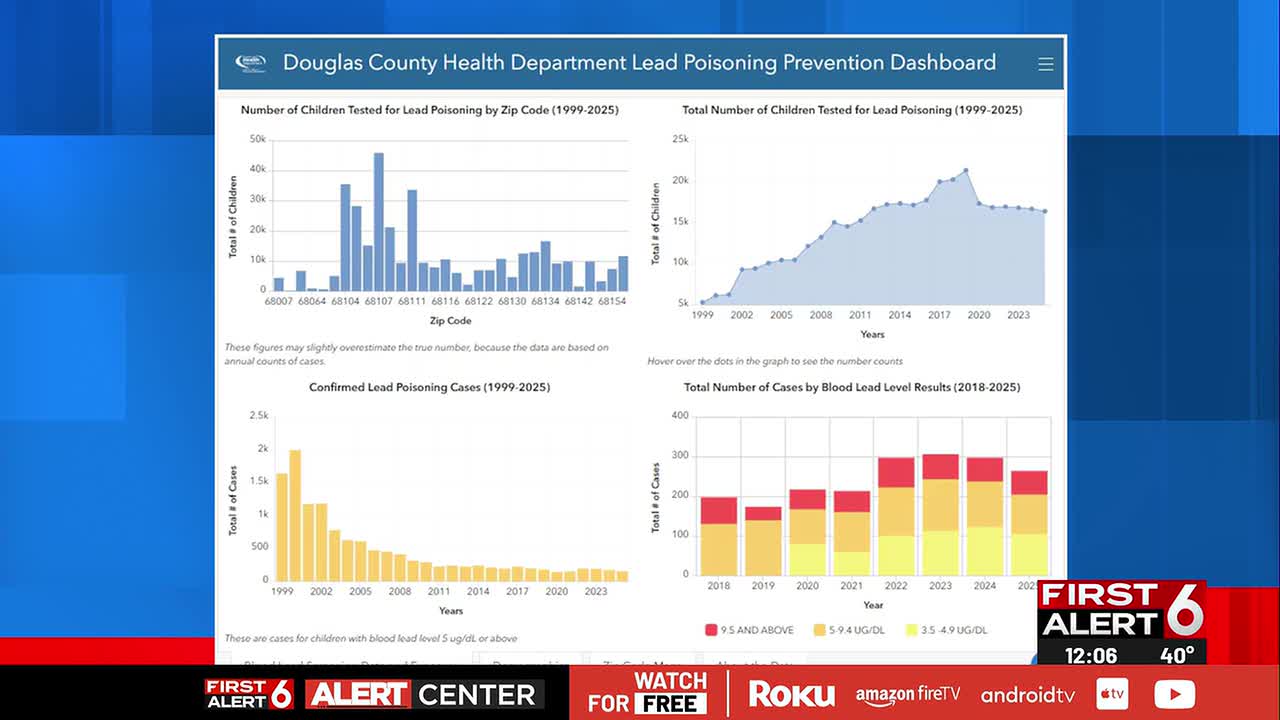
Health officials have long treated the problem as both a medical and housing issue. The county says its lead poisoning prevention program was established and funded by the EPA, with a goal of reducing childhood lead poisoning in Douglas County. The health department has promoted blood lead screening since 1999, and in January 2024 it began offering free screenings at Tuesday childhood immunization clinics from 8:30 to 11 a.m. by appointment for children 7 and younger and at-risk pregnant women. The program prioritizes people without a medical home, those who are uninsured or underinsured, and anyone not screened in the past 12 months.
The results have been encouraging, but the need has not disappeared. DCHD says the share of screened children found to have lead poisoning has fallen from 33% to less than 2%. Even so, in 2021 Douglas County reported 213 children under 7 with elevated blood lead levels at or above the point where the program can provide support. The EPA and county health officials say children under 7 in the historic lead area should have annual blood lead tests.
The ordinance discussion is also likely to matter for property owners. DCHD offers four kinds of lead home inspections through a cooperative agreement with the EPA: environmental lead risk assessments, pre-1978 inspections, clearance inspections for owner-occupied dwellings and interior lead dust home visits. The department says the main source of childhood lead exposure is chipping and peeling lead-based paint in housing built before 1978, though imported spices, older plumbing, makeup, ceramic dishware, jewelry, keys and other items can also pose risks.
Naudia McCracken, the county’s lead supervisor, said, “No amount of lead is healthy for a person,” and Health Director Dr. Lindsay Huse said the department is addressing the problem and expanding in-person services. DCHD also has partnered with the University of Nebraska at Omaha to test imported spices for lead and has provided water-testing kits to daycare and child care facilities. As officials sort through the survey responses, families and landlords alike are watching to see whether Omaha’s lead rules lead to stronger protections, more inspections or new costs for older housing.
This article was produced by Prism’s automated news system from verified source data, official records, and press releases, then run through automated quality and moderation checks before publishing. The system is built and supervised by the people who set the standards it runs under. Read our full AI policy.
Did this article answer your question?