Douglas County Theft Conviction Upheld, Sale Price Not Sole Value Measure
A Douglas County jury, not a judge, gets to decide whether sale prices determine theft value, a Colorado appeals court ruled in Byron Bolden's Kohl's shoplifting case.
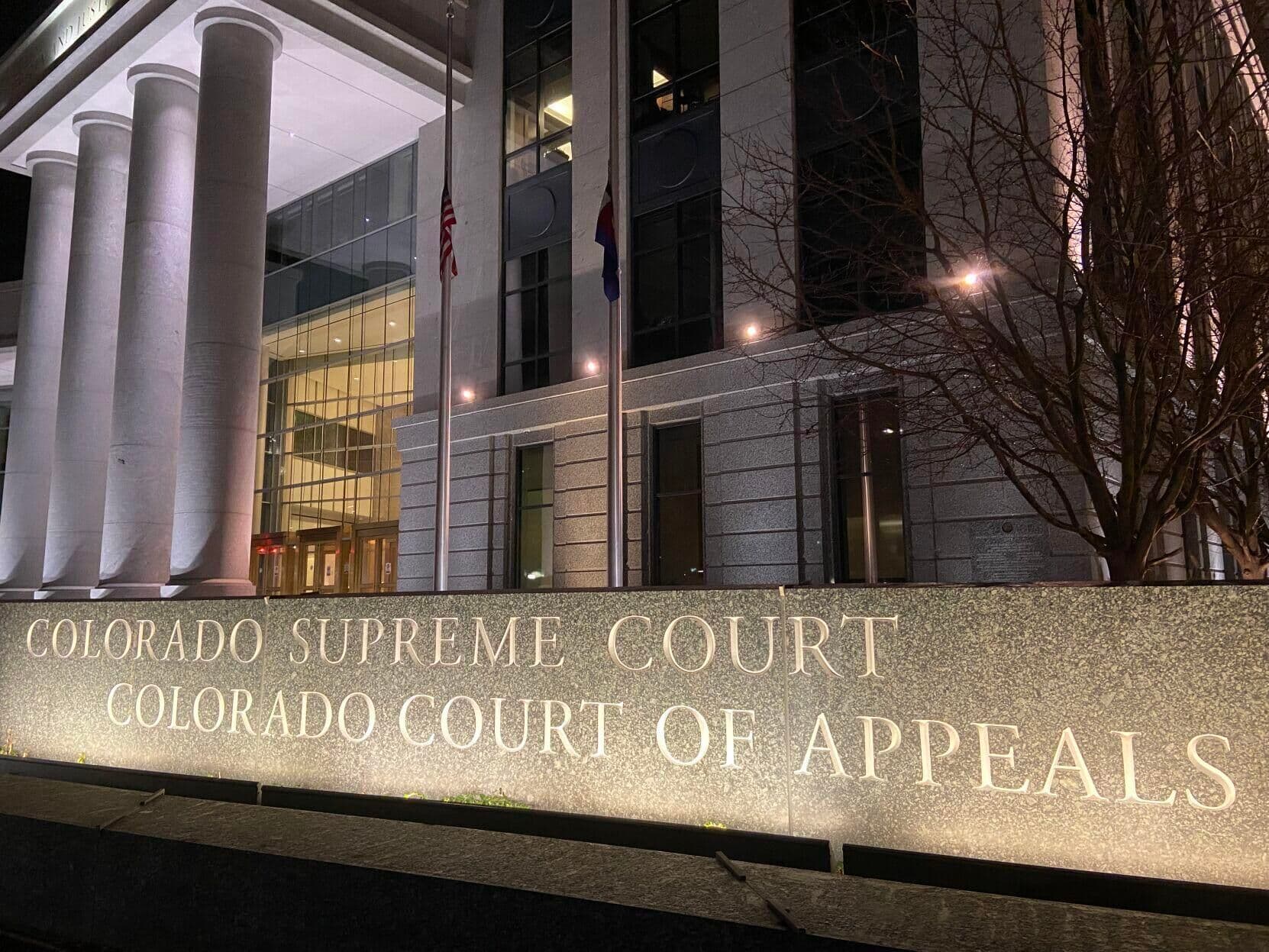
Byron A. Bolden walked out of a Kohl's store without paying for merchandise and didn't dispute that fact. What he disputed was whether the items' sale-day discounted prices should have kept his conviction at the misdemeanor level. The Colorado Court of Appeals answered that question definitively on March 19, ruling that a jury, not a judge, determines market value when both sides present competing evidence.
A Douglas County jury had already decided the matter at trial before Judge Jane A. Tidball, finding the stolen merchandise was worth more than $2,000 and convicting Bolden of felony theft. Under Colorado law, that single dollar threshold separates a misdemeanor from a class 6 felony: below $2,000, misdemeanor; $2,000 or more but less than $5,000, a class 6 felony, per § 18-4-401(2)(e)-(f), C.R.S. 2025.
Bolden's appeal, filed as case No. 24CA0096 in Douglas County District Court No. 22CR1092, centered on the argument that because the items were on sale the day he and a co-defendant took them, the discounted price should control. His alternate defense counsel, Jeffrey C. Parsons of Broomfield, argued that the price any willing customer would have paid at the register, $1,856, was the legally operative figure. "The fact that value changes over time, both up and down, is precisely the reason why Colorado law pegs the value to the time and place of the theft," Parsons wrote.
The Colorado Bar Association's case summary, citing the trial record, places the total of the stolen items at $1,856.19. That figure, below the $2,000 felony threshold, was the crux of Bolden's sufficiency-of-the-evidence argument. But both sides also presented nondiscounted ticket prices, and the appeals court held the jury was entitled to credit those higher figures.
Assistant Attorney General Cata A. Cuneo, arguing for the People, noted that Colorado law treats an item's retail value as evidence of worth, and that no existing statute or precedent compels courts to treat a temporary promotional discount as the definitive measure. "Because neither statute nor case law address discounted prices at retail stores in relation to theft, the trial court was within its discretion in submitting the question of value, as a factual question, to the jury," Cuneo wrote. "Defendant has not identified any case law directly on point when it comes to retail merchandise that happened to be on a temporary promotional price discount when it was stolen."

Division III of the Court of Appeals, in an opinion by Judge Harris with Judges Dunn and Moultrie concurring, affirmed the judgment. The court held that "while the discounted sale price of stolen merchandise is some evidence of its value, the sale price does not establish value as a matter of law."
Bolden also challenged Judge Tidball's rejection of two jury instructions he had tendered, both of which cautioned jurors against accepting "speculative" evidence of value. The appeals court rejected that argument on three grounds: no precedent requires importing that specific language into a jury instruction; the concepts were already covered by a separate instruction the court did give; and the caution against speculation was ill-suited to a case where both parties had presented what the court called "competent and detailed evidence of the merchandise's value."
The ruling leaves intact a legal framework in which Colorado juries retain broad discretion to weigh competing valuation evidence in retail theft cases, a question the legislature has not resolved by statute and that, according to the appeals court, produced no directly applicable case law before this decision.
This article was produced by Prism’s automated news system from verified source data, official records, and press releases, then run through automated quality and moderation checks before publishing. The system is built and supervised by the people who set the standards it runs under. Read our full AI policy.
Did this article answer your question?