Franktown residents push back on Tanglewood Road paving project
Franktown neighbors say Tanglewood Road’s recycled asphalt paving narrowed shoulders and strained safety, while Douglas County says the work fits its dust-control strategy.
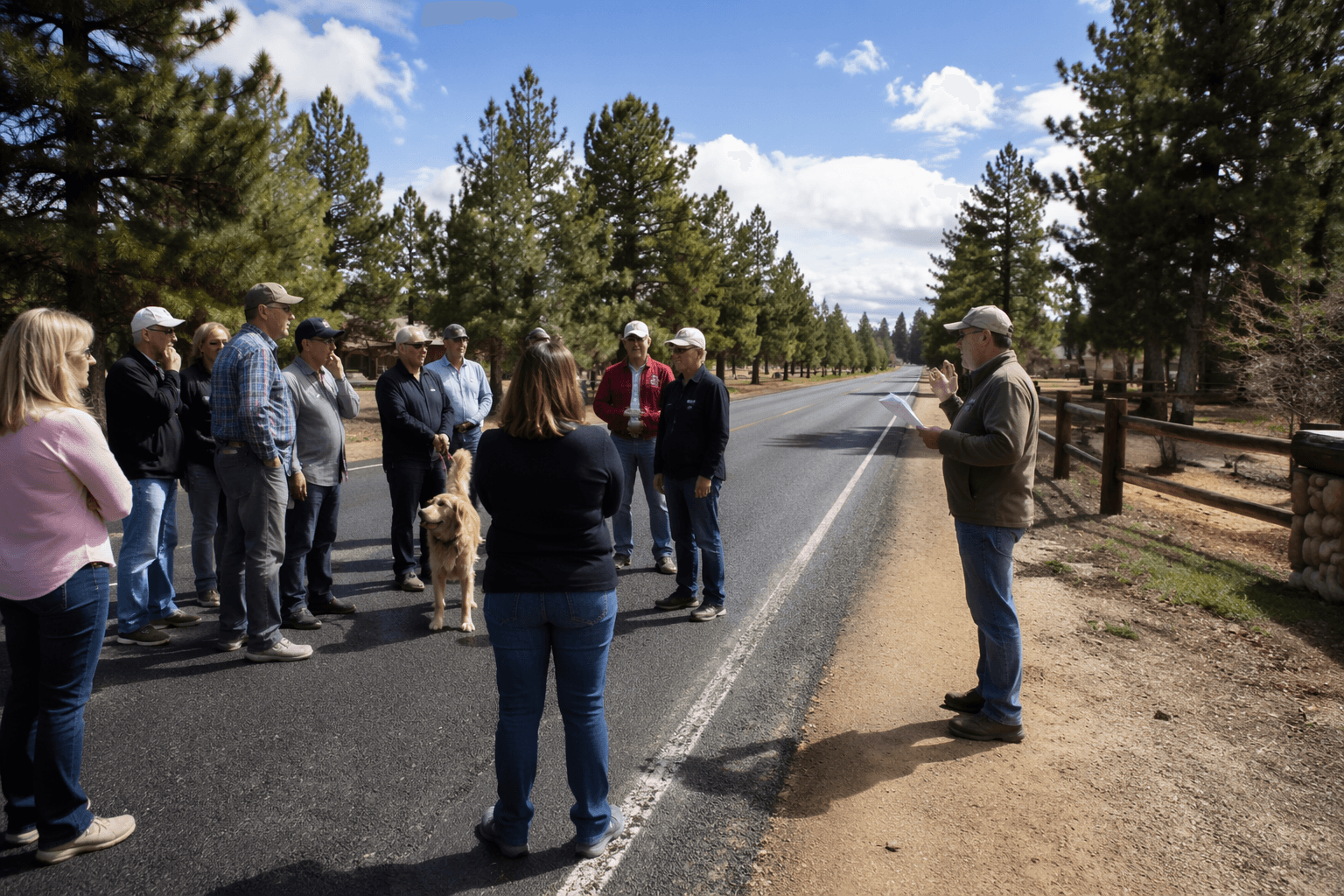
Franktown drivers, horseback riders and neighbors along Tanglewood Road say Douglas County’s recycled asphalt milling project has turned a familiar dirt route into a safety concern, with narrower shoulders, more dust worries and questions about why the work started before many people knew it was coming.
Residents in the Franktown area said the paving began with little advance notice and no obvious road-work signs, leaving them to piece together what was happening from one another before calling the public works department. Carin Shuler said the community had to start making calls because residents were not told ahead of time. She and other homeowners said the work has widened the road enough that the shoulder is now too narrow for horses and pedestrians, a serious problem in a part of Douglas County where equestrian use, dog walking and hiking are part of daily life.
The concerns go beyond inconvenience. Residents said the recycled asphalt surface could be rough on horses’ hooves, hard on dogs’ paws and damaging to vehicle undercarriages on a road many still use like a rural lane rather than a paved collector. For nearby homes, the change also raises questions about drainage, dust and whether a quick fix today will bring longer-term wear or maintenance issues tomorrow.
Douglas County Assistant Director of Public Works Dan Roberts defended the project by pointing to the scale of the county’s gravel-road system. Douglas County says it maintains about 300 miles of gravel roads, nearly 25% of the county road network, and that 30% of its in-house road maintenance staff works on gravel roads. Roberts said rising traffic tied to population growth has made maintenance harder, and that the county reuses milled asphalt from other projects on roads like Tanglewood. He also said dust control is a major driver, since keeping gravel roads watered is expensive and consumes millions of gallons.
County policy shows the paving approach is not limited to Tanglewood. Douglas County says its gravel-road paving program is request-driven, with staff reviewing eligibility, then sending surveys to adjacent property owners after the annual budget is set. At least 51% of directly adjacent owners must support a residential paving request, and the county says its two partnership methods for paving residential gravel roads both require financial participation from benefiting property owners. County materials say gravel-road treatments are meant to increase durability, extend aggregate-surface life and help control dust, with some projects adding about a year of surface life depending on traffic and weather.

Douglas County also says most road work happens from April through October, when temperatures are suitable, and it has launched a live roadway project map and Cone Zone page to alert residents to lane closures, reduced speeds and alternate routes. For Franktown, the broader question now is whether Tanglewood Road is a one-time fix or a preview of how the county plans to treat more rural roads as growth pushes deeper into the county’s gravel system.
This article was produced by Prism’s automated news system from verified source data, official records, and press releases, then run through automated quality and moderation checks before publishing. The system is built and supervised by the people who set the standards it runs under. Read our full AI policy.
Know something we missed? Have a correction or additional information?
Submit a Tip