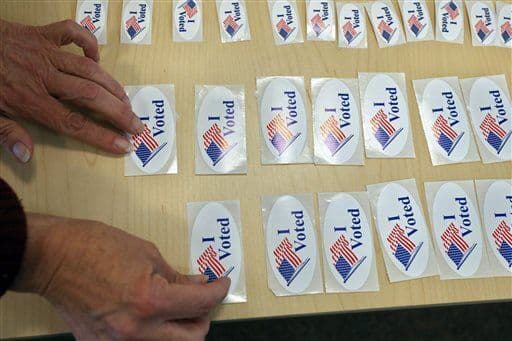
Lone Tree voters to choose two City Council members in May election
Two Lone Tree council seats are on the May 5 ballot, and the winners will help steer growth, budgeting and redevelopment in a city of 14,253 residents.

Only two City Council seats are on Lone Tree’s May 5 ballot, but the winners will help shape how a fast-changing city handles development, budgeting, public spaces and municipal services along Interstate 25, Lincoln Avenue and the Entertainment District.
The election is nonpartisan, so Lone Tree voters will be choosing based on qualifications and priorities rather than party labels. City election materials also say campaign contribution reports must be filed under the city’s Fair Election and Campaign Practices requirements. The stakes are easy to miss in a low-turnout municipal race, but the last city council election drew 3,042 votes from 10,246 registered voters, a 30% turnout. One district race in 2024 was canceled after only one candidate filed the proper petition.

Lone Tree is a home-rule city with a council-manager form of government. The elected mayor and four city councilmembers set policy, while the city manager handles daily operations. Councilmembers represent one of two districts, and the mayor is elected at-large, which gives each seat a direct role in how the city balances neighborhood concerns, redevelopment pressure and long-range planning.
That long-range planning is already mapped out in Lone Tree Elevated, the city’s updated comprehensive plan. Adopted in 2019, it is intended to guide growth and development for the next 20 years and beyond, with land use, transportation, housing, parks and open space, economic development, infrastructure and the natural environment all part of the discussion. Current city planning language points to active work along Lincoln Avenue, adaptive traffic signals, bikeway connections, the Lone Tree Mobility Hub, redevelopment in the Entertainment District and planning for the future of City Center.
The numbers help explain why those decisions matter so much in a relatively small but affluent suburb. Lone Tree had 14,253 residents in the 2020 Census and covers 9.8 square miles. Recent Census Bureau estimates put the city’s 2024 median household income at $123,741, and 71.2% of residents age 25 and older held a bachelor’s degree or higher.
That mix of size, income and education has made Lone Tree’s council debates especially focused on mobility, redevelopment and growth management. With the city’s next municipal election set for May 5, those two council seats will help determine how Lone Tree responds to new projects, shifting transportation demands and the daily services residents feel most directly.
This article was produced by Prism’s automated news system from verified source data, official records, and press releases, then run through automated quality and moderation checks before publishing. The system is built and supervised by the people who set the standards it runs under. Read our full AI policy.
Did this article answer your question?